

Why Recurring Charges Are So Easy to Miss
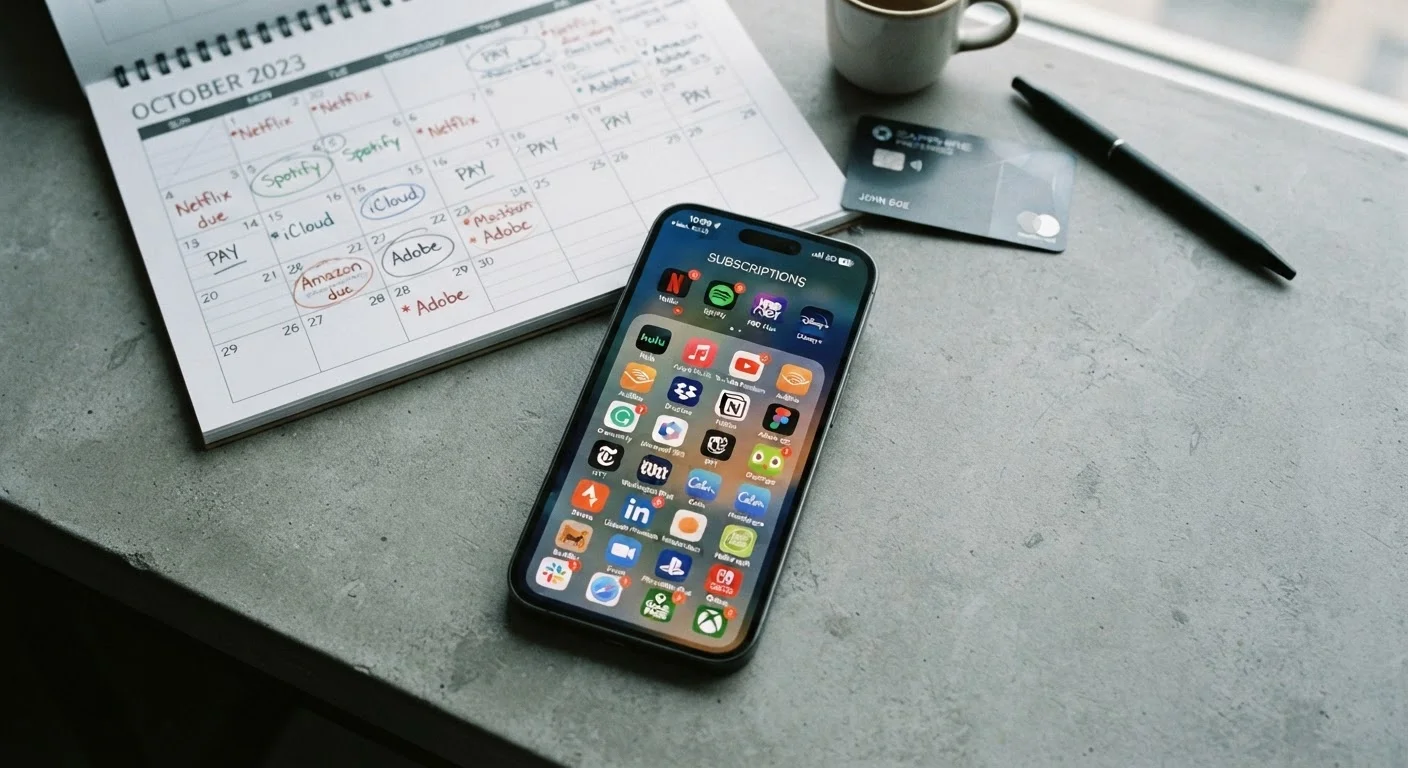
Recurring charges are engineered for invisibility. They arrive at predictable intervals, often for small amounts, and blend into the noise of a typical bank statement. A $9.99 charge rarely triggers the same alarm as an unexpected $200 expense - yet twelve of them add up to nearly $120 a year, per subscription.
The problem compounds when multiple services operate on different billing cycles - some monthly, some annual, some quarterly. Without a structured review habit, it's genuinely difficult to know what you're paying for at any given moment. A monthly money audit is one of the most effective tools for catching this kind of drift before it does lasting damage to your budget.
$219/mo
Average monthly subscription spending per U.S. consumer
According to a survey by C+R Research, consumers significantly underestimate their total subscription spending, often guessing far lower than the actual amount.
42%
Consumers who forgot they were still paying for a service
A survey by Waterstone Management Group found that a large share of subscribers were unaware they were still being charged for services they no longer used.
Common Mistakes That Let Hidden Charges Pile Up
Most people don't lose money to recurring charges all at once - it happens gradually, through a series of small oversights. Understanding the specific mistakes that allow these charges to persist is the first step toward stopping them.
Signing up for free trials and forgetting to cancel before the billing date.
Why it happens: Free trials rely on the assumption that users will forget. The sign-up friction is minimal, but the cancellation process is often deliberately harder to find.
Using multiple payment cards for subscriptions, making it nearly impossible to see the full picture.
Why it happens: Subscriptions accumulate over time across different life stages - a card used for a gym signup years ago may still carry that charge even if it's no longer your primary card.
Overlooking annual charges because they appear only once and are easy to forget between billing cycles.
Why it happens: Monthly charges stay visible; annual ones disappear from view for 11 months and often feel like a surprise when they hit. Many people mistake them for unauthorized transactions rather than services they agreed to.
Paying for shared or family plans that others in the household no longer use.
Why it happens: When a service was set up to cover multiple people, usage patterns change but billing rarely follows. The original subscriber often continues paying without realizing others have stopped using it.
Assuming a canceled account means billing has stopped without confirming the cancellation.
Why it happens: Some services require multiple steps to fully cancel, or send a 'we're sorry to see you go' email that is not actually a confirmation of cancellation. Partial cancellations are more common than people realize.
These errors are rarely the result of carelessness. More often, they reflect the reality that managing a modern financial life involves dozens of small decisions, and some inevitably fall through the cracks. Addressing them systematically - rather than reactively - is what separates a solid budget from one that quietly bleeds each month.
How to Conduct a Subscription Audit
A subscription audit doesn't require special software. Start by pulling up the last two to three months of statements for every bank account and credit card you use. Go line by line and flag every charge that recurs - even ones you recognize. The goal is a complete, written list of what you're paying, how often, and for what purpose.
Next, evaluate each item: Do you actively use it? Does the value justify the cost? Could a lower tier or a shared plan meet your needs? Once you've answered those questions honestly, cancel anything that fails the test - and do it immediately. Intending to cancel later is how forgotten subscriptions survive for years.
Watch Out for 'Pause' Options During Cancellation
Many subscription services offer a 'pause' or 'snooze' option when you try to cancel, which delays billing rather than stopping it. If your goal is to stop being charged, select the full cancellation option and confirm it. A pause that expires automatically will resume billing without any additional notice.
For those working to free up cash for debt repayment, eliminating unused recurring charges is one of the fastest, lowest-effort adjustments available. It won't replace a full debt payoff strategy - for a broader look at how small financial habits interact with debt, see financial moves that quietly set back debt payoff progress - but it can meaningfully accelerate it.
This article is for general informational and educational purposes only and does not constitute personalized financial advice. Consult a qualified financial professional for guidance specific to your situation.
The content on this site is for informational purposes only and is not a substitute for professional advice. Always consult a qualified professional for guidance specific to your situation.