

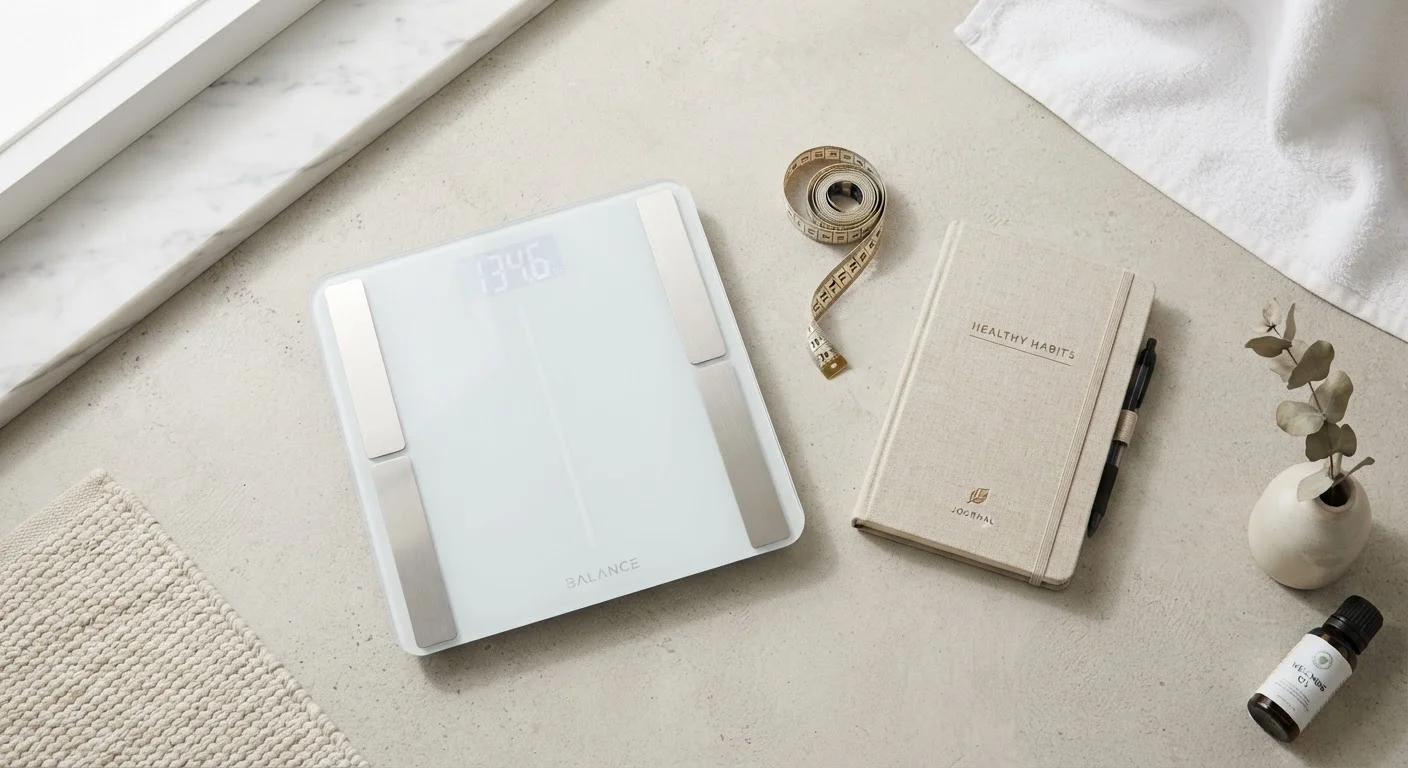
Option A
Body Weight
The familiar, single-number measurement most people know.
Best for: Quick, low-effort tracking of overall mass changes over time.
Option B
Body Composition
A multi-dimensional breakdown of what your body is actually made of.
Best for: Understanding the ratio of fat, muscle, bone, and water for a fuller health picture.
What Each Measurement Actually Tells You
Body weight is the total gravitational force of everything inside you - organs, bones, muscle, fat, water, and even the food in your digestive tract. It's captured in seconds on a standard scale and expressed as a single number in pounds or kilograms. That simplicity is its main appeal.
Body composition, on the other hand, describes the proportions of the different tissues that make up that total weight. The most commonly referenced breakdown distinguishes fat mass (all adipose tissue) from lean mass (muscle, bone, organs, and water). More detailed assessments can further separate skeletal muscle mass, bone mineral density, and total body water.
The critical insight: the same body weight can represent vastly different physiological realities. A 180-pound person who is predominantly lean muscle has a very different metabolic profile, physical capacity, and health risk profile than a 180-pound person carrying a high percentage of body fat - even though both would look identical on a bathroom scale.
BMI Is Not Body Composition
Body Mass Index (BMI) is often confused with body composition, but it's simply a ratio of weight to height squared. BMI doesn't distinguish fat from muscle or account for where fat is distributed. A muscular individual may have a high BMI despite low body fat, while someone with a 'normal' BMI may carry a disproportionate amount of visceral fat. Health professionals often use BMI as a population-level screening tool, not a complete individual health assessment.
How Body Composition Is Measured
Several methods exist for estimating body composition, each with different levels of precision and accessibility:
- DEXA (dual-energy X-ray absorptiometry): Considered a gold standard in clinical research, it uses low-dose X-rays to distinguish fat, lean, and bone tissue. It requires specialized equipment, typically found in medical or research settings.
- Bioelectrical impedance analysis (BIA): Sends a small electrical current through the body and estimates composition based on resistance. Consumer-grade BIA scales are widely available, though accuracy is affected by hydration levels and other variables.
- Skinfold calipers: A trained assessor pinches specific skin sites to estimate subcutaneous fat. Results depend heavily on the assessor's technique and are less accurate for higher body-fat levels.
- Hydrostatic weighing: An older method that uses water displacement to estimate body density, then calculates fat percentage from established formulas. Accurate but impractical for most people.
No consumer method matches clinical precision. Treat estimates as directional data rather than absolute truth, and aim for consistency - using the same method each time - rather than comparing readings across different tools.
~36%
U.S. adults classified as obese by BMI
According to CDC data, obesity prevalence in U.S. adults highlights why body fat distribution - not just weight - matters for public health monitoring.
3-5 lbs
Typical daily weight fluctuation in adults
Everyday variations in hydration, food, and hormonal factors can shift body weight several pounds within a single day, illustrating the limits of scale-only tracking.
~18%
Higher resting calorie burn in muscle vs. fat tissue
Research estimates that skeletal muscle burns roughly 6 calories per pound per day at rest versus approximately 2 calories per pound for fat, underscoring why lean mass affects metabolism.
Why the Scale Can Mislead Progress Tracking
One of the most common frustrations in fitness is watching the scale stay flat - or even rise - despite weeks of consistent exercise. This happens because strength training and cardio routines can simultaneously reduce fat mass and increase muscle mass. Since muscle tissue is denser than fat tissue (meaning it takes up less volume per pound), your body can become leaner and smaller in circumference while your weight holds steady or increases.
Without body composition data, this progress is invisible on a scale - and can feel discouraging. Tracking metrics like waist circumference, how clothes fit, performance improvements, and periodic body composition assessments paints a far more accurate picture of what's actually happening.
It's also worth noting that body weight naturally fluctuates several pounds throughout any given day due to hydration, food intake, and hormonal shifts. A single weigh-in is a snapshot, not a verdict.
The Health Relevance of Body Composition
Research consistently links excess fat mass - particularly visceral fat (fat stored around internal organs in the abdominal region) - to elevated risks for type 2 diabetes, cardiovascular disease, and metabolic syndrome. Body weight alone doesn't distinguish where fat is stored or how much lean tissue underlies that number.
Understanding metabolic rate is part of the same picture: lean muscle mass is metabolically active tissue, meaning it burns more calories at rest than fat does. A higher proportion of muscle mass can support a more efficient metabolism over time.
That said, body composition data should be interpreted in the context of your overall health - not used as a source of anxiety or self-judgment. Both very low and very high body fat percentages carry health implications, and what's appropriate varies by age, sex, and individual factors. A healthcare provider or registered dietitian can help you understand what your numbers actually mean for your specific situation.
This article is for general informational and educational purposes only and is not a substitute for professional medical advice, diagnosis, or treatment. Always consult a qualified healthcare provider with questions about your health or fitness.
The content on this site is for informational purposes only and is not a substitute for professional advice. Always consult a qualified professional for guidance specific to your situation.