

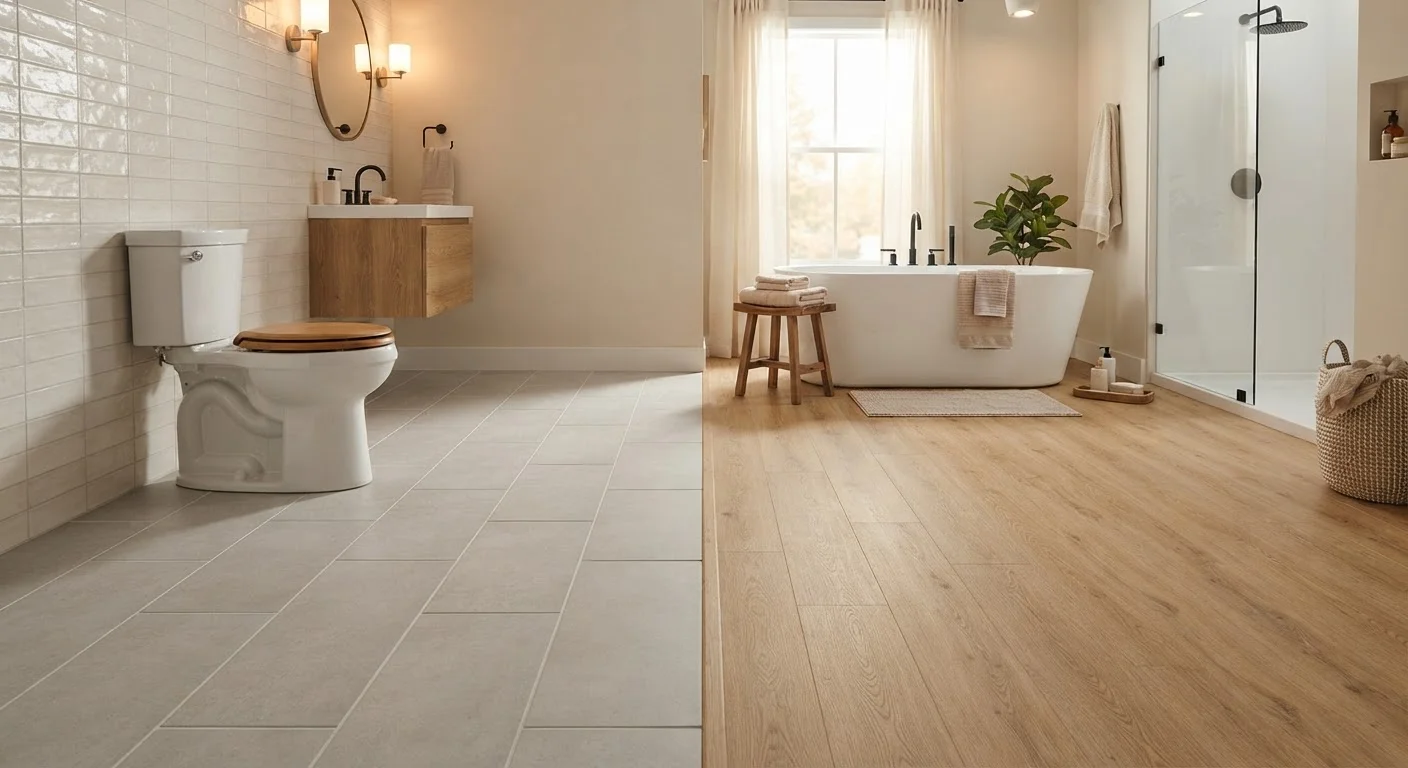
Option A
Bathroom Tile
The time-tested, fully waterproof classic.
Best for: Homeowners who want maximum water protection, long-term durability, and a high-end aesthetic in wet or high-traffic bathrooms.
Option B
Luxury Vinyl Plank (LVP)
The comfortable, budget-friendly modern contender.
Best for: Homeowners seeking a warmer underfoot feel, easier DIY installation, and strong moisture resistance at a lower upfront cost.
How Each Material Handles Water
Water resistance is the defining performance factor for any bathroom floor. Understanding how each material manages moisture helps you avoid costly subfloor damage down the road.
Tile - particularly porcelain - is fully waterproof at the surface. Its dense, fired construction absorbs virtually no water. The vulnerability lies in the grout lines between tiles: untreated grout is porous and can absorb moisture, allowing water to creep toward the subfloor over time. Regular sealing of grout lines (typically every one to three years, depending on traffic and product used) eliminates most of this risk.
Luxury vinyl plank is engineered to be water-resistant, with a rigid or flexible core wrapped in a waterproof wear layer. Most quality LVP products can handle standing water for a period of hours without damage to the plank itself. However, water that seeps through seams or around edges can still reach the subfloor, making proper installation and edge sealing critical. LVP is not considered a fully waterproof system the way a well-grouted and sealed tile floor is.
| Criterion | Bathroom Tile | Luxury Vinyl Plank |
|---|---|---|
| Waterproofing | Fully waterproof surface; grout needs sealing | Water-resistant; seams can allow seepage |
| Typical lifespan | 20-30+ years | 10-25 years |
| DIY friendliness | Moderate to difficult | Easy to moderate |
| Underfoot comfort | Hard and cold | Warmer, slight give |
| Maintenance | Grout sealing required periodically | Sweep and damp-mop only |
| Relative material cost | Moderate to high | Lower to moderate |
| Installation time | 2-4 days including curing | Half-day to 1 day |
| Resale perception | Generally positive | Acceptable; improving |
Installation: Complexity and Time
Installation complexity affects both your budget and your timeline, especially if you're considering a DIY approach.
Tile installation involves several stages: subfloor preparation (tile requires a very flat, rigid surface), application of a cement backer board, troweling on thinset mortar, laying and spacing tiles, and then grouting. Each stage has a curing time, and mistakes in any step - an uneven subfloor, misaligned tiles, or improperly mixed grout - can compromise the finished floor. Most homeowners hire a professional tile setter, which adds to overall cost. A standard bathroom tile job can take two to four days from prep to finished surface.
Luxury vinyl plank uses a click-lock or glue-down system that many homeowners can handle without prior experience. The subfloor still needs to be flat and dry, but the materials are lighter, easier to cut with basic tools, and forgiving of minor imperfections. A small bathroom can often be completed in a single day. This makes LVP particularly appealing for quick renovations or rental property updates.
Subfloor Preparation Is Non-Negotiable
Both tile and LVP require a clean, flat, structurally sound subfloor. Tile tolerates almost no flex - a bouncy or uneven subfloor will crack tiles and grout over time. LVP needs a surface flat to within 3/16 inch over 10 feet or per manufacturer specifications. Skipping proper subfloor prep is one of the most common reasons bathroom floors fail prematurely. If your subfloor has soft spots, water damage, or significant unevenness, address those issues before installing any new flooring material.
Comfort, Maintenance, and Long-Term Value
Beyond water resistance and installation, day-to-day comfort and upkeep matter in a room you use every morning.
Tile is cold underfoot, especially in winter months. Radiant heating systems can be installed beneath tile to address this, though that adds cost. Tile is extremely durable - a properly installed ceramic or porcelain floor can last 20 to 30 years or more. Cleaning is straightforward, though grout lines can trap dirt and require periodic scrubbing. Cracked tiles can be replaced individually if the original tile is available.
Luxury vinyl plank has a more comfortable feel underfoot - it's slightly warmer and has a small amount of flex that reduces fatigue. Maintenance is simple: sweep and damp-mop. LVP typically carries a wear-layer warranty ranging from 5 to 25 years depending on the product tier. However, LVP can be damaged by prolonged heavy furniture pressure, sharp impacts, or exposure to very high temperatures, and individual plank replacement can be tricky if the flooring has been glued down or if matching planks are unavailable years later.
20-30 years
Expected lifespan of a well-installed tile floor
According to the National Association of Home Builders, ceramic tile floors are among the longest-lasting flooring materials in residential construction.
3-5×
Tile installation labor cost versus LVP
Professional tile installation is generally two to five times more labor-intensive than floating LVP, according to flooring industry cost guidelines.
The content on this site is for informational purposes only and is not a substitute for professional advice. Always consult a qualified professional for guidance specific to your situation.