

Option A
Recessed Lighting
The sleek, minimalist option built into the ceiling plane.
Best for: Best for low-ceiling rooms, modern aesthetics, layered lighting schemes, and spaces where a clean overhead look is the priority.
Option B
Ceiling Fixtures
The versatile, statement-making surface-mounted choice.
Best for: Best for rooms where a focal point is welcome, installation flexibility is needed, or the ceiling height and style call for visual interest overhead.
How Each Type Works and What It Does to a Room
Recessed lighting - sometimes called can lights or downlights - consists of cylindrical housings installed inside the ceiling cavity, with only a trim ring visible from below. Because the light source is hidden above the ceiling plane, recessed fixtures create a clean, uninterrupted surface that visually enlarges a room. They direct light downward in a controlled cone, which is excellent for task lighting but can leave upper walls and corners dim without additional sources.
Ceiling fixtures, by contrast, mount directly to an electrical box on the ceiling surface. This category includes flush-mount and semi-flush fixtures, chandeliers, pendants, and drum shades. Because the fixture hangs below or sits at the ceiling, it becomes a design element in its own right - influencing style, proportion, and mood in ways that recessed lights simply cannot.
The practical implication: recessed lights distribute illumination more evenly across a horizontal plane, while a single ceiling fixture creates a brighter central pool with softer light radiating outward. Neither is inherently superior - the right choice depends on the room's function, dimensions, and the atmosphere you're after.
| Criterion | Recessed Lighting | Ceiling Fixtures |
|---|---|---|
| Visual impact | Minimal - blends into ceiling | High - acts as a design statement |
| Installation complexity | Higher - requires cutting and wiring multiple cans | Lower - mounts to existing electrical box |
| Typical upfront cost | Higher per room (multiple fixtures needed) | Lower for single-fixture rooms |
| Light distribution | Even, directional downlighting | Central pool, wider ambient spread |
| Ceiling height suitability | Ideal for low to standard ceilings | Better for standard to high ceilings |
| Replaceability | Housing is semi-permanent once installed | Easily swapped at any time |
| Room size feeling | Makes rooms feel larger and taller | Anchors and defines room scale |
Installation Complexity and What Your Ceiling Can Handle
Installing recessed lighting in an existing ceiling - often called a retrofit installation - requires cutting circular holes, running wire to each can, and ensuring the housing fits between joists without disturbing insulation or structural members. In rooms with attic access above, the process is more manageable. In finished second-floor ceilings or concrete slabs, it becomes significantly more complex and may require a licensed electrician. Always verify local permit requirements before beginning any electrical work.
Ceiling fixtures attach to a single electrical box, which most rooms already have in the center of the ceiling. Swapping an old fixture for a new one is one of the more approachable DIY electrical tasks - provided the power is off and the existing box is rated for the new fixture's weight. For heavier chandeliers, a fan-rated or dedicated heavy-duty box is required.
Permits and Electrical Safety Matter
Any new electrical circuit or significant wiring change typically requires a permit and inspection in most U.S. jurisdictions. Even retrofit recessed lighting may fall under local code requirements depending on the scope. Always check with your local building department before starting, and consider hiring a licensed electrician for any work that involves running new wire or altering your panel.
Cost differences are real. A single ceiling fixture installation is typically far less expensive than wiring four to six recessed cans across the same room. If your project involves a full renovation with open ceilings, however, the cost gap narrows considerably since wire routing becomes easier before drywall goes up.
Layering Both for the Best Results
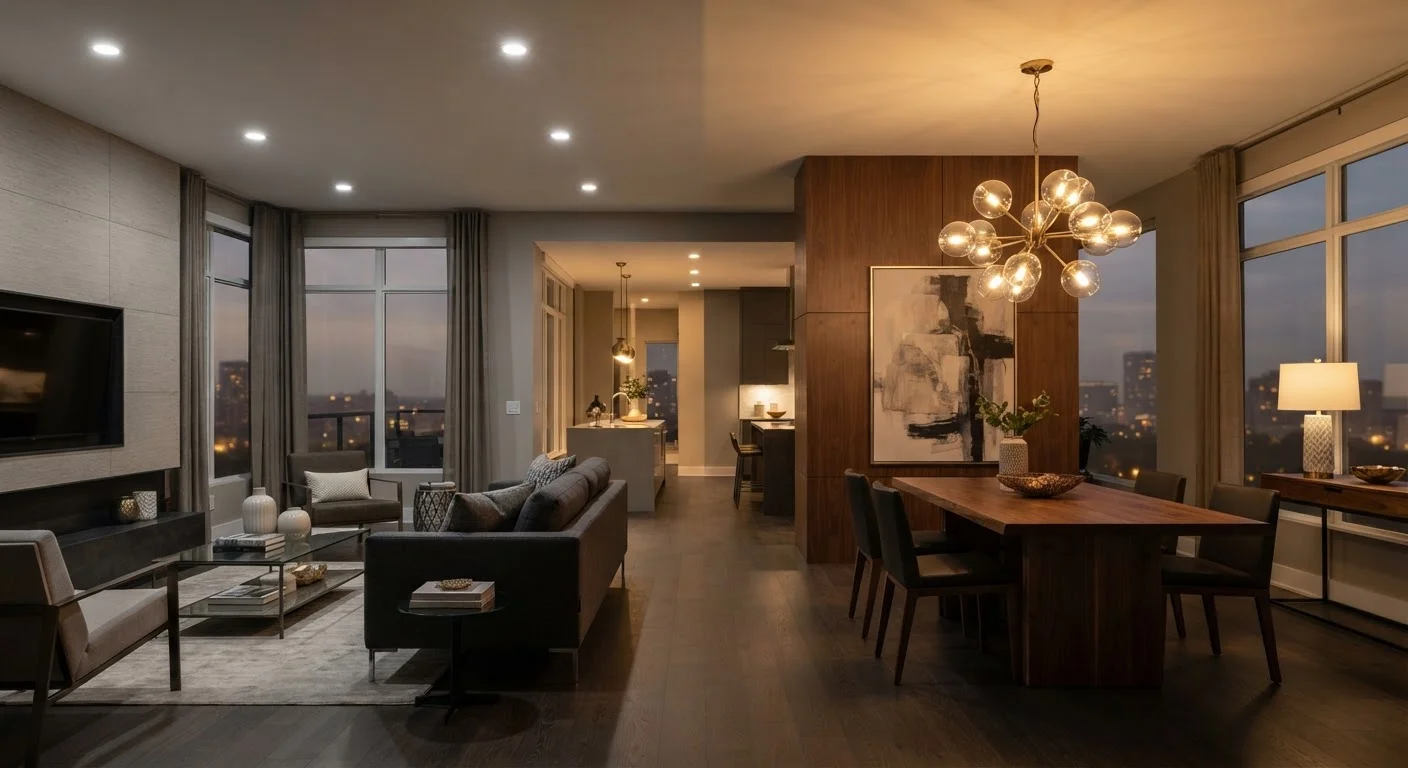
Professional lighting designers frequently combine both types rather than choosing one exclusively. A common approach: recessed lights provide general ambient illumination across a kitchen or living room, while a statement ceiling fixture over a dining table or seating area creates a warm, inviting focal point. This layered strategy allows independent dimmer control over each circuit, letting you shift the room from bright and functional to soft and atmospheric without changing a single bulb.
When planning any lighting layout, consider the ceiling height, the room's primary uses, and whether natural light from windows already handles part of the workload during daytime hours. For rooms with limited ceiling depth - such as a basement with ductwork - low-profile recessed wafer lights, which require no housing can, offer a practical middle ground. For spaces with architectural character like exposed beams or coffered ceilings, a ceiling fixture that echoes those details can reinforce the room's design language far more effectively than a grid of downlights ever could.
The content on this site is for informational purposes only and is not a substitute for professional advice. Always consult a qualified professional for guidance specific to your situation.