

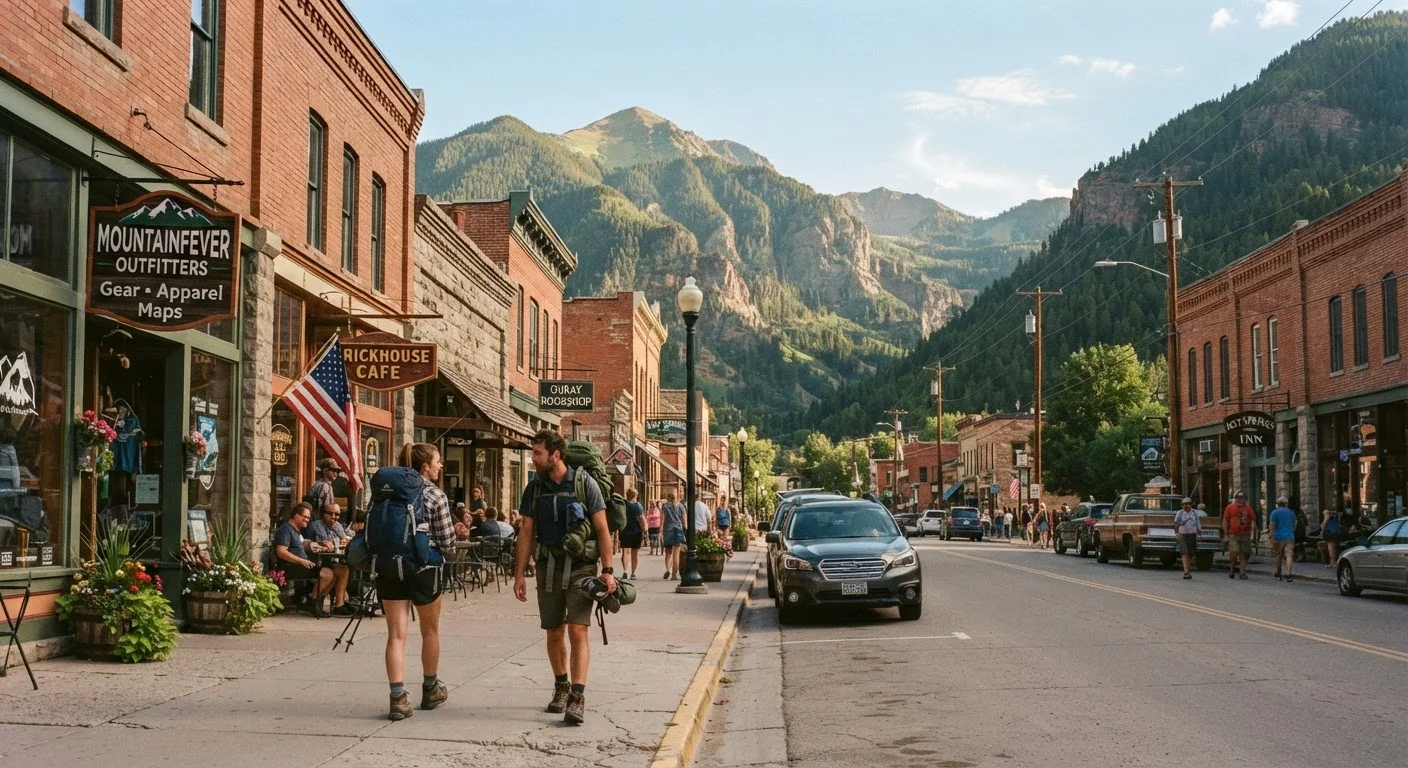
What Makes a Town an AT Gateway?
The Appalachian Trail stretches roughly 2,190 miles from Springer Mountain in Georgia to Mount Katahdin in Maine, passing through 14 states. Along that corridor, certain towns have grown into recognized stopping points - places where the trail crosses or runs close enough that hikers regularly descend for resupply, rest, and connection.
These gateway towns aren't all the same. Some sit directly on the trail; others require a short shuttle ride. What they share is an infrastructure and culture shaped by decades of through-hiker traffic: outfitters, hiker-friendly lodging, post office general delivery services, and locals accustomed to muddy boots at the diner counter.
For non-hikers, these towns offer something different - a window into Appalachian mountain culture, accessible outdoor recreation, and a slower pace that most tourist corridors don't replicate.
| Trail Total Length | Approximately 2,190 miles (Appalachian Trail Conservancy) |
| States Crossed | 14 states (Georgia to Maine) (Appalachian Trail Conservancy) |
| Estimated Annual Hikers | 3 million+ visits per year (National Park Service estimate) |
| Through-Hiker Season | March - October (northbound peak) |
| Trail Headquarters | Harpers Ferry, West Virginia (Appalachian Trail Conservancy) |
| Typical Through-Hike Duration | 5-7 months for end-to-end (Appalachian Trail Conservancy) |
Three Towns Worth Knowing
Damascus, Virginia
Damascus calls itself Trail Town USA, and the nickname is earned. The AT runs directly through the center of town, and the Virginia Creeper Trail - a converted rail line - begins here, making Damascus a hub for hikers and cyclists alike. The town hosts Trail Days each May, a gathering that draws former through-hikers and trail enthusiasts. Visitors who aren't hiking can rent bikes for the Creeper Trail descent, browse the handful of outfitters on Laurel Avenue, and find affordable lodging in hostels and small inns.
Harpers Ferry, West Virginia
Harpers Ferry sits at the confluence of the Potomac and Shenandoah rivers and carries deep Civil War history. The Appalachian Trail Conservancy's headquarters is located here, making it a symbolic midpoint for through-hikers. Non-hikers will find a National Historical Park with well-maintained interpretive sites, river access for kayaking, and a compact lower town of 19th-century buildings. The terrain is accessible - short loop trails inside the park suit casual walkers without committing to strenuous AT mileage.
Hot Springs, North Carolina
Hot Springs is one of the few places where the AT runs directly down the main street. The town is small - population under 600 - but offers natural mineral hot spring pools, a reliable hostel network, and several restaurants accustomed to feeding hungry long-distance walkers. Non-hikers can soak at the hot springs, paddle the French Broad River, or simply spend a quiet night in a genuinely rural mountain setting that most of Western North Carolina's more popular destinations no longer provide.
Through-hiker
A person attempting to hike the entire Appalachian Trail in a single continuous journey, typically taking five to seven months. Through-hikers are a distinct community with their own culture and logistics.
Resupply
The practice of restocking food and gear at a town stop during a long-distance hike. Gateway towns are often chosen based on their resupply options, including grocery stores and mail drops.
General Delivery
A postal service that allows hikers to mail packages to themselves at a local post office, to be held for pickup. Many through-hikers use this to resupply gear or food without a fixed mailing address.
Hostel (trail hostel)
Low-cost, hiker-oriented lodging common in AT gateway towns. Trail hostels typically offer bunk beds, laundry, and shared kitchens, and are usually open to non-hikers as well.
Rail Trail
A recreational path built on a former railroad corridor. Rail trails are typically flat or gently graded, making them accessible for cyclists and casual walkers. The Virginia Creeper Trail near Damascus is a well-known example.
Practical Expectations for Visitors
Gateway towns vary considerably in size, amenity level, and seasonal accessibility. A few things to know before visiting:
- Services can be limited. Many gateway towns have populations under a few thousand. Expect one or two restaurants, limited ATM access, and reduced hours outside summer and fall.
- Seasonal crowds are real. Through-hiker season runs roughly March through October, with peak northbound traffic in spring and summer. Towns like Hot Springs and Damascus can feel noticeably busier during those months.
- Weather changes quickly. Appalachian mountain weather is variable year-round. Even non-hikers venturing onto short local trails should carry layers and check forecasts.
- Cell service is inconsistent. Download offline maps before arriving. Many gateway towns sit in valleys with spotty signal.
Non-hikers planning a visit should research lodging well in advance for peak months. Options range from trail hostels (which typically welcome non-hikers) to standard bed-and-breakfasts, but inventory is thin compared to resort towns.
Visitors should also verify current road conditions, park hours, and any trail or facility closures through official sources - the National Park Service and Appalachian Trail Conservancy websites are the most reliable starting points.
This article provides general travel information only. Conditions, services, and access at specific locations can change. Always verify current details with official sources and local providers before traveling.
The content on this site is for informational purposes only and is not a substitute for professional advice. Always consult a qualified professional for guidance specific to your situation.