

Why the Simple Split Falls Short
Most budgeting guides start with the same instruction: separate your needs from your wants. It's intuitive - housing is a need; a streaming subscription is a want. But in practice, most Americans encounter a third zone that this binary ignores.
Consider a reliable car. In a city with robust public transit, it might be a want. For someone commuting 40 miles to a job with no other transport options, it's a clear need. The same dollar cost, but a completely different financial classification. This is where the simple needs-vs-wants framework begins to crack.
Real spending decisions carry context - about your income, your location, your health, your job, and your long-term goals. A rigid two-category system doesn't capture that. What's needed is a third category: financial priorities. These are expenses that may not be survival-critical, but are strategically important to your stability or future. Think emergency fund contributions, debt payments above the minimum, or professional development costs.
The Category Can Change With Circumstance
What counts as a need, want, or priority is not fixed. A gym membership might be a want for a healthy 25-year-old and a medically recommended priority for someone managing a chronic condition. Life changes - a new job, a move, a health diagnosis - can legitimately shift how you classify the same expense. Reviewing your categories periodically is not indecisiveness; it's good financial hygiene.
Defining Financial Priorities in Practice
A financial priority isn't just something you care about - it's something that, if neglected, meaningfully sets back your long-term financial position. Saving for retirement is a classic example. It isn't a need in the immediate sense - skipping a contribution won't cut off your electricity - but consistently deprioritizing it has compounding consequences that are difficult to reverse later in life.
Similarly, paying down high-interest debt above the minimum payment is a financial priority. The interest saved over time often dwarfs what could be gained elsewhere with that same money. These decisions may feel optional month-to-month, but their cumulative effect is substantial.
Identifying your financial priorities requires you to ask: What spending decisions today have the greatest impact on where I want to be in five or ten years? The answers differ by household, which is exactly why personalized categorization matters more than a one-size-fits-all label system. For a structured approach to allocating across these categories, the 50/30/20 rule compared to zero-based budgeting offers two practical frameworks worth considering.
A remote worker pays for a high-speed internet plan that costs significantly more than a basic connection.
A 32-year-old contributes to a Roth IRA each month before paying off a low-interest student loan faster.
A family regularly dines at restaurants twice a week as part of their social and family routine.
Building Consistent Habits Around What Matters
Understanding these categories only creates value if you act on them consistently. Small, repeated decisions - made with clarity about what's a need, what's a want, and what's a priority - accumulate into significant financial outcomes over months and years.
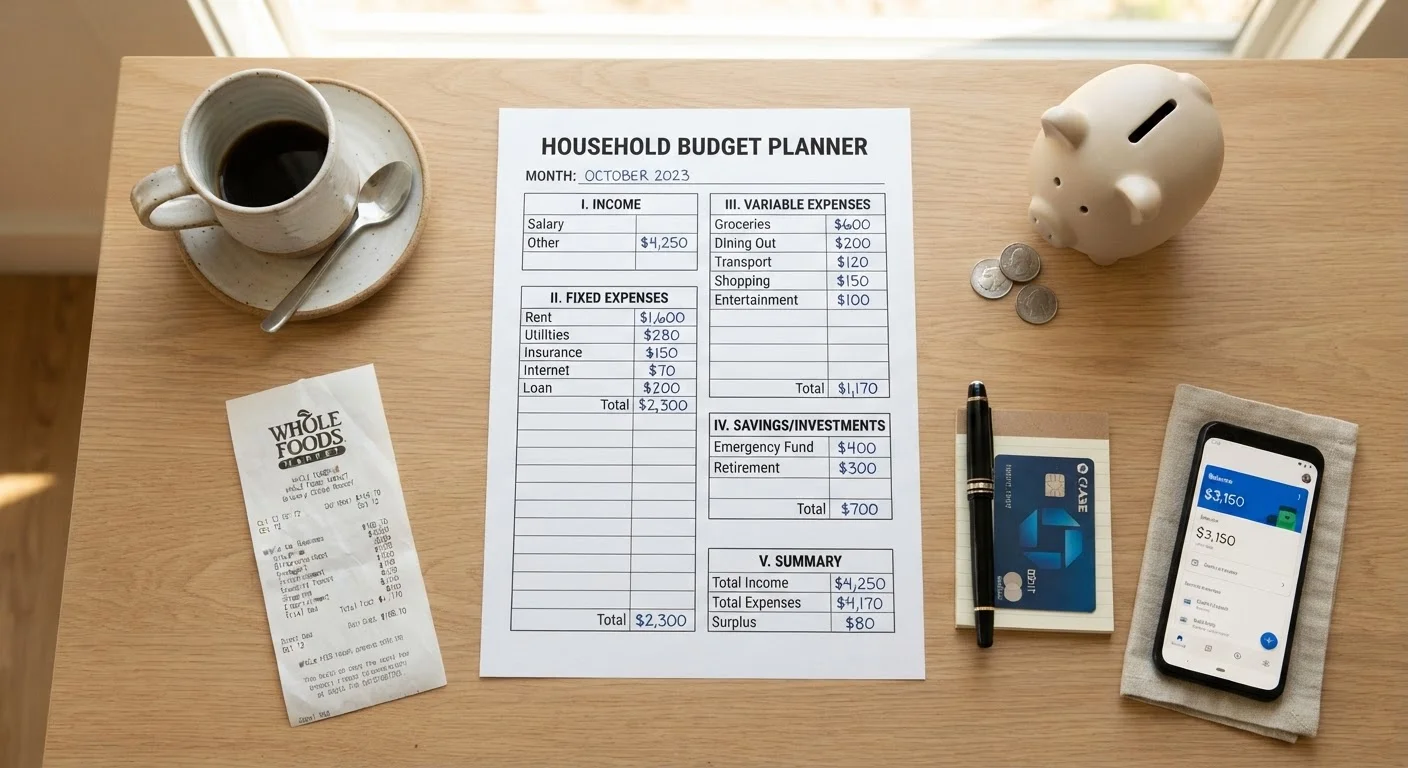
A practical approach is to build your budget in priority order rather than category order. Start with non-negotiable needs (rent, utilities, groceries). Then layer in your financial priorities (savings contributions, debt payments). What remains is your discretionary pool - the wants - to be allocated as you see fit. This sequencing ensures that your most impactful financial habits are funded before lifestyle spending takes over.
This mirrors the logic behind pay-yourself-first budgeting, which treats saving as a fixed obligation rather than a residual afterthought. For households where income is stretched, this ordering becomes even more essential - though the trade-offs are harder. Our guide on personal finance on a tight budget addresses what to do when even needs are hard to cover.
34%
Americans with no emergency savings
According to Bankrate's annual Emergency Savings Report, roughly one in three U.S. adults reported having no emergency savings - underscoring how often financial priorities go unfunded.
50%+
Income consumed by housing alone for many renters
The Harvard Joint Center for Housing Studies has reported that cost-burdened renters - those spending more than 30% on housing - number in the tens of millions, with severe cases exceeding 50% of income on shelter.
This article is for general informational purposes only and does not constitute personalized financial advice. Consult a qualified financial professional for guidance specific to your situation.
Frequently Asked Questions
A need is something required for basic survival or functioning - shelter, food, medicine, and transportation to work. A want enhances your quality of life but isn't strictly necessary. The line between them can blur depending on your job, health, or family situation.
Financial priorities reflect the spending decisions most important to your goals, even if they don't fit neatly as a basic need. For example, contributing to a retirement account isn't a survival need, but it's a high-priority financial action that many advisers consider essential to long-term stability.
Yes. If a gym membership supports a health condition, or professional attire is required for career advancement, those "wants" may deserve priority status in your budget. Priorities are personal and should reflect your specific circumstances and goals.
Revisiting your categories at least once a year - or after any major life change like a new job, move, or family addition - is a sound practice. Your financial priorities naturally shift as your income, responsibilities, and goals evolve.
Not automatically. The 50/30/20 rule is a helpful framework for structuring spending, but it assumes a level of income that many households don't have. For those with tighter margins, needs may consume far more than 50% of take-home pay. See our <a href="/finance/budgeting-basics/personal-finance-on-a-tight-budget-what-the-numbers-actually-tell-you">guide to budgeting on a tight budget</a> for adapted strategies.
Saving doesn't fall neatly into either category. It's best treated as a non-negotiable financial priority - something set aside before discretionary spending, not after. The <a href="/finance/budgeting-basics/pay-yourself-first-vs-traditional-expense-first-budgeting">pay-yourself-first approach</a> is built around exactly this idea.
The content on this site is for informational purposes only and is not a substitute for professional advice. Always consult a qualified professional for guidance specific to your situation.