

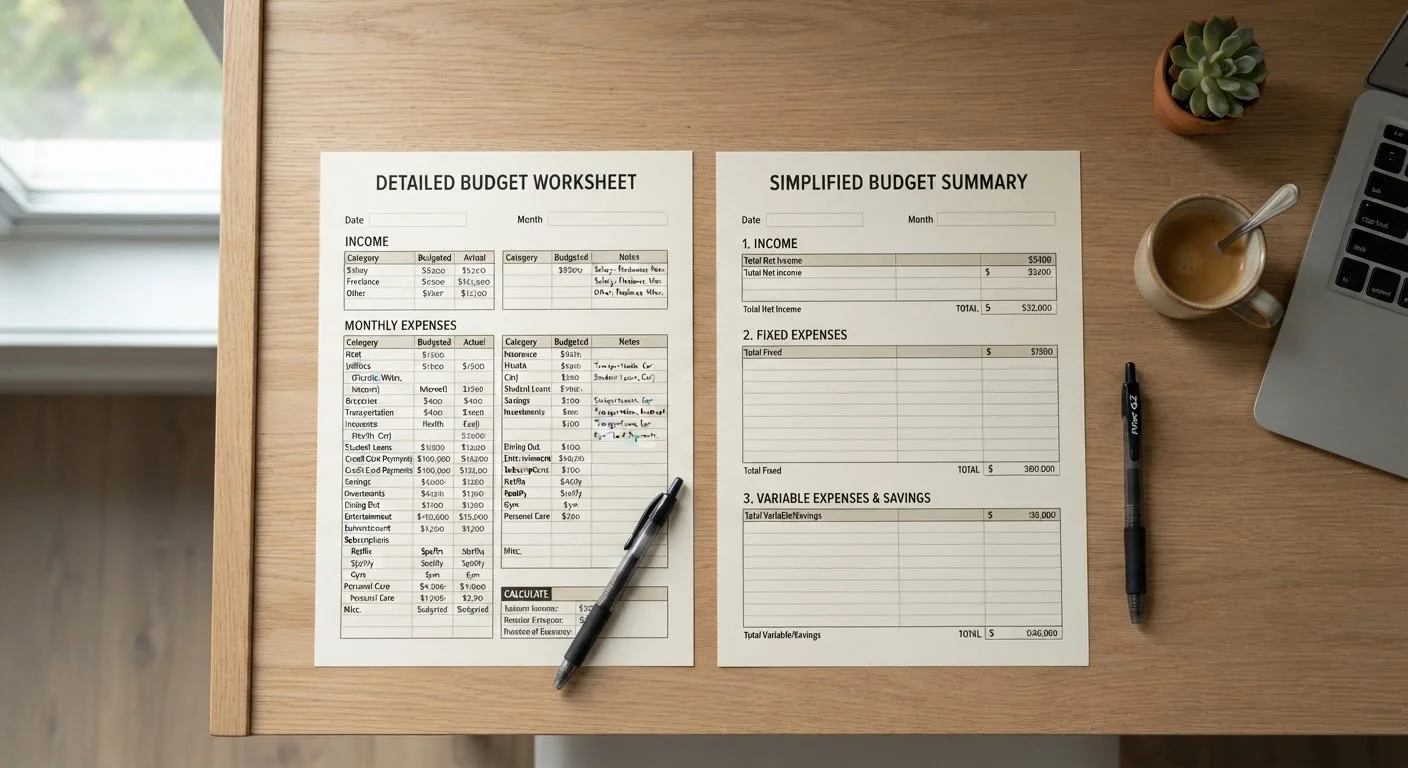
Option A
Zero-Based Budgeting
The detail-first method that assigns every dollar a specific purpose.
Best for: People who want granular control over spending and are willing to build and review a budget every month.
Option B
The 50/30/20 Rule
The percentage-based shortcut that divides income into three broad buckets.
Best for: People who want a simple, low-maintenance structure without tracking every expense category.
How Each Method Works
Zero-based budgeting starts from scratch each month. You take your total expected income and allocate every dollar to a specific category - housing, groceries, transportation, entertainment, savings, debt repayment - until the remaining balance equals zero. No dollar is left unassigned. The process is deliberate: if you earn $4,000 this month, your categories must collectively account for all $4,000.
The 50/30/20 rule, popularized in personal finance literature, uses a simpler division. After-tax income is split into three groups: 50% toward needs (rent, utilities, insurance, minimum debt payments), 30% toward wants (dining, subscriptions, hobbies), and 20% toward savings and additional debt paydown. For a deeper look at how this framework handles edge cases, see how the 50/30/20 rule actually works.
The philosophical difference is significant. Zero-based budgeting treats every expense as a decision that must be justified each cycle. The 50/30/20 rule treats income allocation as a standing policy, requiring only occasional recalibration. Both approaches can work - but they suit different temperaments and financial situations.
| Criterion | Zero-Based Budgeting | 50/30/20 Rule |
|---|---|---|
| Core principle | Every dollar assigned a job; budget ends at zero | Income split into three fixed percentage buckets |
| Setup time | High - rebuilt from scratch each month | Low - percentages stay constant month to month |
| Level of detail | Granular - individual categories for each expense | Broad - three top-level categories only |
| Handles variable income | Well - recalculated from actual income each cycle | Moderately - percentages adjust automatically |
| Best for beginners | Challenging - steep initial learning curve | Yes - quick to understand and apply |
| Flexibility for high cost-of-living | High - categories can reflect real expenses | Low - 50% needs cap may be unrealistic in some areas |
| Accountability mechanism | Per-category tracking each month | Bucket-level checks, less granular oversight |
Where Each Method Tends to Break Down
Zero-based budgeting's main vulnerability is its time cost. Building a detailed monthly budget from scratch takes discipline and consistent attention. When life gets busy, the system is often the first thing dropped - and without the monthly setup, it offers no structure at all. It can also feel overwhelming for anyone new to budgeting, leading some people to abandon it before the habit takes hold. For a more detailed look at the method's mechanics, visit our guide on zero-based budgeting in practice.
The 50/30/20 rule has its own blind spots. Its percentages assume a middle-income household where 50% of take-home pay genuinely covers essentials. In high cost-of-living areas - or for households carrying significant debt - needs alone can consume 60-70% of income, leaving the rule's structure impossible to meet without adjustment. On the other end, high earners may find the 30% wants category far too permissive for their savings goals.
~77%
Americans living paycheck to paycheck at some point
Surveys by various financial research organizations have consistently found that a large share of U.S. adults report difficulty maintaining a financial cushion, underscoring the importance of any structured budgeting approach.
20%
Savings/debt target under the 50/30/20 rule
For many households, consistently setting aside 20% of after-tax income for savings and debt repayment is aspirational rather than immediately achievable, particularly at lower income levels.
The wants/needs boundary is also blurrier than the 50/30/20 rule acknowledges. A gym membership might be a want for one person and a mental health essential for another. For a more nuanced look at how to categorize expenses, see understanding needs, wants, and financial priorities.
Choosing the Right Framework - or Combining Both
No single budgeting method is universally superior. The right framework is the one you will actually use consistently over time. Research on financial behavior consistently suggests that engagement with a budget - regardless of format - matters more than which specific system is chosen.
Some households benefit from a hybrid approach: using the 50/30/20 percentages as broad guardrails, then applying zero-based detail within specific categories (like discretionary spending) where tighter control is wanted. This reduces the time commitment while preserving meaningful accountability where it counts most.
If you are deciding between the two, consider also how you handle your paycheck fundamentally - the pay-yourself-first vs. expense-first comparison explores another foundational budgeting philosophy that complements both methods discussed here. Explore budgeting basics for more practical strategies on building a monthly plan that fits your life.
This article is for general informational and educational purposes only. It does not constitute personalized financial advice. Consult a qualified financial professional for guidance tailored to your individual circumstances.
The content on this site is for informational purposes only and is not a substitute for professional advice. Always consult a qualified professional for guidance specific to your situation.