

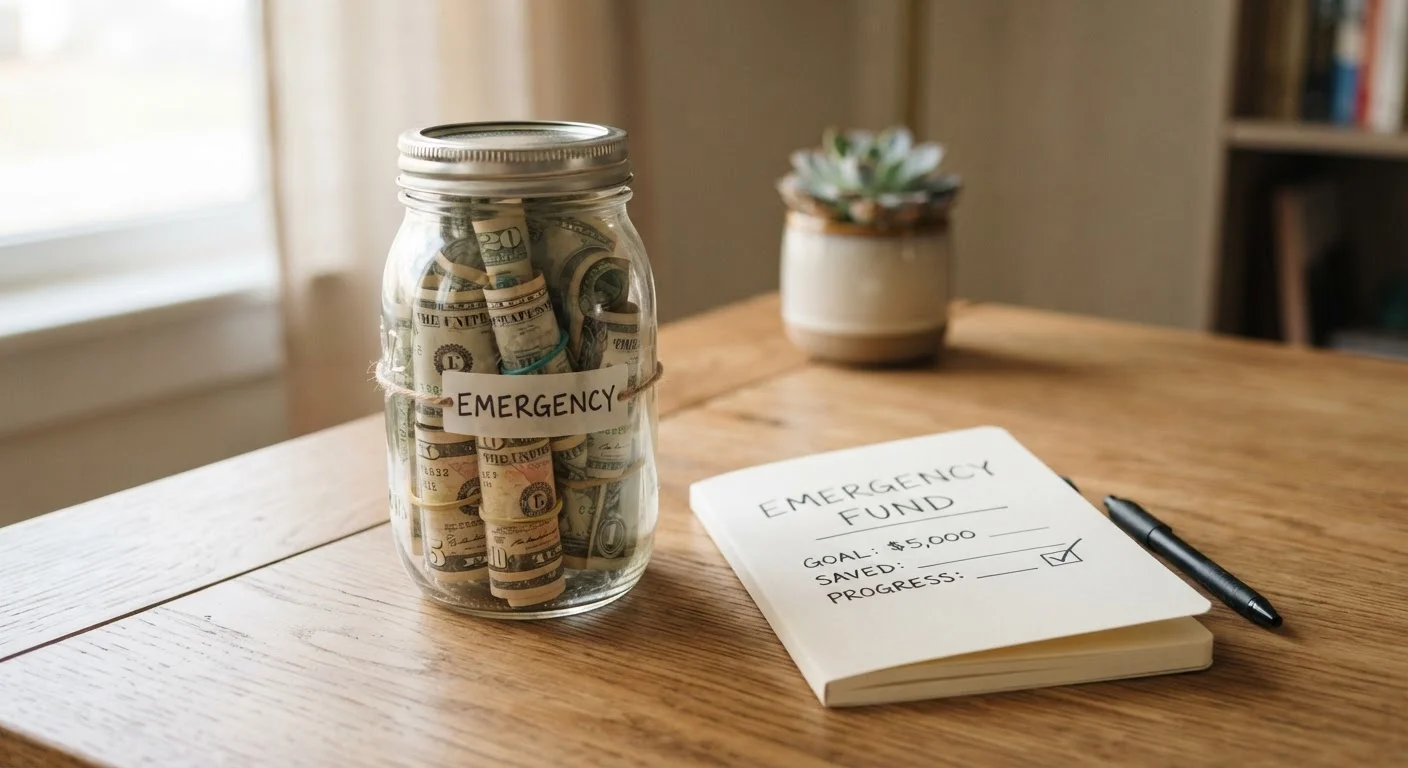
The Real Purpose of an Emergency Fund
Many people build an emergency fund and then dip into it for things that feel urgent but aren't genuine financial emergencies. A concert ticket sold out. A phone screen cracked. An invitation to a destination wedding arrived. These are inconveniences - sometimes expensive ones - but they are not what an emergency fund is designed to absorb.
An emergency fund exists to protect your financial stability when something truly unexpected and unavoidable happens. The defining test has two parts: Was the expense unforeseeable? And does it directly threaten your ability to meet essential needs? If the answer to both is yes, your emergency fund is the right tool. If either answer is no, a different savings strategy likely applies.
This distinction matters because raiding an emergency fund for non-emergencies leaves you exposed when a real crisis hits - and that is precisely when you most need that cushion intact.
~57%
Americans unable to cover a $1,000 emergency from savings
According to a Bankrate survey, a majority of U.S. adults say an unexpected $1,000 expense would require them to borrow or go into debt.
3-6 months
Recommended emergency fund coverage in essential expenses
This range is a widely accepted guideline among personal finance educators, though individual needs vary based on income stability, household size, and employment type.
22%
U.S. adults with no emergency savings at all
The Federal Reserve's Report on the Economic Well-Being of U.S. Households has consistently found that a significant share of Americans have no dedicated emergency savings buffer.
What Belongs in an Emergency Fund - and What Doesn't
Legitimate emergency fund expenses share common characteristics: they are sudden, essential, and large enough to disrupt your regular budget. Classic examples include:
- Job loss or income disruption - covering rent, food, and utilities while you regain stable income
- Unexpected medical or dental costs - bills not anticipated or covered by insurance
- Critical car repairs - when your vehicle is essential to employment and breaks down without warning
- Emergency home repairs - a failed water heater, burst pipe, or broken furnace that cannot wait
Expenses that do not belong here are often predictable or optional. Annual car registration, holiday shopping, a known appliance nearing end of life, or home maintenance that can be scheduled - these should be funded through a sinking fund, which is built specifically for anticipated future costs.
If you own a home, recurring maintenance deserves its own dedicated pool. A home maintenance fund operates separately from your emergency reserve and is sized around your home's age and condition - not a one-time surprise event.
Create a Personal Emergency Criteria List
Before you need your emergency fund, write down the specific scenarios that would justify using it - job loss, a medical event, a critical home system failure. Having a predefined list removes emotion from the decision in the moment. When an expense comes up, check it against your list rather than deciding under pressure.
How to Size Your Emergency Fund Appropriately
The commonly cited target - three to six months of essential living expenses - is a useful starting point, not a universal rule. Essential expenses include housing costs, utilities, groceries, minimum debt payments, and transportation. They do not include dining out, subscriptions, or discretionary spending.
Your personal target should reflect your individual risk profile. A salaried employee in a stable industry with two household incomes and no dependents may feel secure at three months. A freelancer with one income stream, variable revenue, and dependents may need considerably more. Neither number is wrong - the right amount is the amount that would genuinely sustain you through the most likely disruption you'd face.
“An emergency fund is not about hoarding cash - it's about buying yourself time and options when life doesn't go according to plan. Without it, every setback becomes a financial crisis.”
— Tiffany Aliche, Personal finance educator and author known as 'The Budgetnista'
Build this fund gradually and consistently. Small, automatic contributions made over time are more sustainable than ambitious one-time deposits that rarely happen. Even modest weekly transfers to a dedicated account compound into meaningful protection over months. That is the core principle of small, consistent financial habits: they accumulate into real security.
For a clear comparison of how an emergency fund relates to other saving concepts, sinking funds, rainy day funds, and emergency funds each serve different functions - understanding all three helps you build a more complete financial safety net.
This article is for general informational and educational purposes only and does not constitute personalized financial or investment advice. Consult a qualified financial professional for guidance tailored to your specific circumstances.
Frequently Asked Questions
A true financial emergency is an unplanned event that threatens your ability to meet essential needs - housing, food, transportation, or health. Job loss, a major medical bill not covered by insurance, or a broken furnace in winter are clear examples. A sale ending or a non-critical appliance upgrade does not qualify.
A widely cited guideline is three to six months of essential living expenses - rent or mortgage, utilities, food, minimum debt payments, and transportation. Those with variable income, dependents, or unstable employment may benefit from aiming for six months or more. This is general guidance; your situation may differ.
Only if the repair is both unexpected and essential for you to work or meet basic needs. A routine oil change is predictable and belongs in a sinking fund. A transmission failure that leaves you unable to get to work is a legitimate emergency.
Yes - an urgent, unplanned veterinary expense can be a valid use of emergency funds, particularly if it represents a significant, unexpected cost. For guidance on distinguishing genuine pet emergencies from routine care, see <a href="/pets/pet-health-care/when-a-pet-emergency-is-truly-an-emergency">when a pet emergency is truly an emergency</a>.
A dedicated savings account separate from your everyday checking account works well. The account should be liquid - meaning you can access funds quickly without penalties - but separate enough that it isn't spent casually. High-yield savings accounts are a commonly used option, though returns will vary.
An emergency fund covers unpredictable crises. A sinking fund covers known future expenses you save toward in advance - like a vacation, car registration, or home repair you know is coming. For a fuller breakdown, see <a href="/finance/saving-and-debt/sinking-funds-rainy-day-funds-and-emergency-funds-clearing-up-the-confusion">sinking funds, rainy day funds, and emergency funds explained</a>.
The content on this site is for informational purposes only and is not a substitute for professional advice. Always consult a qualified professional for guidance specific to your situation.