

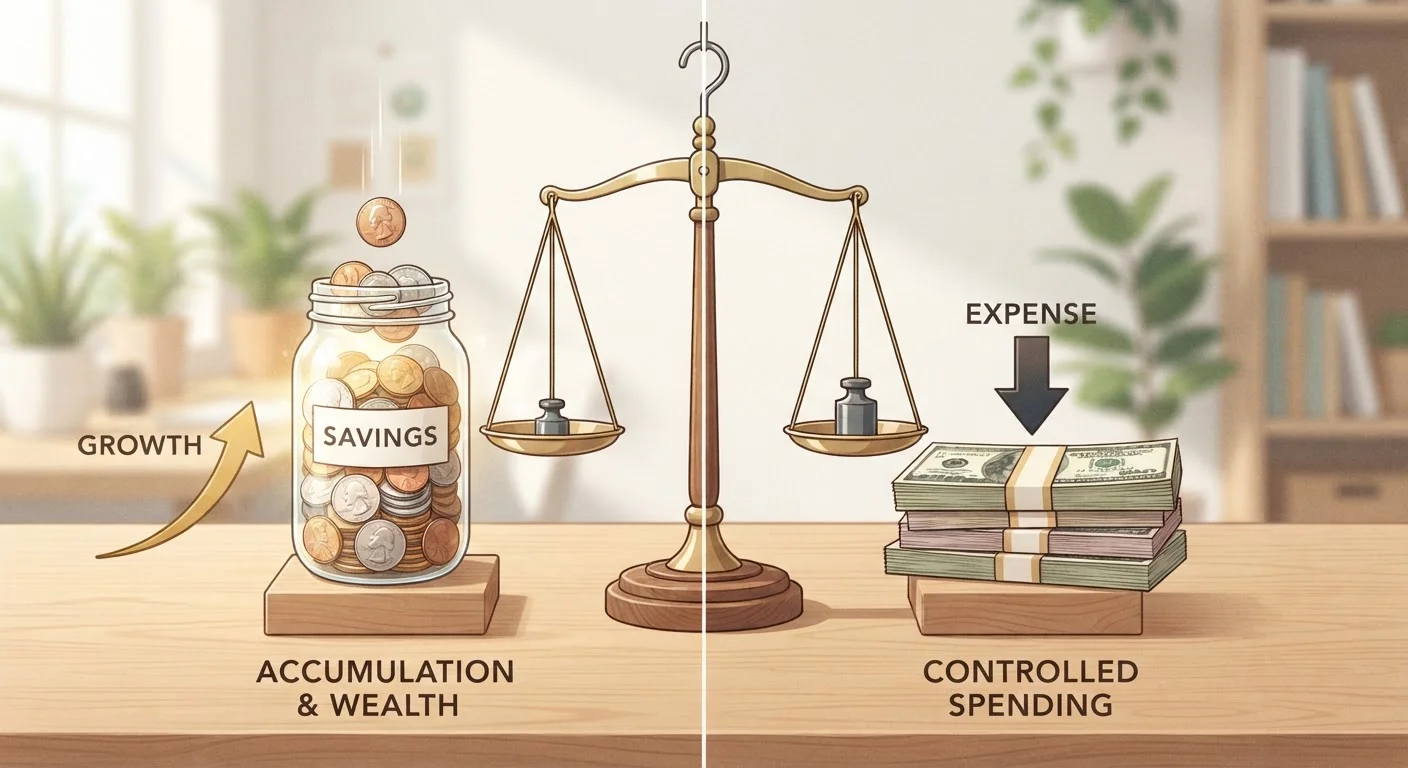
The Either-Or Trap - and Why It's Misleading
A persistent piece of personal finance advice tells people to eliminate all debt before saving a single dollar. Another camp argues the opposite - save first, always. Both extremes can be costly, and neither accounts for how financial life actually works.
The reality is that debt and savings rarely exist in isolation. Most people carry some form of debt - whether a student loan, a car payment, or a credit card balance - while also facing expenses that require financial reserves. Treating repayment and saving as mutually exclusive forces an unnecessary choice that can leave you financially fragile in either direction.
As our coverage of persistent myths about debt explains, oversimplified rules about borrowing often lead to worse financial decisions. The same applies here: a blanket rule ignores the specifics of interest rates, income stability, and individual risk.
This Is General Financial Information
The frameworks described here are educational tools, not personalized financial advice. Everyone's debt profile, income, and risk tolerance differs. A licensed financial adviser or nonprofit credit counselor can help you apply these principles to your specific situation.
Why a Safety Net and Debt Repayment Must Coexist
Consider what happens when someone directs every spare dollar toward debt with no savings buffer. The moment an unexpected expense appears - a broken appliance, a medical copay, a car repair - there's no financial cushion. The result is often new borrowing, frequently at high interest rates, which partially or entirely erases the progress made on the original debt.
A small emergency fund functions as a firewall against that cycle. Financial educators widely recommend having at least a starter emergency fund in a liquid account before aggressively tackling debt. Even a few hundred dollars set aside can prevent a manageable setback from becoming a new debt obligation.
Once you have a baseline cushion, the calculus shifts. The question becomes: for any extra dollar beyond minimum payments and basic savings, where does it create the most value? That depends significantly on the interest rate attached to your debt. You may also find it helpful to understand the distinction between good debt and bad debt - not all balances deserve the same urgency.
40%
Americans who couldn't cover a $400 emergency
According to Federal Reserve surveys, a significant share of U.S. adults would struggle to cover an unexpected $400 expense without borrowing or selling something.
20%+
Average credit card APR in recent years
Federal Reserve data has shown average credit card interest rates reaching historically high levels, underscoring the urgency of prioritizing high-rate debt repayment.
3-6 months
Recommended emergency fund size (expenses)
Most financial guidance suggests a fully-funded emergency fund should cover three to six months of essential living expenses, though even a starter fund reduces financial vulnerability significantly.
Using Interest Rates as Your Decision Framework
Interest rates are the most practical guide for allocating extra cash. If your debt carries a high interest rate - credit cards frequently charge rates well into the double digits - every dollar paid down saves a guaranteed amount in future interest. That effective return often exceeds what you'd earn in a standard savings account.
Lower-interest debt, such as certain federal student loans or fixed-rate mortgages, presents a different calculation. The gap between the cost of that debt and the return on saving or investing narrows considerably, making a split approach - some extra toward debt, some toward savings - more defensible.
This is not a recommendation to invest instead of repaying debt; rather, it's a reminder that the math is context-dependent. The snowball vs. avalanche debate covers how different repayment strategies perform depending on your debt mix, which is relevant once you've determined how much to allocate toward repayment overall.
For those managing finances jointly, this framework benefits from a shared conversation. Building a budget as a couple requires aligning on exactly these priorities before the numbers can work.
Start with your interest rates, not rules of thumb
Before deciding how to split extra dollars, list each debt with its interest rate. High-rate balances - typically above 7-8% - generally deserve priority over building beyond a basic emergency fund. Lower-rate debt allows more flexibility to grow savings simultaneously. This simple inventory often makes the right allocation obvious.
Building a Workable Dual-Track Plan
A practical approach typically follows a sequence: first, meet all minimum debt payments; second, set aside a starter emergency fund; third, evaluate extra dollars using the interest rate framework above; fourth, revisit allocations as balances change.
Automation helps considerably. Directing a fixed amount to savings each pay period - before discretionary spending - removes the decision from each month and builds the habit regardless of whether you feel motivated. The same principle applies to debt: paying slightly above the minimum on a consistent schedule reduces total interest paid over time without requiring dramatic lifestyle changes.
What derails most plans isn't strategy - it's subtle ongoing habits. Our look at financial moves that quietly set back debt payoff progress identifies the patterns worth watching for as you maintain a dual-track approach.
If your financial situation changes significantly - income drops, expenses spike - priorities may need to shift. Handling debt and savings during financial hardship offers a framework for those moments when the standard plan needs adjustment.
This article is for general informational and educational purposes only and does not constitute personalized financial, investment, tax, or legal advice. Consult a qualified financial professional for guidance tailored to your specific circumstances.
Frequently Asked Questions
Not necessarily. A common framework is to build a small emergency fund first - typically $500 to $1,000 - before aggressively paying down debt. This prevents minor financial shocks from forcing you deeper into debt. After establishing that cushion, you can shift more focus to debt repayment while continuing modest savings contributions.
Compare the interest rate on your debt to the return you'd earn by saving. High-interest debt - such as credit card balances - generally warrants prioritizing repayment since the interest cost typically outweighs savings returns. For lower-interest debt, splitting extra funds between savings and debt reduction often makes sense.
A minimal emergency fund is still worthwhile even with high-interest debt. Without any savings, a single unexpected expense - a car repair, a medical bill - may push you to borrow more at high rates. A small, accessible reserve can break that cycle while you work down the balance.
Yes. Research in behavioral finance suggests that having even modest savings reduces financial stress and improves decision-making. Progress on debt simultaneously reduces interest costs, so both goals compound your financial stability over time. Neither should be entirely neglected for the other.
Small contributions still matter. Even setting aside $25 a month builds a savings habit and provides some buffer, while paying slightly more than the minimum on debt reduces total interest paid. The key is consistency rather than the size of any single contribution.
The content on this site is for informational purposes only and is not a substitute for professional advice. Always consult a qualified professional for guidance specific to your situation.