

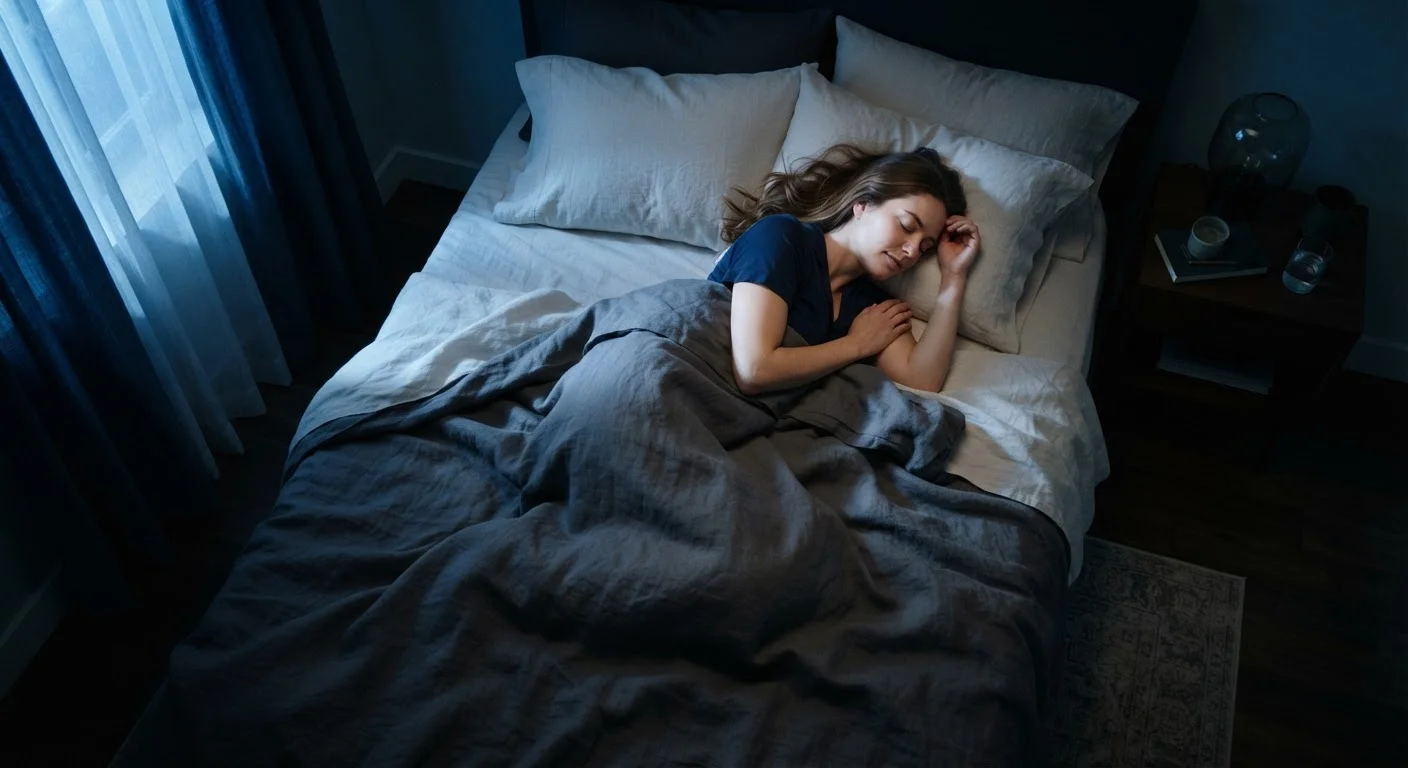
What Your Body Is Actually Doing While You Sleep
Exercise creates microscopic damage in muscle fibers - and that damage is the signal your body needs to rebuild stronger. But the rebuilding happens after you leave the gym, primarily during sleep. During the deeper stages of sleep, the pituitary gland releases growth hormone, which drives the repair and synthesis of muscle protein. This is not a minor background process; it is one of the body's primary repair windows.
Slow-wave sleep - the deepest non-REM stage - is when this hormone release peaks. Interrupt that stage repeatedly, whether through a noisy environment, irregular sleep timing, or simply not sleeping long enough, and the hormonal cascade that supports recovery becomes less effective. REM sleep also plays a role, supporting nervous system recovery and the consolidation of motor patterns learned during training.
“Sleep is the greatest legal performance-enhancing drug that most people are probably neglecting. The shorter your sleep, the shorter your life.”
— Matthew Walker, Professor of Neuroscience and Psychology, University of California, Berkeley, and author on sleep science
How Sleep Deprivation Undermines Fitness Progress
When sleep is consistently cut short, the body shifts into a state of physiological stress. Cortisol - the body's primary stress hormone - rises. Elevated cortisol promotes the breakdown of muscle protein rather than its synthesis, directly working against the adaptations you are training for. At the same time, disrupted sleep impairs insulin sensitivity, making it harder for the body to efficiently use carbohydrates for energy or recovery.
The effects go beyond muscle and metabolism. Sleep-deprived athletes show measurable declines in reaction time, coordination, and decision-making - all of which increase the risk of poor movement mechanics and injury. Motivation and perceived effort also shift: workouts that feel manageable after a good night's rest can feel overwhelming after several nights of poor sleep.
These are not abstract concerns. See our overview of core training principles for how recovery fits into the broader framework of any effective fitness program - it is listed alongside overload and consistency for good reason.
7-9 hrs
Recommended nightly sleep for adults
According to the American Academy of Sleep Medicine and Sleep Research Society consensus guidelines for adult health.
~70%
Of daily growth hormone released during sleep
A substantial portion of human growth hormone secretion occurs during slow-wave sleep, per established endocrinology research.
Up to 30%
Reduction in physical performance after sleep loss
Research on sleep restriction has documented meaningful declines in strength, endurance, and reaction time in sleep-deprived individuals.
Practical Steps to Protect Your Sleep for Better Recovery
Improving sleep for fitness recovery does not require a complicated protocol. Prioritizing consistency in sleep and wake times - even on weekends - is among the most evidence-supported habits for supporting circadian rhythm and hormonal balance. The body's internal clock responds strongly to routine, and irregular timing can disrupt the sleep architecture that makes deep sleep accessible.
Creating a sleep environment that is cool, dark, and quiet supports the conditions for deeper sleep stages. Limiting caffeine in the afternoon and reducing bright screen exposure in the hour before bed are widely recommended, though individual responses vary.
Consistency Matters More Than Perfection
You do not need a perfectly optimized sleep environment to see recovery benefits. Going to bed and waking at roughly the same time each day - including weekends - is one of the single most impactful habits you can build. Even small improvements in sleep regularity can meaningfully support hormonal balance and physical recovery over time.
Nutrition and training timing also matter. Consuming protein before sleep has been studied as a way to support overnight muscle protein synthesis - though this remains an area of ongoing research and is not a substitute for overall dietary adequacy. Heavy training sessions very close to bedtime can raise core body temperature and alertness in some individuals, potentially delaying sleep onset.
This article is for general informational and educational purposes only and is not a substitute for professional medical or fitness advice. Consult a qualified healthcare provider before making changes to your health or exercise routine.
Frequently Asked Questions
Most health and sports science guidance points to 7-9 hours per night for the general adult population. Highly active individuals or those in intensive training phases may benefit from the higher end of that range. Individual needs vary, and persistent fatigue despite adequate hours warrants a conversation with a healthcare provider.
Weekend 'recovery sleep' can partially offset some of the effects of short-term sleep debt, but it does not fully reverse the hormonal disruptions or cognitive impairments that accumulate during the week. Consistent nightly sleep is more beneficial than irregular catch-up patterns for physical recovery.
Short naps of 20-30 minutes can reduce fatigue and improve alertness, and some research suggests they may support recovery when nighttime sleep is insufficient. However, naps are not a substitute for full nightly sleep cycles, which include the deep slow-wave stages most critical for tissue repair.
Chronically short sleep elevates cortisol, a stress hormone that promotes muscle protein breakdown and can interfere with gains from resistance training. Over time, insufficient sleep may slow recovery, increase soreness duration, and reduce the body's ability to build and maintain lean muscle mass.
Sleep plays a meaningful role in metabolic regulation. Poor sleep disrupts hormones like leptin and ghrelin that govern hunger and satiety, often increasing appetite. It also impairs insulin sensitivity and can shift the body toward burning less fat relative to muscle - undermining body composition goals.
The content on this site is for informational purposes only and is not a substitute for professional advice. Always consult a qualified professional for guidance specific to your situation.