

Summary
18 items · 20-40 minutes
Why a Pre-Start Checklist Matters
Starting a new exercise routine is one of the most positive steps you can take for your long-term health - but it's also one of the most commonly abandoned. Research consistently shows that a large proportion of people who begin a fitness program quit within the first few weeks. Often, the reason isn't lack of willpower. It's lack of preparation.
This checklist is designed to help you think through the key variables before you commit - so that your first week isn't also your last. Work through each group at your own pace. There are no right or wrong answers, only honest ones.
If you're also beginning to think about how nutrition supports your efforts, see our guide to nutrition basics for fitness beginners - it pairs directly with the planning work you'll do here.
Health & Medical Readiness
Goal Setting & Expectations
Choosing the Right Exercise Type
Scheduling, Recovery & Nutrition
Tools That Make the Process Easier
You don't need a gym membership or expensive equipment to start exercising. But having a few basic tools in place before day one removes common early friction points.
Fitness or activity tracker
Helps you monitor session frequency, duration, and basic activity patterns so you can track progress objectively.
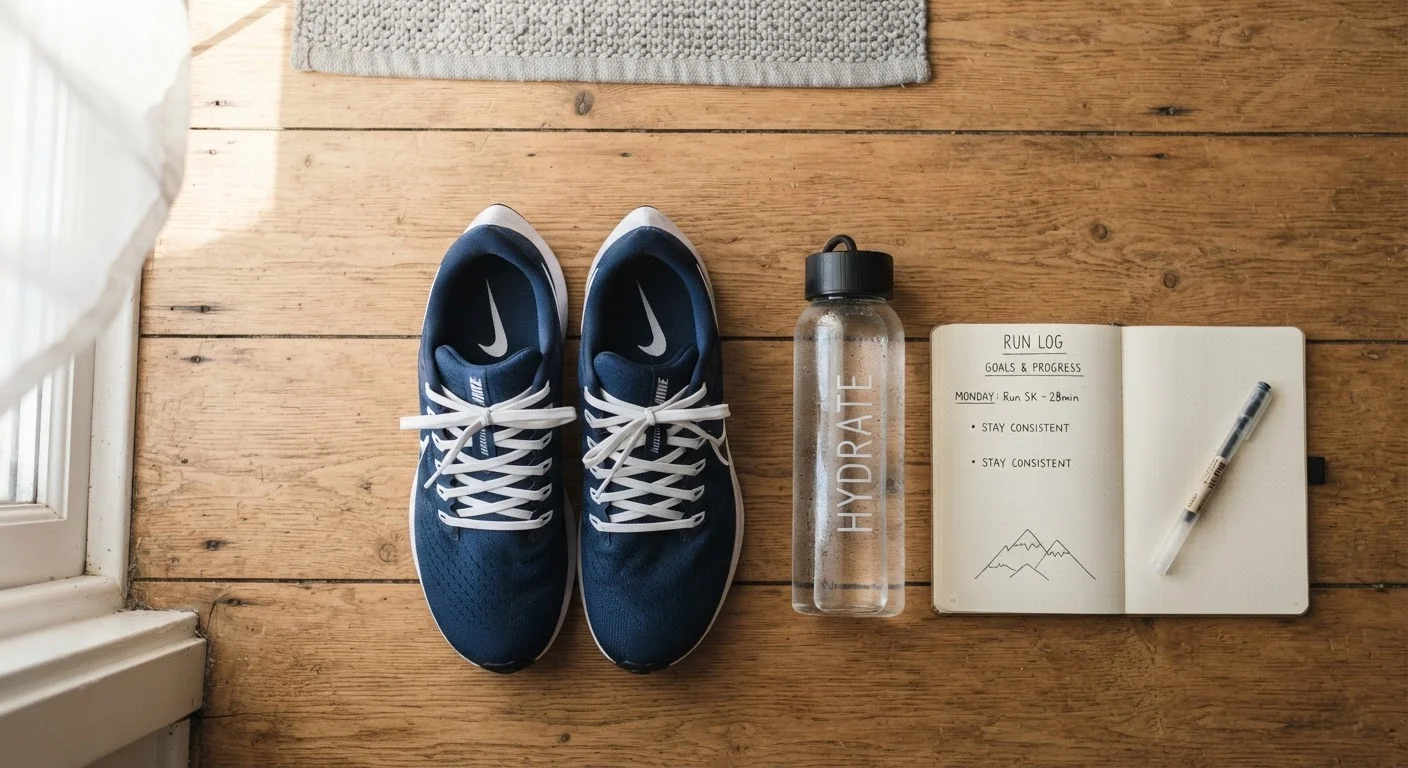
Supportive footwear appropriate to your activity
Proper footwear reduces impact stress on joints and lowers risk of lower-body injuries during exercise.
Water bottle (reusable)
Staying adequately hydrated before, during, and after sessions supports performance and recovery.
Weekly planner or calendar app
Scheduling workouts in advance significantly increases the likelihood that they happen consistently.
Resistance bands or bodyweight exercise guide
Allows effective strength work at home without equipment investment, useful for building a baseline before joining a gym.
Once you've worked through the checklist and gathered what you need, the next challenge is making the habit stick over time. Our article on building a sustainable workout habit covers practical strategies that help even reluctant movers stay consistent.
It's also worth considering the role that flexibility and mobility play in injury prevention. Stretching habits that support long-term joint health is a useful companion read once you've established your routine basics.
Don't Skip the Medical Check-In
It can be tempting to jump straight into a new program, especially when motivation is high. However, for individuals over 40, those with sedentary lifestyles, or anyone with a known health condition, a medical check-in before starting is genuinely important - not just a formality. Certain conditions and medications can significantly change how your body responds to exercise. A brief conversation with your provider can prevent a serious problem down the line.
This article is for general informational and educational purposes only. It is not a substitute for professional medical advice, diagnosis, or treatment. Always consult a qualified healthcare professional before beginning a new exercise program, particularly if you have any existing health conditions, injuries, or concerns.
The content on this site is for informational purposes only and is not a substitute for professional advice. Always consult a qualified professional for guidance specific to your situation.