

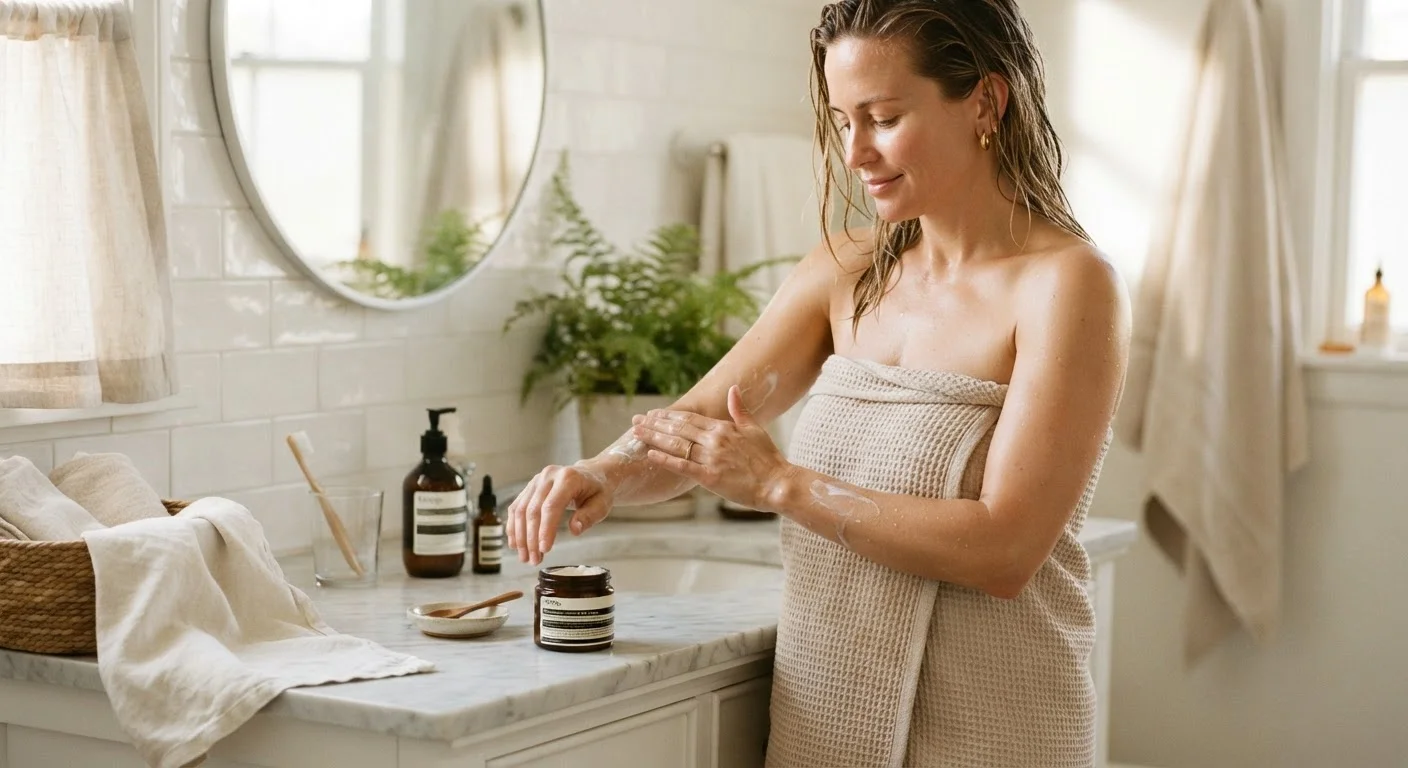
The Timing Window Most People Miss
Dermatologists consistently emphasize one habit above almost all others: moisturize within two to three minutes of stepping out of the shower or bath. Skin is still slightly damp during this window, and applying a moisturizer at this moment helps trap that surface water before it evaporates. Waiting even ten minutes can mean working against drier skin rather than locking in what's already there.
This principle is sometimes called the "soak and seal" method. It's especially useful for people dealing with conditions like eczema or chronically dry skin, though it benefits most skin types. The goal isn't to apply product to soaking-wet skin - patting gently with a towel first and leaving skin slightly dewy tends to give better results than either extreme.
Water temperature also plays an underappreciated role. Hot water strips the skin's natural lipid barrier more aggressively than lukewarm water. Cooler showers aren't always realistic, but finishing with a brief cool rinse can help minimize barrier disruption before you apply any product.
Choosing a Formula That Matches Your Skin's Actual Needs
Not all moisturizers work the same way, and understanding the difference helps you pick something that genuinely addresses your skin's condition. Broadly, moisturizing ingredients fall into three categories: humectants, emollients, and occlusives. For a deeper look at how these categories interact, see our article on hydration vs. moisture.
- Humectants (like glycerin, hyaluronic acid, and urea) draw water into the skin from the environment or deeper skin layers.
- Emollients (like shea butter, squalane, and fatty acids) fill in gaps between skin cells, improving smoothness and flexibility.
- Occlusives (like petrolatum, dimethicone, and beeswax) form a physical barrier on the skin's surface to slow water loss.
Most effective body moisturizers combine two or more of these. For very dry or rough skin - particularly on areas like elbows, knees, and heels - a thicker cream or ointment with occlusive properties tends to outperform light lotions. For normal or slightly dry skin, a lotion or fluid cream is often sufficient and more comfortable for daily use.
Exfoliation as a Foundation for Better Absorption
Dead skin cells accumulate on the skin's surface and can act as a barrier that reduces how well moisturizing ingredients penetrate. Regular, gentle exfoliation removes this buildup, allowing products to work more effectively. For most people, exfoliating the body one to two times per week is sufficient - overdoing it can compromise the skin barrier rather than support it.
Both chemical and physical exfoliation methods have their place in a body care routine. Chemical exfoliants, such as alpha-hydroxy acids (AHAs) like lactic acid, tend to be gentler and more even in their action. Physical scrubs can work well for thicker-skinned areas but may irritate sensitive skin. See our guide on chemical exfoliants vs. physical scrubs for a fuller breakdown of when each approach fits best.
The sequence matters too: exfoliate first, then moisturize. Applying a moisturizer to freshly exfoliated skin takes advantage of a cleaner, more receptive surface. And because barrier function is temporarily more vulnerable right after exfoliation, following up with a good moisturizer is especially important on those days.
Building a Habit That Actually Sticks
The most sophisticated moisturizing routine only works if it's followed consistently. Skin doesn't transform overnight - the visible and tactile improvements from regular moisturizing typically emerge over several weeks as the skin barrier strengthens and surface texture improves.
Pairing moisturizing with an existing daily habit, like brushing your teeth or a morning skincare routine, is one of the most reliable ways to maintain consistency. Keeping your body moisturizer in plain sight near your towel or on the bathroom counter reduces friction and acts as a natural reminder.
Seasonal changes also call for minor adjustments. Lower winter humidity and indoor heating both pull moisture from the skin more aggressively, which may mean switching to a richer formula during colder months. Our companion article on seasonal skincare adjustments covers how routines can adapt throughout the year.
This article is for general informational purposes only and does not constitute medical or dermatological advice. If you have a skin condition or persistent concerns, consult a qualified healthcare professional.
The content on this site is for informational purposes only and is not a substitute for professional advice. Always consult a qualified professional for guidance specific to your situation.