

Why Routines Matter More Than Products
The skincare industry thrives on novelty - new serums, trending ingredients, multi-step rituals. But dermatological evidence consistently points to a simpler truth: the regularity of your routine matters far more than the sophistication of individual products. Skin that receives basic, consistent care almost always fares better than skin subjected to sporadic, product-heavy sessions.
Think of a routine as the framework and products as the tools within it. A sturdy framework - morning cleanse, daily moisture, reliable sun protection - creates a stable baseline from which improvements are measurable. Without that structure, it's impossible to tell which product is helping or hurting. Building from the ground up means starting with that framework before adding anything else.
This guide covers both face and body, because body skin is frequently neglected yet responds to the same evidence-backed principles. Whether you're starting from zero or resetting after an overcomplicated routine, the same logic applies.
The Core Facial Skincare Framework
A functional facial routine has three non-negotiable steps: cleansing, moisturizing, and sun protection. Everything beyond these is optional and additive.
Step 1 - Cleanse
Use a gentle, pH-balanced cleanser morning and evening to remove oil, environmental residue, and dead skin cells. Avoid anything that leaves skin feeling tight or dry - that sensation signals barrier disruption, not cleanliness. Foaming cleansers suit oily skin; cream or oil-based formulas tend to work better for dry or sensitive types.
Step 2 - Moisturize
Moisturizer reinforces the skin barrier by reducing transepidermal water loss. Even oily skin benefits from lightweight hydration. Look for ingredients like glycerin, hyaluronic acid, or ceramides - these are widely studied and generally well-tolerated. Apply while skin is still slightly damp to improve absorption.
Step 3 - Sunscreen (AM only)
Broad-spectrum SPF is the single most evidence-supported step for preventing premature skin aging and reducing UV-related skin damage. Apply it as the final step of your morning routine, every day - including overcast days and time spent near windows.
When adding a retinoid to your routine, start with the lowest available concentration and apply just two to three nights per week before gradually increasing frequency.
Retinoids are among the most evidence-backed ingredients for skin texture and aging, but the most common reason people abandon them is initial irritation caused by starting too aggressively.
Apply SPF to the backs of your hands as part of your morning routine - not just your face.
The hands receive cumulative UV exposure throughout the day and are one of the first areas to show visible signs of photoaging, yet are almost universally overlooked in SPF application habits.
If your skin feels tight after cleansing, switch to a gentler formula - tightness signals disruption of the acid mantle, not effective cleansing.
Maintaining the skin's slightly acidic pH (around 4.5-5.5) is foundational to barrier health, and many conventional cleansers are more alkaline than is optimal.
Once these three steps feel habitual - typically after two to four weeks - you can consider layering in targeted treatments like a vitamin C serum or a retinoid, if appropriate for your skin concerns. Introduce only one new product at a time.
Building Your Body Care Routine
Body skin is thicker than facial skin but shares the same basic needs: gentle cleansing and consistent hydration. A minimal, effective body routine covers two core steps.
Gentle Body Cleansing
Heavily fragranced or antibacterial soaps can disrupt the skin's natural microbiome and strip protective oils, particularly in older adults or those with eczema-prone skin. A mild, fragrance-free body wash or bar soap is adequate for most people. Hot showers feel appealing but accelerate moisture loss - lukewarm water is a practical compromise.
Daily Body Moisturizing
Apply a body lotion or cream within a few minutes of toweling off, when the skin is still slightly damp. This timing significantly improves moisture retention. Focus on high-friction or particularly dry areas: shins, elbows, heels, and hands. Fragrance-free formulas with humectants (glycerin) and occlusives (shea butter, petrolatum) tend to be both effective and gentle.
90%
Of visible skin aging attributed to UV exposure
According to research published by the Skin Cancer Foundation, the majority of premature skin aging is caused by cumulative sun exposure rather than intrinsic aging.
4-12 weeks
Time for most skincare changes to become visible
Dermatologists generally advise consistent use for at least one full skin-turnover cycle before evaluating whether a product or routine change is working.
67%
Of adults report not moisturizing daily
Survey data from the American Academy of Dermatology indicates that daily moisturizing remains one of the most underutilized basic skin care habits among U.S. adults.
For a similarly structured approach to another daily care area, the beginner's guide to daily hair care applies the same step-by-step philosophy to hair health.
Matching Your Routine to Your Skin Type
Skin type shapes which product formulations work best, not whether the core steps apply - everyone needs them.
- Dry skin: Prioritize cream-based cleansers, richer moisturizers with ceramides, and avoid alcohol-heavy toners or astringents.
- Oily or acne-prone skin: Gel or foam cleansers, oil-free or non-comedogenic moisturizers, and niacinamide as a well-studied optional ingredient for sebum regulation.
- Sensitive skin: Fragrance-free everything. Patch-test all new products on a small area of inner arm before applying to the face. Introduce products individually, spaced at least a week apart.
- Combination skin: Use a gentle cleanser across the whole face; consider a lighter moisturizer on the T-zone and a slightly richer one on drier cheek areas.
If you're navigating the nuances of grooming routines more broadly - including facial hair - the men's grooming basics guide covers skin and beard care in a practical, accessible format.
Common Mistakes to Avoid
Starting a routine is straightforward; derailing it is easy too. A few of the most common errors:
- Over-cleansing: Washing the face more than twice daily - or using harsh formulas - strips the skin barrier and can paradoxically increase oiliness as the skin compensates.
- Layering too many products at once: Launching five new products simultaneously makes it impossible to identify what's causing a breakout or reaction.
- Skipping sunscreen on cloudy days: UV-A radiation, which contributes to skin aging, penetrates cloud cover and glass. SPF is an everyday step, not a summer one.
- Expecting overnight results: Most skincare changes - moisturizer improving barrier function, retinoids improving texture - take four to twelve weeks of consistent use to show measurable effect.
For a deeper look at these and other pitfalls, the guide to common skincare routine mistakes is a practical companion read.
Making Your Routine Sustainable
The best skin and body care routine is one you'll actually follow. Complexity is the primary enemy of consistency - research into habit formation suggests that reducing friction around a new behavior dramatically improves follow-through.
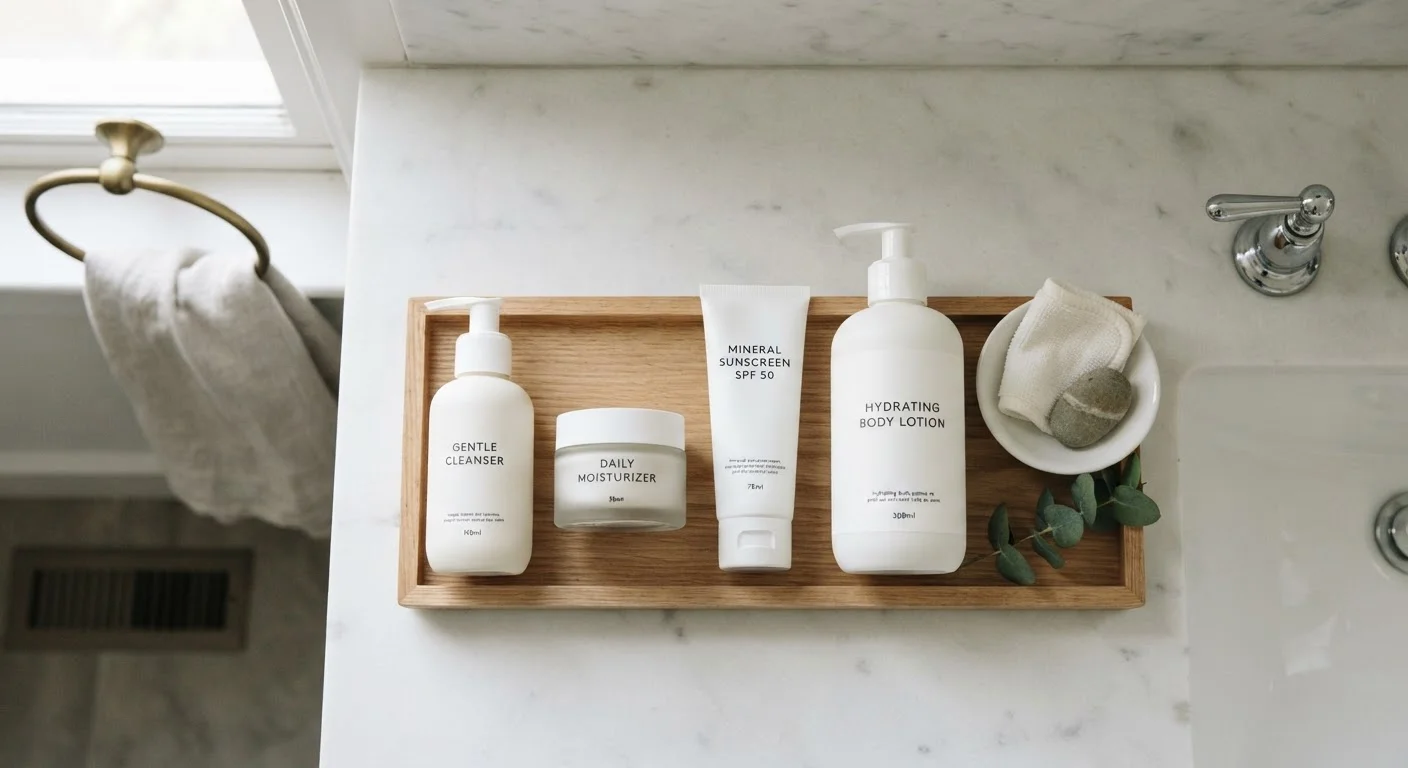
Keep products visible and accessible. A small morning lineup on the bathroom counter is easier to use than a drawer full of options requiring decisions. Pair your new routine with an existing daily habit - brushing teeth, making coffee - to anchor it in your schedule.
Budget is rarely the barrier it appears to be. Dermatologists note that affordable, fragrance-free formulas from pharmacy lines often perform comparably to prestige alternatives for basic hydration and barrier support. The ingredient list matters more than the price tag.
Reassess every two to three months. Skin changes with seasons, hormones, age, and environment. A routine that works in summer humidity may need adjusting in winter. If persistent concerns - acne, rosacea, hyperpigmentation - don't respond to basic care within a couple of months, a board-certified dermatologist can provide targeted, evidence-based guidance.
This article is for general informational and educational purposes only and is not a substitute for professional medical or dermatological advice. Consult a qualified healthcare provider for any persistent skin concerns or before making significant changes to your care routine.
The content on this site is for informational purposes only and is not a substitute for professional advice. Always consult a qualified professional for guidance specific to your situation.