

Start here
Why a Hair Care Routine Matters
Next
Know Your Hair Type Before You Start
Core practice
The Core Steps of a Daily Hair Care Routine
Level up
Weekly and Occasional Care
Protect your progress
Habits to Avoid From the Start
Why a Hair Care Routine Matters
Most people either over-complicate hair care or skip it almost entirely. The result in both cases is the same: hair that doesn't look or feel its best. A consistent routine doesn't require an extensive product collection or hours of effort - it requires understanding a few fundamentals and applying them regularly.
Hair is made of a protein called keratin. The visible strands are already dead by the time they emerge from the scalp, which means the damage you do accumulates and cannot be fully reversed from the outside. That's why prevention and gentle daily maintenance are far more effective than reactive treatments. Building good habits early protects hair from the compounding effects of neglect or mishandling. If you're also establishing other self-care foundations, our guide to building a skin and body care routine offers a similarly grounded starting point.
Know Your Hair Type Before You Start
No single routine works for everyone. Hair varies in texture (straight, wavy, curly, coily), thickness (fine, medium, coarse), and porosity - how readily the hair shaft absorbs and retains moisture. Your scalp type also matters: oily, dry, or balanced scalps each have different cleansing needs.
Porosity
A measure of how easily your hair absorbs and holds onto moisture. Low-porosity hair resists moisture; high-porosity hair absorbs it quickly but loses it just as fast.
Sebum
The natural oil produced by glands in your scalp. It helps lubricate and protect the hair shaft, but excess sebum can make hair look greasy.
Cuticle
The outermost layer of each hair strand, made of overlapping scales. A smooth, flat cuticle means shinier, stronger hair; a raised or damaged cuticle leads to frizz and breakage.
Keratin
The structural protein that hair is primarily made from. Heat, chemical treatments, and physical stress can degrade keratin over time.
Split ends
The fraying of a hair strand at its tip, caused by dryness, heat, or mechanical damage. Split ends cannot be repaired - they must be trimmed to prevent further damage up the shaft.
Before buying any product, spend a week observing your hair. How quickly does it feel greasy after washing? Does it feel dry and brittle or soft and elastic? Does it frizz in humidity or lay flat? These observations are your most reliable guide. If you have curly or coily hair, wash frequency and moisture-retention techniques deserve particular attention - our article on washing natural hair covers those considerations in depth.
The Core Steps of a Daily Hair Care Routine
A foundational routine has three pillars: cleansing, conditioning, and gentle handling. Daily doesn't necessarily mean washing every day - it means performing whatever steps your hair needs on any given day.
Cleansing
Shampooing removes oil, product buildup, and environmental debris from the scalp. How often you need to do this depends on your scalp's oil production, activity level, and hair texture. Overwashing strips the scalp's natural sebum (oil), which can paradoxically trigger more oil production. Apply shampoo primarily to the scalp, not the full length of the hair, and rinse thoroughly. For more on decoding what's actually in your shampoo, see our shampoo ingredient label guide.
Conditioning
Conditioner replenishes moisture and smooths the outer cuticle layer of each strand, reducing friction and breakage. Apply from mid-shaft to ends, leave on for the time recommended on the packaging, and rinse with cool water to help seal the cuticle. People with very fine or oily hair may prefer a lightweight or rinse-out formula.
Gentle Handling
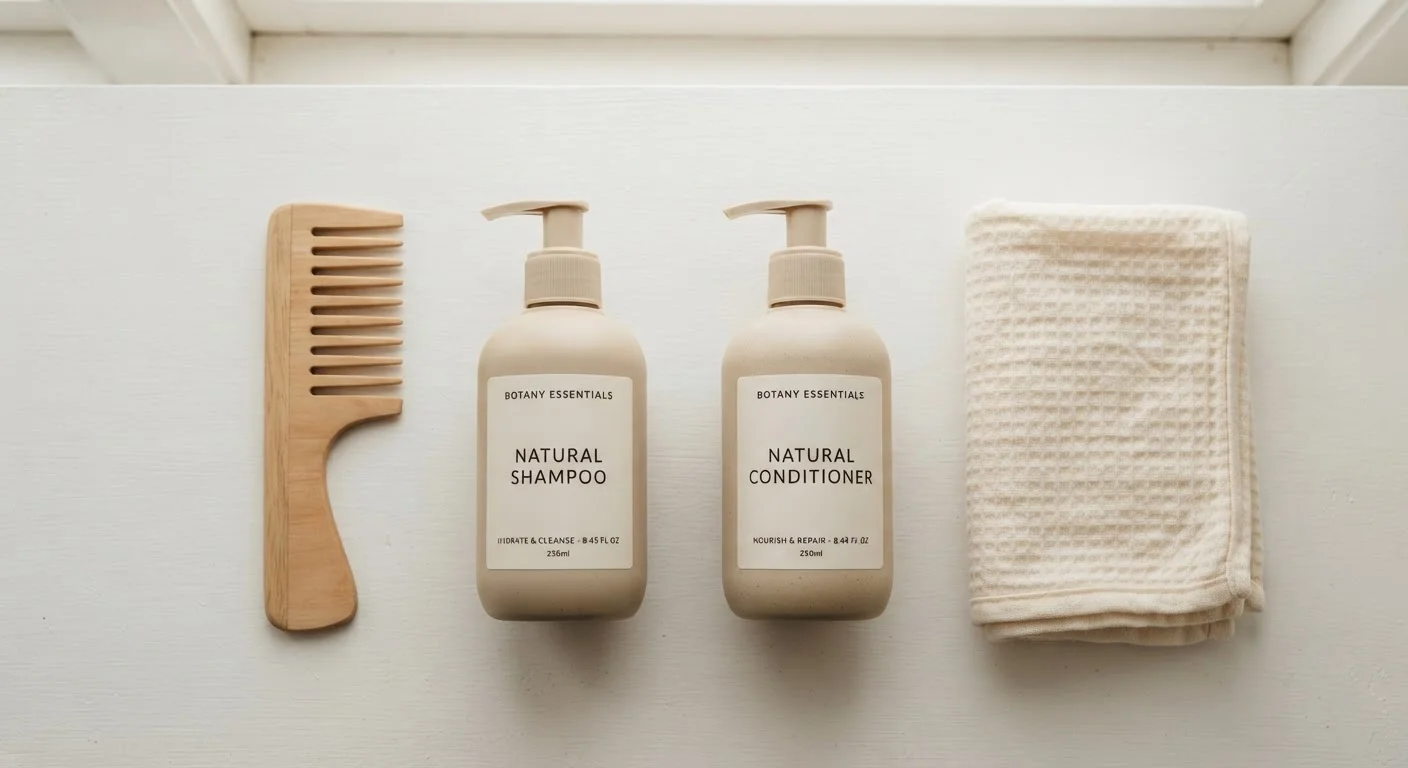
How you treat hair between washes is just as important as what you apply to it. Use a wide-tooth comb or fingers to detangle, starting at the ends and working toward the roots. Blot hair dry with a soft towel rather than rubbing vigorously. If you use heat tools, apply a heat protectant and keep temperature settings moderate.
Start Minimal, Then Build
Resist the urge to buy a full product lineup before you know what your hair actually needs. Begin with a shampoo suited to your scalp type and a basic conditioner, and use them consistently for three to four weeks. Only after observing how your hair responds should you consider adding anything else - such as a leave-in conditioner or styling product.
Weekly and Occasional Care
Beyond daily maintenance, a few periodic steps meaningfully improve hair health over time.
- Deep conditioning: A weekly or biweekly deep conditioner or hair mask adds concentrated moisture, particularly beneficial for dry, color-treated, or textured hair.
- Scalp care: A gentle scalp massage during shampooing can help support circulation. If you experience persistent flaking, itching, or irritation, consult a dermatologist - these may signal conditions like seborrheic dermatitis that benefit from targeted treatment.
- Trims: Regular trims (roughly every eight to twelve weeks for most people) remove split ends before they travel up the strand and cause further breakage.
These steps don't need to happen every day, but scheduling them prevents them from being skipped indefinitely.
Habits to Avoid From the Start
Some common grooming behaviors quietly work against the routine you're trying to build. Tight hairstyles worn daily put repeated mechanical stress on hair follicles. Aggressive towel-drying causes friction and breakage along the cuticle. Sleeping on rough cotton pillowcases creates tangles and surface damage - a satin or silk pillowcase is a simple swap with a meaningful payoff.
Product overload is another common beginner mistake. Layering too many products without fully removing them at wash time leads to buildup that dulls hair and can irritate the scalp. Start with two or three core products, understand how each one works, and add only when you have a specific, identified need. Our companion article on grooming habits that damage hair over time details additional patterns worth reconsidering. For men building grooming habits across hair, skin, and beard care simultaneously, men's grooming basics offers a practical parallel starting point.
This article is for general informational purposes only and does not constitute medical or dermatological advice. If you have concerns about hair loss, scalp conditions, or significant changes in hair health, consult a qualified healthcare provider or dermatologist.
Frequently Asked Questions
Wash frequency depends on your hair type and scalp. People with oily scalps or fine hair may need to cleanse every one to two days, while those with coarse, curly, or coily hair often do well washing once a week or less. Start with a moderate frequency and adjust based on how your scalp feels.
Generally, yes. Shampooing cleanses but also removes some of the hair's natural moisture, so following up with conditioner helps restore that balance. Focus conditioner on the mid-lengths and ends rather than the scalp to avoid buildup.
Porosity describes how well your hair absorbs and holds moisture. Low-porosity hair resists moisture absorption; high-porosity hair absorbs quickly but loses moisture just as fast. Knowing your porosity helps you choose products that actually work for your hair rather than sitting on top of it.
Wet hair is more elastic and vulnerable to breakage, so aggressive brushing when soaking wet is not advised. Using a wide-tooth comb or a detangling brush on damp (not dripping wet) hair, starting from the ends and working upward, significantly reduces damage.
Yes. Deficiencies in nutrients like iron, zinc, biotin, and protein are associated with hair shedding and reduced hair quality. A balanced diet that includes adequate protein and key micronutrients supports normal hair growth. Speak with a healthcare provider if you suspect a nutritional deficiency.
Hair grows slowly - roughly half an inch per month on average - so visible improvements in length and quality take time. You may notice a healthier scalp and less breakage within a few weeks of consistent, gentle care. Patience and consistency matter more than any single product.
The content on this site is for informational purposes only and is not a substitute for professional advice. Always consult a qualified professional for guidance specific to your situation.