

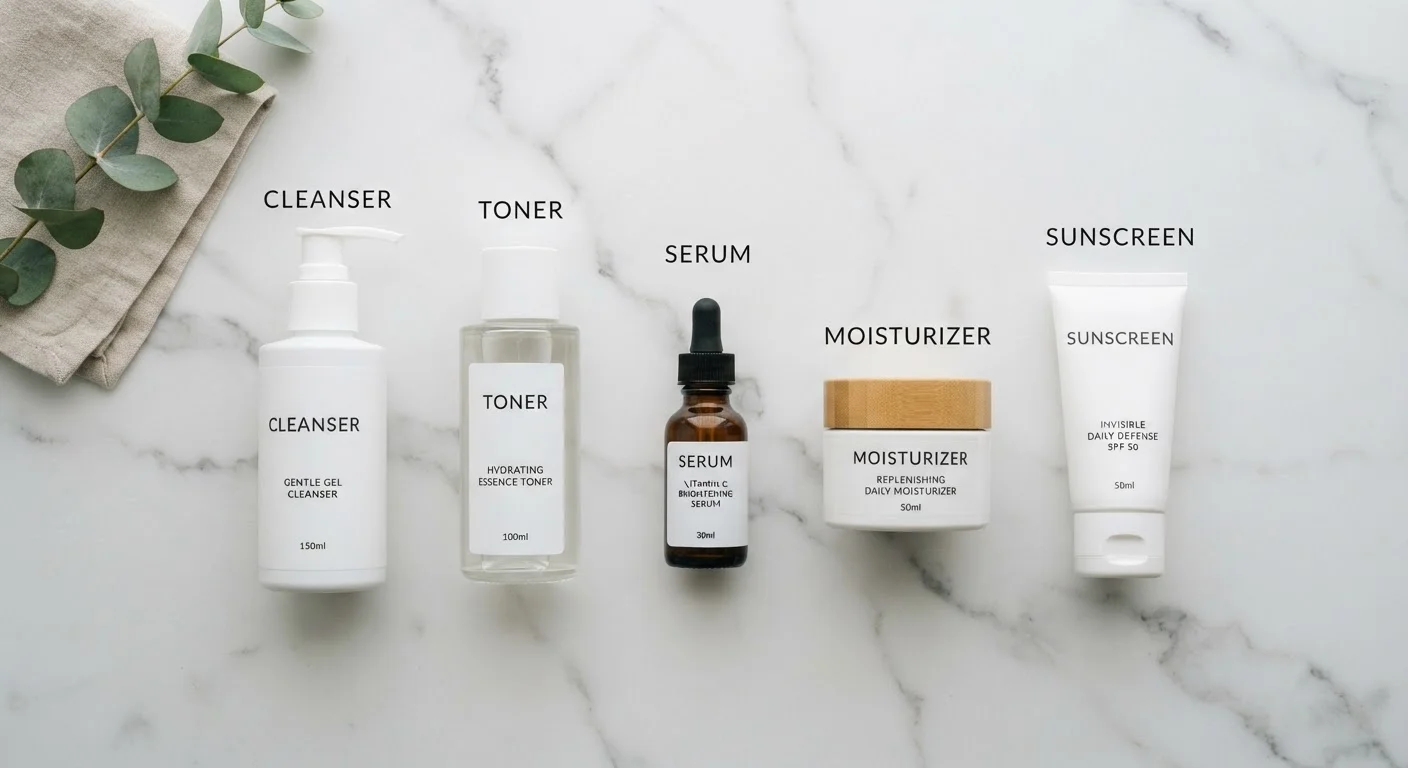
Why Order Matters in a Skincare Routine
Skincare layering isn't a marketing concept - it's grounded in how the skin absorbs different formulas. Products vary significantly in their molecular size, viscosity, and pH. A thick cream applied before a lightweight serum creates a physical barrier that prevents the serum from reaching the skin's surface effectively. Similarly, certain active ingredients need a specific pH range to function: vitamin C (ascorbic acid), for example, works best at a lower pH, meaning it should go on clean skin before anything that might alter that environment.
The working principle is simple: apply thinnest to thickest. Water-based formulas go first because they evaporate quickly and need direct contact with skin. Oil-based or occlusive products go last because they seal everything beneath them in place. Getting this sequence right means your products can do what they're formulated to do - rather than competing against each other.
If you're also navigating ingredient labels to understand what you're layering, reading a skincare ingredient list can help you decode what's actually in each product before you apply it.
What you will need
The Correct Layering Sequence, Step by Step
The steps below reflect the dermatologically recognized order for both morning and evening routines, with notes on where each routine diverges. Morning routines end with SPF; evening routines typically swap that slot for a richer treatment or sleeping mask. For a deeper look at how daytime and nighttime needs differ, see morning vs. evening skincare routines.
Gentle Facial Cleanser
Removes surface dirt, oil, and residual makeup to prepare skin for subsequent layers.
Toner or Essence
Rebalances skin pH and delivers lightweight hydration before serums are applied.
Targeted Serum
Delivers concentrated active ingredients - such as vitamin C, niacinamide, or hyaluronic acid - to address specific skin concerns.
Moisturizer
Seals in hydration and supports the skin's protective barrier after lighter layers.
Broad-Spectrum Sunscreen (SPF 30+)
Protects skin from UV damage; applied as the final step in any morning routine.
Eye Cream
Delivers targeted hydration or treatment to the delicate skin around the eyes, typically applied before moisturizer.
Cleanse First, Always
Begin every routine - morning or evening - with a gentle cleanser suited to your skin type. Cleansing removes oil, pollution, sweat, and product buildup that would otherwise block subsequent layers from absorbing properly. Use lukewarm water and rinse thoroughly. Pat (don't rub) skin dry with a clean towel.
Apply Toner or Essence (If Using One)
Toners and essences are water-based and go on immediately after cleansing, while skin is still slightly damp. They help rebalance pH and provide the first layer of hydration, creating a receptive surface for serums. Apply by pressing gently with your palms or a cotton pad - avoid dragging across skin.
Layer Serums Thinnest to Thickest
Serums are lightweight, concentrated formulas designed to deliver active ingredients deep into the skin. If you use more than one, apply the most watery consistency first and work toward thicker gels. Press a few drops gently into skin rather than rubbing. Allow 30-60 seconds before the next step.
Treat the Eye Area
If you use an eye cream, apply it after serums and before your main moisturizer. The skin around the eyes is thinner and more delicate than the rest of the face. Use your ring finger to gently tap - not rub - a small amount around the orbital bone. Avoid applying too close to the lash line.
Seal with Moisturizer
Moisturizer acts as a barrier-supporting layer that locks in the actives and hydration applied below it. Warm a pea- to dime-sized amount between your fingertips and press evenly across the face and neck. Thicker creams go here - not before - because they can block lighter serums from penetrating if applied first.
Finish with Sunscreen (Morning Only)
In the morning, sunscreen is the final, non-negotiable step. Apply a generous, even layer over your moisturizer - approximately a quarter teaspoon for the face alone. Do not mix SPF into your moisturizer, as this dilutes the protective film. Allow it to set for a minute before applying makeup, if worn.
Sunscreen Is Not Optional
Broad-spectrum SPF 30 or higher is considered a cornerstone of skin health by dermatologists. It should be the absolute last step in any morning routine - applied over moisturizer, never under it. Skipping or misplacing sunscreen in your routine undermines both protection and the effectiveness of any treatment products beneath it.
Common Sequencing Mistakes and How to Avoid Them
Even with the right products, small sequencing errors are easy to make - and they consistently undercut results. One of the most frequent mistakes is applying moisturizer before a serum, effectively blocking the active ingredients from reaching the skin. Another is applying sunscreen before moisturizer, which disrupts the protective film SPF products need to form evenly on the surface.
Rushing through steps is also a common issue. Applying each product on top of a still-wet previous layer can dilute formulas and reduce their efficacy. A brief pause - 30 to 60 seconds - between steps gives each layer time to begin absorbing.
Don't Mix Incompatible Actives
Certain active ingredients can irritate or neutralize each other when layered directly together. Retinoids and high-strength vitamin C, or retinoids and AHA/BHA exfoliants, are commonly cited combinations to approach cautiously. If you use multiple actives, consider alternating them morning and evening rather than stacking them in a single session. A dermatologist can help you design a safe layering plan.
Overloading a routine with too many products at once is another pitfall worth knowing about. If you're newer to building a routine, common missteps when starting a new skincare routine covers the most frequent errors and how to sidestep them. The goal is a routine that's consistent and correctly sequenced - not necessarily long or elaborate.
A Simple Routine Done Consistently Wins
Research consistently shows that consistency matters more than complexity in skincare. A three-step routine - cleanser, moisturizer, SPF - applied correctly every day will outperform a ten-step routine used sporadically or in the wrong order. Start simple, master the sequence, then add products one at a time if needed.
This article is for general informational purposes only and does not constitute medical or dermatological advice. Consult a qualified healthcare professional or board-certified dermatologist for guidance on your individual skin concerns or conditions.
The content on this site is for informational purposes only and is not a substitute for professional advice. Always consult a qualified professional for guidance specific to your situation.