

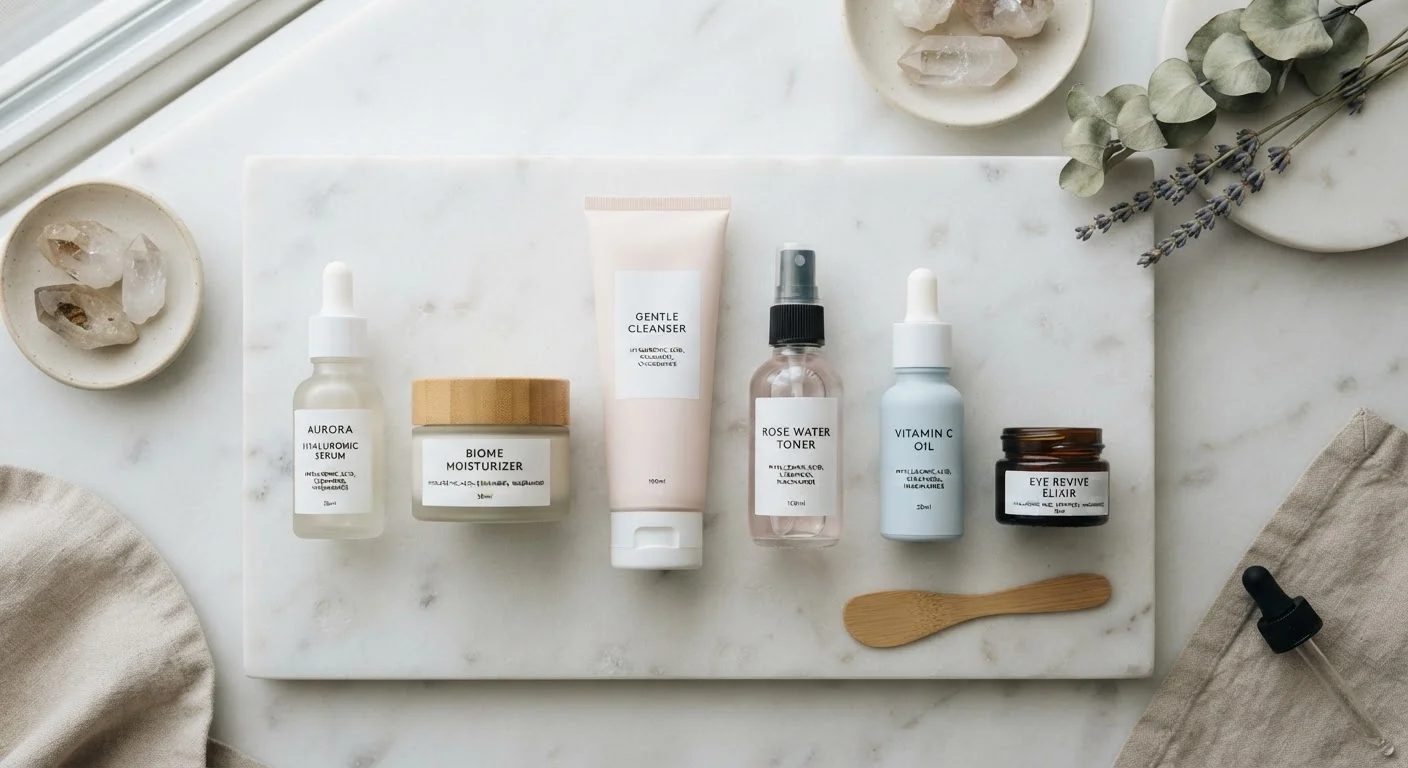
Why Skincare Myths Are So Hard to Shake
Skincare misinformation spreads fast - across social media, beauty tutorials, and well-meaning advice passed down through families. The problem is not just that these myths are wrong; it is that acting on them can lead to irritated skin, wasted money, or missed protection. Building an effective routine starts with understanding what the evidence actually supports.
This article addresses some of the most persistent myths in skin care and replaces them with what dermatological science and established research actually show. For a deeper look at the foundation of healthy skin, see the science behind your skin barrier.
Myth
Pores open and close depending on whether you use hot or cold water.
Fact
Pores do not have muscles and cannot open or close in response to temperature.
Pores are simply openings in the skin through which hair follicles and sebaceous glands reach the surface. They have no muscular structure and do not respond to steam or cold water by physically expanding or contracting. Hot water may temporarily make pores appear larger by softening the debris inside them, and cold water may cause mild tissue contraction - but neither changes actual pore size. Genetics, age, and sun damage are the main determinants of how prominent pores appear.
Myth
Natural or organic ingredients are always safer and gentler than synthetic ones.
Fact
Natural origin does not equal safe or non-irritating - many plant-derived ingredients cause reactions.
Poison ivy is natural. So is lemon juice, which can cause phototoxic burns when applied to skin exposed to sunlight. Essential oils, botanical extracts, and natural fragrances are among the most common causes of contact dermatitis documented in dermatology literature. Meanwhile, many synthetic ingredients - such as niacinamide or hyaluronic acid - have extensive safety profiles and are well tolerated across skin types. What matters is the ingredient's safety data, concentration, and formulation, not whether it came from a plant or a lab.
Myth
Drinking plenty of water gives your skin a hydrated, plump appearance.
Fact
Systemic hydration and skin surface hydration are largely independent processes.
Staying adequately hydrated is important for overall health, and severe dehydration can affect skin elasticity. However, drinking extra water beyond normal hydration needs does not measurably increase moisture in the outermost layer of skin - the stratum corneum - which is primarily maintained by the skin barrier itself, topical humectants, and environmental humidity. Topical moisturizers and ingredients like ceramides or glycerin are far more directly effective at supporting surface hydration than increasing water intake. For more on this distinction, see common myths about drinking water and hydration.
Myth
SPF in foundation or tinted moisturizer is enough to protect you from sun damage.
Fact
The amount of SPF-containing makeup typically applied is far too thin to deliver the labeled protection.
SPF ratings on products are determined using a standardized application amount of 2 milligrams per square centimeter of skin. Studies have shown that people apply makeup at a fraction of that quantity - often one-quarter or less - which dramatically reduces the effective SPF. Additionally, makeup is rarely reapplied throughout the day the way sunscreen should be. SPF in foundation can contribute to protection at the margins, but it should not be treated as a substitute for a dedicated, properly applied broad-spectrum sunscreen.
Myth
Expensive skincare products work better because of higher-quality ingredients.
Fact
Price is not a reliable indicator of a product's formulation quality or clinical effectiveness.
The cost of a skincare product reflects packaging, branding, marketing, and retail positioning as much as it reflects ingredient quality. Many active ingredients - retinol, niacinamide, glycolic acid, zinc-based sunscreens - are widely available across price points. What determines efficacy is the concentration of the active ingredient, its stability in the formula, and whether it is paired with compatible ingredients. A dermatologist-reviewed, modestly priced product with evidence-backed actives can outperform a luxury alternative with weaker formulation.
What These Corrections Mean for Your Routine
Stripping away these myths makes it easier to build a routine that is both simple and genuinely effective. A few principles hold up well across the evidence: consistent sun protection, gentle cleansing that does not strip the skin's natural moisture, and patience when introducing new products.
~50%
Adults using SPF makeup as sole sun protection
Surveys in dermatology literature suggest a substantial portion of adults rely on SPF-labeled cosmetics rather than dedicated sunscreen, despite evidence that application amounts are insufficient.
1 in 5
Americans who will develop skin cancer
According to the American Academy of Dermatology, approximately one in five Americans will develop skin cancer during their lifetime, underscoring the importance of consistent and adequate sun protection.
One of the most consequential steps you can take is applying a broad-spectrum sunscreen daily - not relying on SPF-labeled makeup. Research consistently supports this habit for long-term skin health. Our article on daily sunscreen use breaks down what the data actually shows.
If you are just getting started, it is also worth knowing the most common errors people make early on. Common missteps when starting a new skincare routine covers overloading products, skipping patch tests, and other pitfalls that derail routines before they begin.
This article is for general informational and educational purposes only and does not constitute medical advice. For concerns about your skin or specific conditions, consult a qualified dermatologist or healthcare professional.
The content on this site is for informational purposes only and is not a substitute for professional advice. Always consult a qualified professional for guidance specific to your situation.