

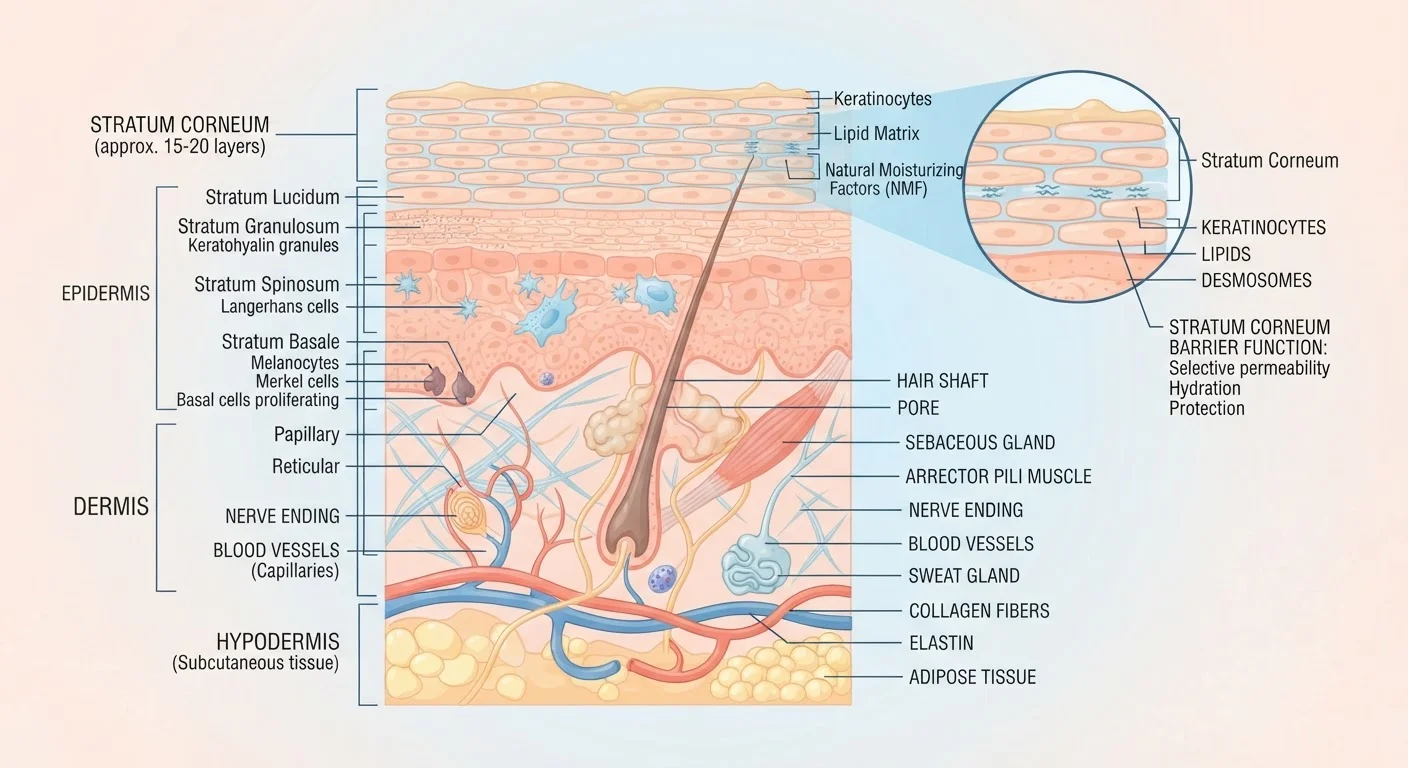
What the Skin Barrier Actually Is
Think of your skin barrier as a brick wall. The "bricks" are flattened dead skin cells called corneocytes, and the "mortar" between them is a carefully balanced mixture of lipids - primarily ceramides, cholesterol, and free fatty acids. Together, they form the stratum corneum, the outermost layer of the epidermis and the body's first line of defense against the outside world.
This structure does two critical jobs simultaneously: it prevents transepidermal water loss (TEWL), keeping your skin hydrated from within, and it stops external aggressors - microbes, allergens, pollution, and harsh chemicals - from penetrating deeper skin layers. When the ratio of lipids in that mortar is correct, the wall holds firm. When it isn't, gaps form.
Understanding this structure explains why so many common skincare problems - dryness, redness, stinging, breakouts - can trace back to a single root issue: a compromised barrier. For a broader look at how different skin types experience barrier function differently, see our plain-language guide to skin types.
What Damages the Skin Barrier
Barrier damage rarely happens all at once. It accumulates through repeated, everyday habits that individually seem harmless.
~20 µm
Thickness of the stratum corneum
Despite measuring only about 20 micrometers thick, the stratum corneum performs the majority of the skin's barrier function, according to dermatological literature.
50%
Ceramide share of skin's lipid matrix
Ceramides make up approximately 50% of the lipid content in the stratum corneum, making them the dominant structural component of barrier integrity.
30-40%
Adults reporting sensitive or reactive skin
Population surveys in dermatology research consistently estimate that roughly 30-40% of adults self-report sensitive skin, often linked to underlying barrier vulnerability.
- Harsh or over-used cleansers: Surfactants that strip natural oils disrupt the lipid layer. Foaming cleansers with high pH are frequent offenders.
- Over-exfoliation: Acids and physical scrubs remove protective cells faster than the skin can regenerate them, weakening structural integrity.
- Environmental stressors: Cold air, low humidity, UV radiation, and pollution all degrade lipid integrity and accelerate water loss.
- Hot water and long showers: Heat dissolves skin lipids, and prolonged exposure compounds the effect.
- Certain skin conditions: Eczema (atopic dermatitis) and psoriasis are characterized by underlying barrier dysfunction, not just surface dryness.
Many widely repeated skincare habits actually work against the barrier. Our article on skincare myths that persist despite the evidence breaks down several of the most common misconceptions.
How to Support and Rebuild the Barrier
The good news is that the skin barrier is dynamic - it can recover when given the right conditions. The approach doesn't require an elaborate routine; it requires a consistent, strategic one.
Less Is Often More for Barrier Recovery
When the skin barrier is already compromised, adding new active ingredients - acids, retinoids, vitamin C - can worsen irritation. Dermatologists commonly recommend temporarily simplifying a routine to a gentle cleanser and a barrier-supporting moisturizer, then reintroducing actives slowly once the skin has stabilized.
Cleanse gently. Choose a low-pH, surfactant-light cleanser and limit washing to once or twice daily. Lukewarm water is far less disruptive than hot.
Moisturize strategically. Apply a moisturizer while skin is still slightly damp to trap water before TEWL occurs. Look for formulas containing ceramides, glycerin, or niacinamide - ingredients with meaningful evidence behind barrier support. For more on technique and timing, our guide on body moisturizing habits that make a difference is worth reading.
Protect from UV daily. Sun exposure degrades the lipid matrix and accelerates barrier aging. This is one reason dermatologists consistently recommend daily SPF use. The evidence supporting this habit is substantial - see our piece on what research actually shows about daily sunscreen for detail.
If you're starting from scratch or rebuilding after damage, our comprehensive guide to building a skincare routine walks through the process step by step.
This article is for informational purposes only and is not a substitute for professional medical or dermatological advice. If you are experiencing persistent skin symptoms, consult a qualified healthcare provider.
Frequently Asked Questions
Common signs include persistent tightness, flaking, redness, stinging when applying products, and increased sensitivity. These symptoms suggest the barrier is not effectively retaining moisture or blocking irritants. A dermatologist can confirm whether barrier dysfunction is the cause.
Recovery time varies depending on the severity of damage and individual skin biology. Mild disruption may resolve in a few days with proper care, while more significant compromise can take several weeks. There are no guaranteed timelines, and a dermatologist can provide guidance for persistent issues.
Hydration supports overall health, but the skin barrier's moisture retention is primarily managed by its lipid structure, not fluid intake alone. Topical moisturizers and avoiding barrier-stripping habits have a more direct impact on the barrier's integrity.
Not necessarily. 'Natural' does not automatically mean gentle or barrier-safe - many botanical extracts and essential oils can be irritating or sensitizing. What matters most is how a product's ingredient profile affects your individual skin, regardless of how it is marketed.
Yes. Frequent use of physical scrubs or chemical exfoliants like acids removes the outer layers of skin cells and disrupts the lipid matrix. This can weaken the barrier, causing increased sensitivity and moisture loss. Dermatologists generally recommend limiting exfoliation to one to three times per week at most.
Ceramides, niacinamide, glycerin, hyaluronic acid, and fatty acids are commonly cited in dermatological literature as ingredients that help reinforce or support barrier function. Products containing these are often recommended for people with dry or sensitive skin.
The content on this site is for informational purposes only and is not a substitute for professional advice. Always consult a qualified professional for guidance specific to your situation.