

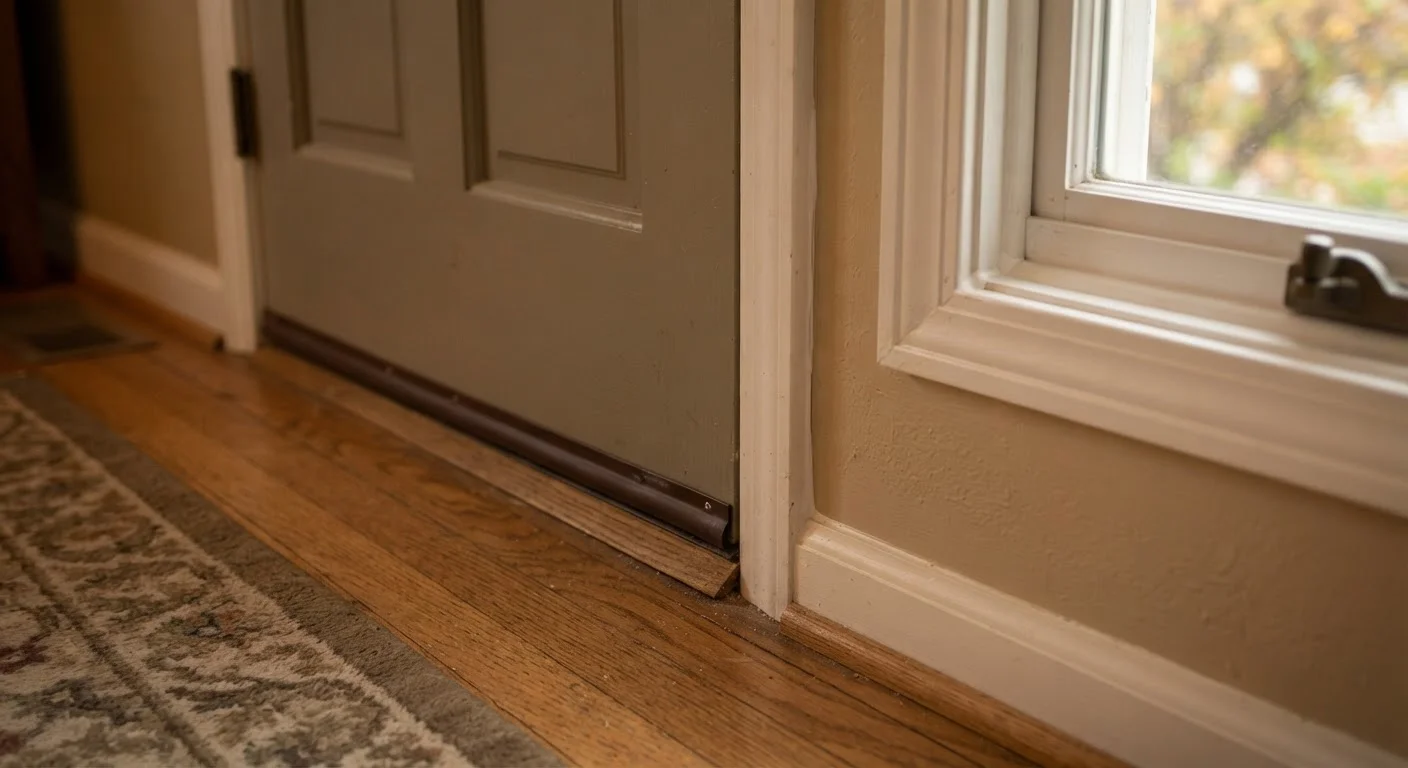
Option A
Caulking
The go-to sealant for stationary gaps and cracks.
Best for: Best for sealing fixed joints where two surfaces meet and don't move, such as around window frames, door casings, and baseboards.
Option B
Weatherstripping
The flexible seal built for moving parts.
Best for: Best for sealing movable gaps around doors and operable windows that open and close regularly.
What Each Material Does - and Why It Matters
Air leaks around doors and windows are one of the most common sources of energy loss in American homes. The U.S. Department of Energy notes that sealing these gaps is among the most cost-effective ways to improve comfort and reduce heating and cooling expenses. But choosing the right sealant matters just as much as sealing the gap at all.
Caulk is a flexible, paste-like compound that cures into a solid or semi-solid bead. It's applied with a caulk gun and forms a permanent bond between two stationary surfaces - think the joint where a window frame meets exterior siding, or where a door casing meets a wall. Once cured, caulk doesn't flex significantly, so it's not suited for joints that open and close.
Weatherstripping is a compressible material - available in foam tape, felt, vinyl, rubber, or metal forms - installed along the edges of movable parts like door jambs, door bottoms, and operable window sashes. It creates a seal when the door or window closes, then recovers its shape when opened. This resilience is what makes it the right choice for moving joints.
Using caulk where weatherstripping belongs - say, along a door stop - means the seal cracks within weeks. Using weatherstripping where caulk belongs leaves gaps that caulk would have bridged cleanly. Getting the right material in the right place is the whole game.
| Criterion | Caulking | Weatherstripping |
|---|---|---|
| Best location | Stationary joints and gaps | Moving parts - doors, operable windows |
| Material form | Paste applied by caulk gun | Foam, rubber, vinyl, felt, or metal strip |
| Flexibility under movement | Low - cracks if flexed repeatedly | High - compresses and recovers |
| Typical lifespan | 5-10 years (varies by product type) | 2-5 years depending on use and material |
| DIY difficulty | Low to moderate - requires clean surface prep | Low - many types use adhesive backing |
| Tools needed | Caulk gun, utility knife, painter's tape | Scissors or utility knife, sometimes a screwdriver |
| Works on door bottoms? | No | Yes - door sweeps and threshold seals |
Where to Apply Each One in Your Home
A room-by-room walk through your home will reveal which sealant is needed where. Here's a practical guide to the most common locations:
Caulk Applications
- Exterior window frames: Seal the joint between the window frame and the surrounding siding or trim.
- Door casings: Apply along the edge where the door casing meets the interior wall or exterior siding.
- Baseboards and crown molding: Fill the gap between trim and the wall where air can migrate from uninsulated cavities.
- Plumbing and electrical penetrations: Seal around pipes, wires, and conduits that pass through exterior walls.
Weatherstripping Applications
- Door jambs (top and sides): V-strip or foam tape compresses when the door closes, blocking the gap between door and frame.
- Door bottoms: A door sweep or threshold seal closes the gap at the floor - often the largest single air leak in a door assembly.
- Operable windows: Sliding or double-hung windows benefit from foam tape or V-strip along the sash rails and meeting rails.
For bathroom windows and other areas where moisture is a concern, our bathroom caulk and grout reference covers what failure looks like and when each material needs attention.
Silicone vs. Latex Caulk: A Quick Note
Not all caulk is the same. Silicone caulk offers superior moisture resistance and durability, making it a common choice for exterior applications and areas exposed to water. Latex (acrylic) caulk is easier to apply and paint over, making it popular for interior trim work. Always read the product label to confirm it's rated for your specific application - exterior, interior, paintable, or waterproof.
How to Know When Seals Have Failed
Seals don't last forever. Caulk becomes brittle, shrinks, or pulls away from surfaces - typically after five to ten years, though UV exposure and temperature cycling can accelerate this. Weatherstripping compresses over time and loses the ability to spring back, or it tears and detaches from the adhesive backing.
Common signs it's time to reseal:
- You can feel a noticeable draft near a closed door or window on a windy day.
- Daylight is visible around a door frame when the lights are off inside.
- Your heating or cooling system runs longer than usual without reaching the set temperature.
- The existing caulk bead is cracked, crumbling, or has pulled away from one surface.
- The weatherstripping looks flattened, torn, or no longer makes full contact when the door closes.
Plan a quick inspection each fall before heating season and each spring before you start running the air conditioning. Catching a failed seal early costs a few dollars in materials; ignoring it costs the difference in your monthly energy bill, month after month.
Up to 30%
Energy lost through air leaks in a typical home
The U.S. Department of Energy estimates that air sealing and insulation improvements can reduce heating and cooling costs by up to 30 percent in some homes.
2-5 years
Average lifespan of foam weatherstripping
Foam weatherstripping tends to compress and deteriorate faster than metal or rubber alternatives, particularly on high-use exterior doors.
The content on this site is for informational purposes only and is not a substitute for professional advice. Always consult a qualified professional for guidance specific to your situation.