

Option A
Free-Feeding
The always-available, low-intervention approach.
Best for: Best for healthy adult dogs with naturally self-regulated appetites and owners with unpredictable daily schedules.
Option B
Scheduled Meals
The structured, portion-controlled feeding method.
Best for: Best for dogs prone to overeating, multi-dog households, puppies, seniors, and owners focused on digestive and weight management.
What Each Feeding Method Actually Means
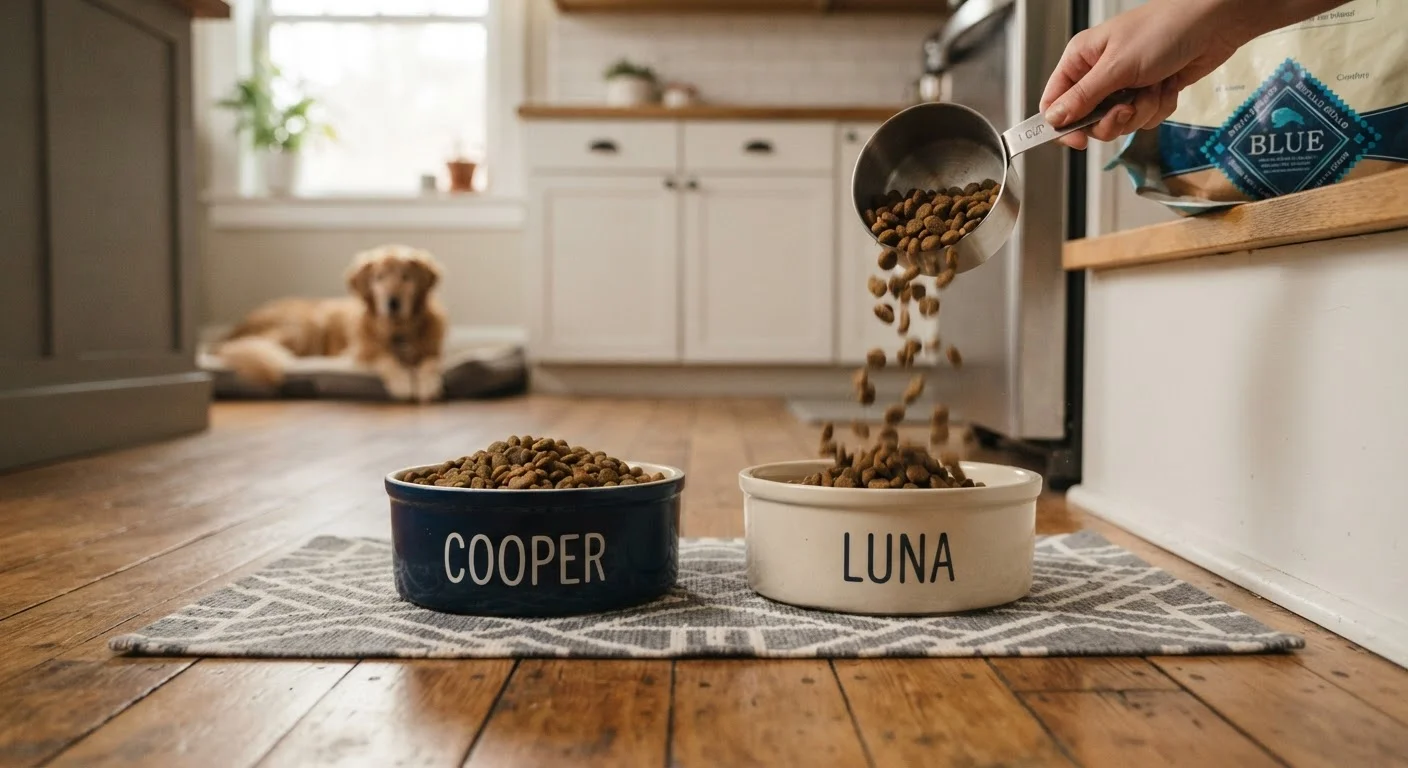
Free-feeding means filling your dog's bowl with a day's worth of dry kibble and leaving it accessible at all times. Your dog eats whenever they choose. Scheduled meals means measuring a specific portion and offering it only during defined windows - typically twice a day for most adult dogs - then removing the bowl whether or not it's finished.
These aren't just logistical differences. They shape how your dog relates to food, how you track their health, and how predictable their daily life feels. For a deeper look at why daily predictability matters to dogs, see why pets thrive on routine.
| Criterion | Free-Feeding | Scheduled Meals |
|---|---|---|
| Portion control | Difficult to track accurately | Precise and measurable |
| Weight management | Higher risk of overeating | Easier to manage calories |
| Appetite monitoring | Hard to detect changes | Changes noticed quickly |
| Suitable for puppies | Generally not recommended | Strongly recommended |
| Multi-dog households | Problematic - hard to supervise | Manageable with supervision |
| Wet food compatibility | Not suitable - spoils quickly | Fully compatible |
| Routine reinforcement | Minimal structure | Strong daily anchor |
| Owner flexibility | High - no set schedule needed | Requires consistent timing |
The Case for Scheduled Meals
Veterinary nutrition guidance broadly favors scheduled feeding for several practical reasons. When you offer measured portions at set times, you know exactly how much your dog ate - and you'll notice immediately if they skip a meal, which can be an early sign of illness or stress.
Weight management is simpler because you control the calorie intake precisely. Obesity is one of the most common preventable health problems in dogs, and scheduled meals are a straightforward tool against it. Puppies especially benefit: growing dogs need age-appropriate portions spaced throughout the day to support healthy development, and free access to food can lead to irregular energy spikes or digestive upset.
There's a behavioral dimension too. Mealtimes become anchors in a dog's day, reinforcing the kind of structured routine that supports calmer behavior. If that routine is ever disrupted - by travel, a new work schedule, or a household change - understanding the effects ahead of time helps. What happens when a pet's routine is disrupted covers exactly that. For those starting fresh, building a daily schedule for a new dog offers a practical framework.
~59%
U.S. dogs estimated overweight or obese
According to the Association for Pet Obesity Prevention's research, well over half of American dogs are classified as overweight or obese, making calorie management a central veterinary concern.
2x/day
Typical veterinary meal frequency recommendation for adult dogs
Most veterinary nutrition guidelines suggest healthy adult dogs do well with two measured meals per day, supporting stable energy and easier intake monitoring.
When Free-Feeding May Work - and Its Real Limits
Free-feeding has genuine appeal for owners with irregular schedules. It removes the pressure of being home at a specific time and can reduce anxiety in dogs that become frantic around mealtimes. For a small subset of adult dogs - those who genuinely self-regulate, maintain a healthy weight without fluctuation, and eat only dry kibble - leaving a measured daily allotment out may be manageable.
The critical word there is measured. Simply topping off a bowl whenever it looks low is free-feeding at its most problematic: you lose all track of intake. Wet food should never be left out for extended periods due to spoilage and bacterial growth. And in multi-dog homes, free-feeding makes it nearly impossible to know which dog ate how much, which can mask health issues or lead to one dog consuming another's portion.
It's also worth noting that many dogs are not natural self-regulators. Breeds with strong food motivation - Labrador Retrievers are a commonly cited example in veterinary literature - tend to eat whatever is available, making free-feeding a direct route to overconsumption. If you're sorting through common assumptions about feeding frequency in general, common myths about feeding pets once a day is a useful companion read.
Making the Right Choice for Your Dog
No single feeding method suits every dog. The decision should factor in your dog's age, breed tendencies, weight history, any existing health conditions, and your own household routine. A veterinarian or board-certified veterinary nutritionist is the best resource for tailoring a feeding plan - particularly for dogs with medical needs, puppies, pregnant or nursing dogs, or seniors.
What's clear from veterinary guidance is that portion control and appetite awareness matter regardless of method. If you choose free-feeding, weigh out the day's allotment in the morning rather than estimating by eye. If you choose scheduled meals, stick to consistent times and note any changes in eating behavior. Both approaches require active attention - the difference is in how much structure you build into that attention. For a broader view of your dog's overall care, Pet Health & Care offers practical guidance across all aspects of keeping your dog healthy.
This article is for general informational purposes only and is not a substitute for personalized veterinary advice. Always consult a licensed veterinarian regarding your individual dog's nutritional needs and feeding plan.
The content on this site is for informational purposes only and is not a substitute for professional advice. Always consult a qualified professional for guidance specific to your situation.