

Why Shedding Happens - and When It Becomes a Problem
Shedding is a completely normal biological process for most dogs and cats. Hair follicles cycle through growth, rest, and release phases continuously, and factors like daylight hours, temperature shifts, and hormonal changes all influence how much fur your pet drops at any given time. Breeds with dense double coats - think Siberian Huskies or Maine Coon cats - shed far more than short-coated animals, but virtually every fur-bearing pet sheds to some degree.
Where shedding crosses into a concern is when you notice sudden increases paired with bald patches, inflamed skin, excessive scratching, or changes in your pet's energy or appetite. These can point to underlying issues such as allergies, thyroid imbalances, parasites, or nutritional deficiencies. If you're seeing those warning signs, skip the grooming tutorials and head straight to your veterinarian for a proper evaluation. This article is focused on normal shedding management for otherwise healthy pets.
For a broader look at pet health and care basics, including when symptoms warrant professional attention, the resources there can help you build a more complete picture of your animal's wellbeing.
Brushing: The Foundation of Any Shedding Routine
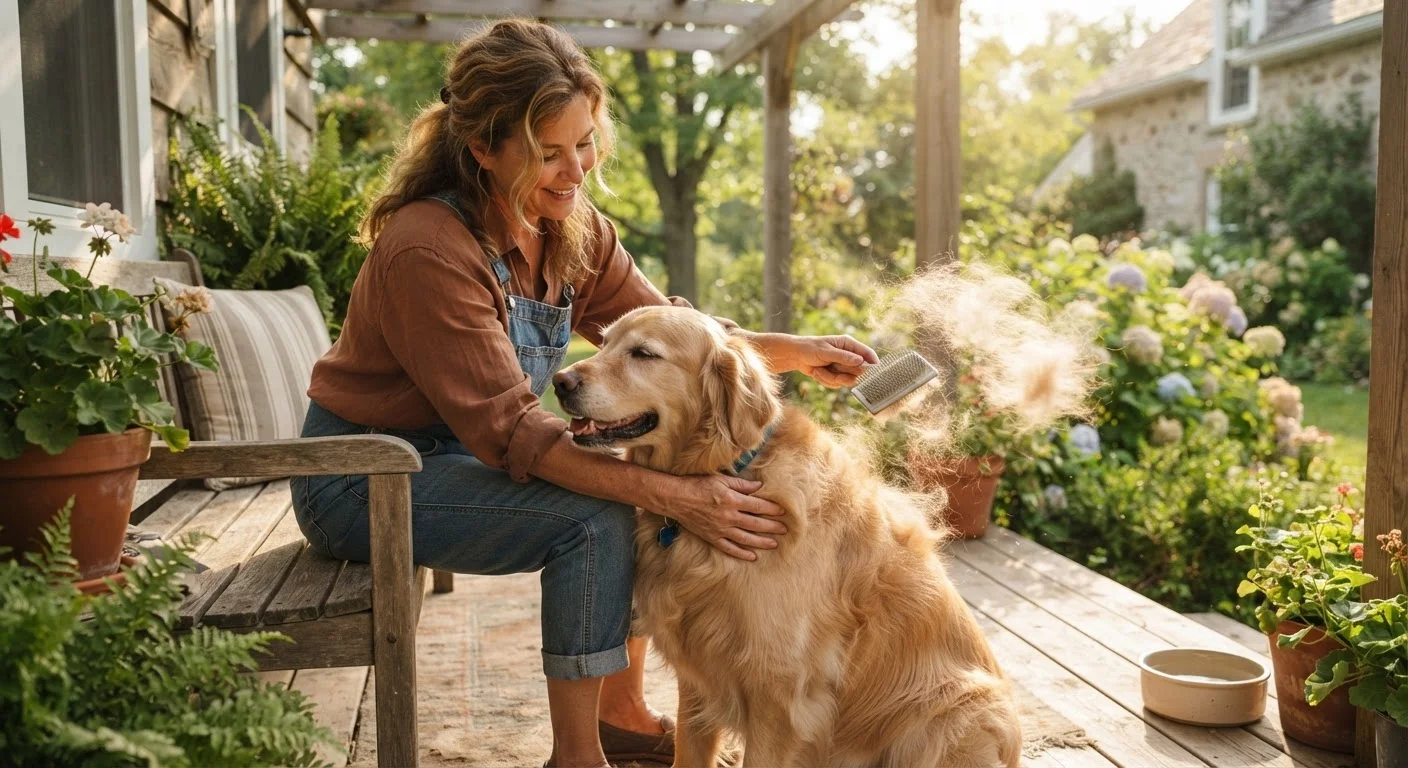
Regular brushing is the single most impactful habit you can build. It removes loose, dead hair before it ends up on your couch, stimulates healthy skin circulation, and distributes natural oils along the coat shaft - all of which support a healthier, less fragile coat overall.
Fitting grooming into a packed schedule is easier when it's part of a broader routine. The Daily Pet Routine Checklist for Busy Households pairs grooming with feeding, exercise, and enrichment tasks so nothing gets skipped on hectic days.
Bathing, Diet, and the Details That Add Up
Bathing plays a supporting role in shedding management, but frequency matters enormously. Over-bathing - more than once every few weeks for most dogs - strips the skin's natural oils, which can leave the coat brittle and prone to breakage and excess shedding. Most dogs do well with a bath every four to six weeks; cats generally handle their own grooming and rarely need bathing unless directed by a vet.
When you do bathe your pet, use a gentle, pet-formulated shampoo, rinse thoroughly to prevent residue buildup, and follow with a thorough towel dry or low-heat blow dry. Trapped moisture near the skin can cause irritation that worsens shedding.
Nutrition is another lever most owners underestimate. Coats that look dull or feel brittle often reflect a diet lacking in omega-3 and omega-6 fatty acids. These compounds support the skin barrier and hair follicle health. Many commercial pet foods include them, but if your veterinarian recommends supplementation, they can guide you on appropriate options for your specific pet's size and health status - never add supplements without professional input first.
Grooming routines that serve your pet well share something in common with the habits explored in pet dental care: consistency beats intensity every time. A few minutes daily outperforms a marathon session once a month.
Seasonal Adjustments and Long-Term Coat Health
Shedding tends to peak in spring and fall as pets respond to changing light cycles and prepare their coats for warmer or cooler months. During these transitions, even pets that shed lightly year-round can leave behind noticeably more fur. Increasing brushing sessions to daily during these windows - and using a deshedding tool or undercoat rake if your pet tolerates it - can significantly reduce the volume that accumulates in your home.
Keeping your home environment comfortable also helps. Extremely dry indoor air, common in winter when heating runs constantly, can dry out your pet's skin and increase shedding. A humidifier in rooms where your pet spends most of their time can offer some relief, though consult your vet if skin dryness appears to be a recurring issue.
Consistency is what separates manageable shedding from an overwhelming fur situation. By pairing regular brushing with appropriate bathing, sound nutrition, and seasonal awareness, you create conditions where your pet's coat stays as healthy as possible - and your furniture stays appreciably cleaner. The Pet Health & Care hub offers additional guidance on building the kind of proactive habits that keep pets thriving long-term.
This article is intended for general informational purposes only and does not constitute veterinary advice. Always consult a qualified veterinarian for guidance specific to your pet's health and needs.
The content on this site is for informational purposes only and is not a substitute for professional advice. Always consult a qualified professional for guidance specific to your situation.