

Why Dental Care Is the Most Overlooked Pet Habit
Studies from veterinary organizations consistently place dental and periodontal disease among the most diagnosed conditions in adult dogs and cats - yet surveys suggest the vast majority of pet owners never brush their pet's teeth. It's an easy habit to overlook: unlike a missed meal or a skipped walk, declining oral health is invisible until it becomes a serious problem.
Plaque begins forming on tooth surfaces within hours of eating. Without regular removal, it mineralizes into tartar - a hardened deposit that irritates gum tissue, promotes bacterial growth, and, over time, can lead to pain, tooth loss, and infection. There is also growing veterinary interest in the relationship between chronic oral bacteria and systemic organ health, though research in this area is still developing.
For a broader picture of what dental disease actually involves - and what good preventive care looks like - see our companion article on dental health in dogs and cats.
Pair Brushing With a Positive Cue
Using a consistent phrase like 'teeth time' before each session helps your pet anticipate and accept the routine. Pairing the cue with a small reward afterward reinforces a positive association over time. This technique is the same principle behind everyday bonding interactions that build lasting trust.
What You'll Need Before You Start
Getting the right tools makes a real difference in how smoothly the introduction goes. The essentials are straightforward, and your veterinarian's office is always a good place to ask for guidance on what's appropriate for your specific pet.
What you will need
Pet-Safe Toothpaste
Cleans teeth and gums safely; formulated to be swallowed and available in pet-friendly flavors.
Soft-Bristled Pet Toothbrush
Reaches along the gumline to remove plaque without irritating sensitive gum tissue.
Finger Brush
A slip-on rubber brush that can be easier for beginners or pets new to brushing.
High-Value Treats
Used to reward cooperation and build a positive association with the brushing routine.
Never Use Human Toothpaste on Pets
Human toothpaste often contains fluoride and xylitol - both of which are toxic to dogs and cats. Always use a toothpaste specifically formulated for pets, which is safe to swallow and comes in flavors animals find palatable. If you're unsure which product to use, ask your veterinarian for a recommendation.
How to Build the Brushing Habit Step by Step
The key to success is patience. Pets that are introduced to brushing gradually - rather than having a toothbrush pushed in their mouth - tend to accept it with far less resistance. Follow these steps at your pet's pace, not a fixed calendar.
Let Your Pet Taste the Toothpaste First
Before introducing any brushing motion, put a small amount of pet toothpaste on your fingertip and let your pet lick it off. Do this for two or three days in a row. The goal is simple familiarity - your pet learns the toothpaste tastes good and poses no threat. Keep the mood light and end with praise or a treat.
Introduce Touch Around the Mouth
With toothpaste on your finger, gently rub along your pet's outer gum line without a brush. Use slow, circular motions and keep sessions to 15-20 seconds. Repeat daily for several days until your pet tolerates the touch calmly. This step is about desensitization, not cleaning - don't rush it.
Introduce the Toothbrush or Finger Brush
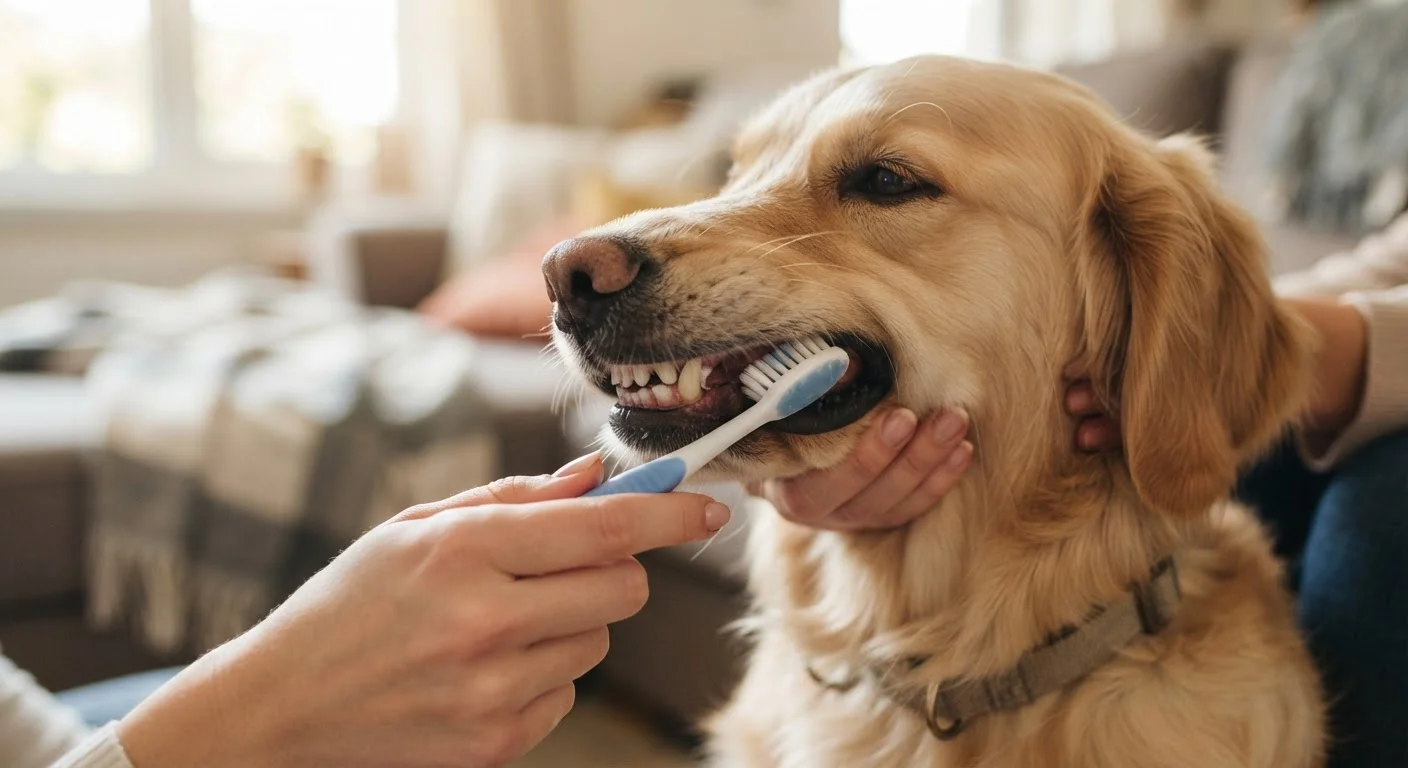
Apply a pea-sized amount of pet toothpaste to the brush. Let your pet sniff and lick the brush before it touches their teeth. Then, with lips gently lifted, brush the outer surfaces of the teeth in short, gentle strokes angled slightly toward the gumline. Focus on the upper back teeth first - these accumulate the most tartar. Aim for 30 seconds per side.
Build Up to a Full Session
Over one to two weeks, gradually extend brushing time until you can comfortably cover all reachable tooth surfaces - outer, inner (where tolerated), and chewing surfaces. Most pets need one to two minutes of brushing total. End every session with enthusiastic praise and a reward so your pet leaves the experience feeling good.
Establish a Fixed Daily Cue
Anchor the brushing habit to something you already do - right after your evening meal, for example, or as part of your pet's bedtime wind-down. A fixed trigger makes it easier to stay consistent. You can add it to a broader care checklist; the Daily Pet Routine Checklist for Busy Households is a useful reference for slotting dental care alongside feeding, exercise, and other hygiene tasks.
Schedule Regular Veterinary Dental Checkups
At-home brushing significantly reduces tartar buildup, but it doesn't eliminate the need for professional dental cleanings. Ask your veterinarian how often a professional cleaning is appropriate for your individual pet - this varies by species, age, breed, and health status. Your vet can also identify early signs of periodontal disease, tooth fractures, or oral pain that aren't visible at home.
Don't Force or Rush the Process
Forcing your pet's mouth open or pushing through visible stress can damage trust and make future brushing far harder. If your pet shows signs of significant distress - such as growling, biting, or cowering - pause and consult your veterinarian or a veterinary behaviorist before continuing.
Once brushing is part of your daily routine, it naturally fits alongside other hygiene habits. If you're still building out your overall pet care rhythm, the guide on setting up a daily routine for your first pet covers how to structure the full picture - from feeding to grooming to rest.
When Brushing Isn't Enough: Supplemental Options
Brushing is the most effective at-home dental tool available, but it works best as part of a broader oral health strategy. Veterinary-approved dental chews, water additives, and dental diets can provide supplemental plaque control - though none replaces brushing on their own. Look for products that carry the Veterinary Oral Health Council (VOHC) seal, which indicates the product has met standards for plaque or tartar reduction claims.
Avoid giving pets hard objects - such as antlers, hooves, or very hard nylon toys - that can fracture teeth. The general rule of thumb from veterinary dentists: if you wouldn't want to be hit on the knee with it, it's probably too hard for your pet's teeth.
Dental care is just one piece of a healthy daily routine. See how it fits into the full picture with our daily pet care checklist, which covers everything from exercise to coat care. For grooming habits that complement dental hygiene, grooming habits that keep shedding under control is a helpful next read.
This article is for general informational purposes only and does not constitute veterinary medical advice. Always consult a licensed veterinarian for guidance specific to your pet's health needs.
The content on this site is for informational purposes only and is not a substitute for professional advice. Always consult a qualified professional for guidance specific to your situation.