

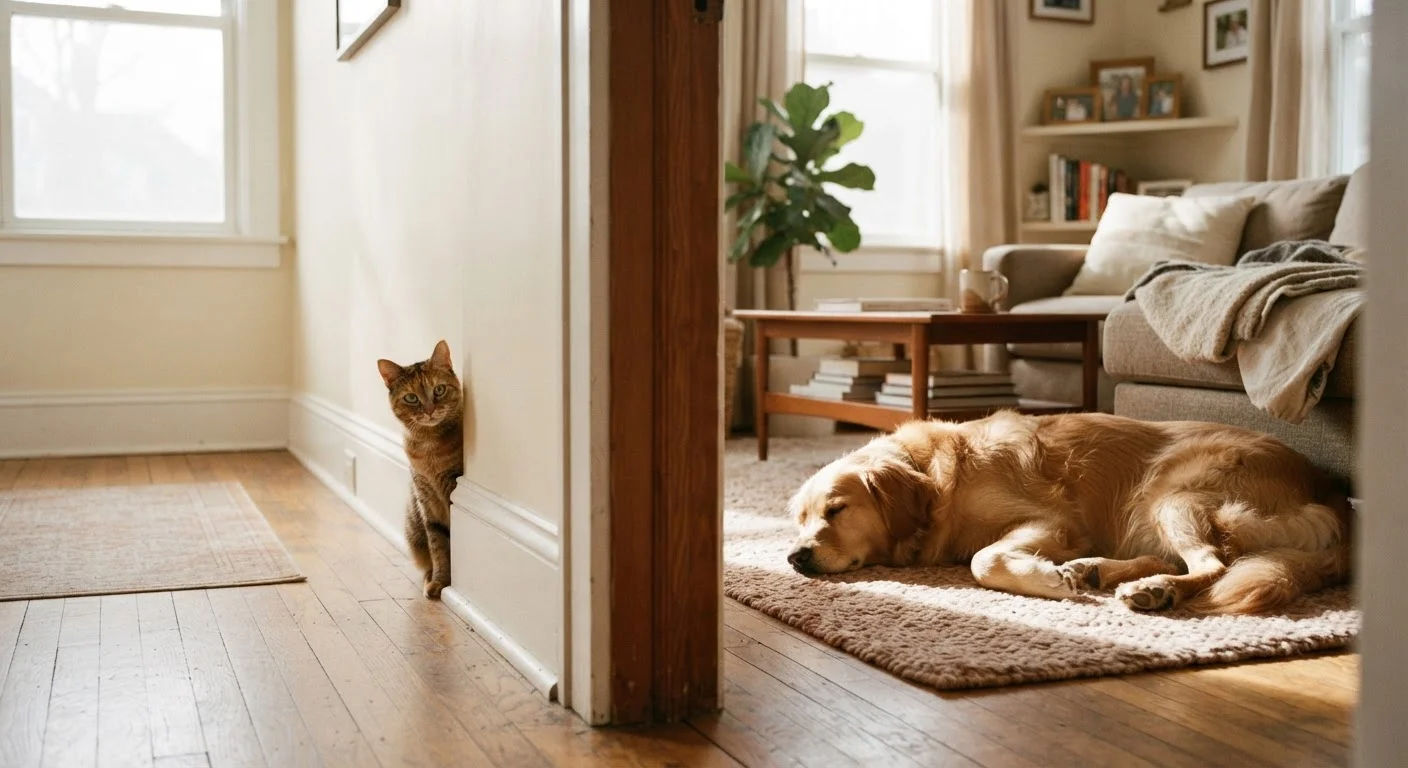
Why the Room-by-Room Method Works
When a new animal enters the home, the resident pet experiences a territorial shift that can trigger anxiety, aggression, or withdrawal. The room-by-room approach works because it controls the pace of that shift - letting each animal build familiarity gradually rather than forcing an immediate, high-stakes encounter.
Animals rely heavily on scent to interpret their world. Before they ever see each other, they can begin forming an impression through smell alone. This is why the method starts in separate spaces and progresses only when both animals show calm, relaxed behavior - not on a fixed calendar schedule.
It's also worth noting that disrupted routines amplify stress. If your resident pet's feeding, play, and rest schedule stays consistent throughout the process, they're far more likely to remain emotionally stable. For more on why routine matters, see what happens when a pet's routine gets disrupted.
Before you begin, make sure your new pet has had a health check. A vet visit can catch contagious illnesses or parasites that could affect your resident animal. Learn what that first appointment involves at your new pet's first vet visit.
What you will need
What You'll Need Before You Start
Gathering the right tools before bringing your new pet home prevents scrambling mid-introduction and keeps both animals safer.
Baby gate or exercise pen
Creates a visual barrier that allows animals to see and smell each other safely without direct contact.
Separate bedding or worn clothing items
Used to exchange scents between animals before any face-to-face introduction.
High-value treats
Used to create positive associations during controlled exposure sessions.
Pheromone diffuser (species-appropriate)
Can help reduce baseline anxiety in cats or dogs during the adjustment period.
Leash and harness (for dogs)
Allows you to manage a dog's movement and proximity during supervised face-to-face meetings.
Step-by-Step Introduction Process
Follow these steps in order and resist the urge to skip ahead. Progress is guided by each animal's body language, not by how many days have passed. Signs of readiness include loose, relaxed posture, normal eating, and non-fixated curiosity. Signs to slow down include hissing, growling, pacing, or refusal to eat.
Set Up a Separate Base Room for the New Pet
Before your new pet arrives, prepare a comfortable, self-contained space - ideally a bedroom or office - with their own food, water, litter or pads, bedding, and enrichment. This room is their safe zone for the first several days. Keep the door closed and do not allow the resident animal inside.
Exchange Scents Before Any Visual Contact
After 24-48 hours, swap a piece of bedding or a worn item from each animal into the other's space. Watch both animals' reactions without interfering. Sniffing with a relaxed body is a green light. Growling, hiding, or refusing to approach the item suggests more time is needed before progressing.
Feed Both Animals on Opposite Sides of a Closed Door
Place each animal's food bowl a few feet from the closed door, close enough that they can smell each other while eating. Over several days, gradually move the bowls closer to the door. If either animal refuses to eat or shows tension, move the bowls back and slow the pace.
Introduce a Visual Barrier Stage
Once both animals are eating calmly at the door, replace the closed door with a baby gate or cracked door secured with a door stop, allowing them to see and smell each other with a physical boundary still in place. Keep sessions short - five to ten minutes - then separate them again. Watch for soft, curious body language on both sides.
Conduct Supervised Face-to-Face Meetings in Neutral Space
Choose a room that neither animal has strongly claimed as territory. Keep dogs on a loose leash - taut leashes transfer anxiety. Allow natural sniffing, then calmly separate the animals before either shows stress. Repeat daily, gradually extending session length as both animals remain relaxed. Cats should always have an elevated escape route available.
Expand Access Gradually With Supervised Free Roaming
Once face-to-face meetings are consistently calm, begin allowing both animals to share a larger area under close supervision. Continue giving each animal their own retreat space - a room, crate, or elevated perch - that the other cannot access. Only move to unsupervised time together when you have observed multiple sessions with zero tension or conflict.
Once both animals are sharing space peacefully and without supervision-related tension, focus on nurturing those relationships over time. Small, consistent positive interactions matter most - explore how at building a stronger bond through everyday interactions.
This article is for general informational purposes only and does not constitute veterinary advice. If either animal shows signs of extreme stress, injury, or illness during introductions, consult a licensed veterinarian or certified animal behaviorist.
The content on this site is for informational purposes only and is not a substitute for professional advice. Always consult a qualified professional for guidance specific to your situation.