

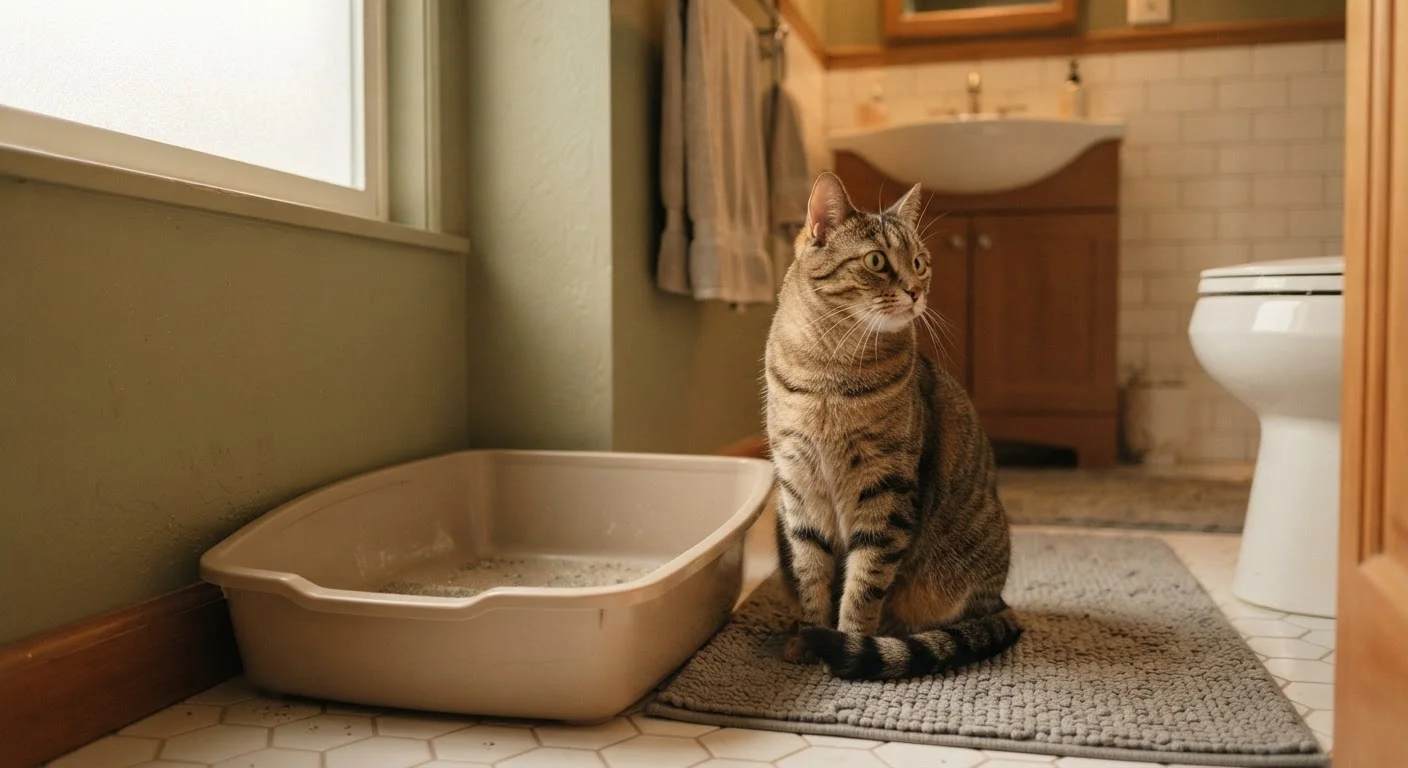
Why Litter Box Avoidance Deserves Serious Attention
When a cat stops using the litter box consistently, it tends to frustrate owners quickly. But the behavior is rarely random. Cats are instinctively motivated to bury their waste - it's a deeply ingrained survival behavior - so when they stop doing it in the designated spot, something has disrupted that drive.
The causes fall into three broad categories: medical, environmental, and social. Understanding which category applies in your situation is the essential first step. Misreading the cause often leads owners to make changes that don't address the real problem - or, worse, make things harder for the cat.
This is also worth noting: inappropriate elimination is one of the leading reasons cats are surrendered to shelters. Approaching the problem with curiosity rather than frustration makes a meaningful difference - for the cat and for your relationship with them. For a broader look at how misread feline behavior creates friction between cats and owners, see our piece on pet behavior myths many owners still believe.
Rule Out Medical Causes First
Sudden litter box avoidance - especially when paired with straining, blood in urine, frequent trips to the box, or crying - can signal a urinary blockage or infection requiring immediate veterinary attention. Never assume the cause is behavioral until a vet has cleared your cat. Delaying care for a blocked cat, in particular, can be life-threatening within hours.
The Most Common Mistakes - and What to Do Instead
Most cases of litter box avoidance trace back to a handful of correctable oversights. Understanding the specific error - and why it matters to a cat - makes it much easier to fix.
Assuming avoidance is spiteful behavior rather than a signal.
Why it happens: It's easy to interpret a cat eliminating on the floor right next to the box as deliberate rebellion, especially when the behavior appears sudden.
Scooping the litter box too infrequently.
Why it happens: Owners underestimate how sensitive cats' sense of smell is - roughly 14 times more powerful than a human's - and may find a box acceptable that a cat considers intolerable.
Placing the litter box in a loud, high-traffic, or hard-to-access location.
Why it happens: Owners often prioritize convenience - tucking boxes near appliances, in closets, or beside the washing machine - without considering how the cat experiences that space.
Using scented litters or strong cleaning products near the box.
Why it happens: Scented litters are marketed for odor control and seem like a solution, but the fragrance that seems mild to humans can be overwhelming to a cat.
Ignoring social stress in multi-cat households.
Why it happens: Tension between cats is often subtle - an intercepted glance, a blocked doorway - and owners may not realize one cat is being ambushed at or near the box.
Overlooking the box type - covered vs. uncovered, size, and entry height.
Why it happens: Owners often choose a box based on aesthetics or odor containment rather than what the cat actually finds comfortable.
Never Punish a Cat for Missing the Box
Scolding, startling, or physically correcting a cat for eliminating outside the litter box does not work and is likely to make things significantly worse. Cats do not connect punishment with a past action, so they simply learn to fear you or to hide when they need to go. Focus on identifying and removing the underlying cause instead.
One often-missed factor is the litter box count in homes with multiple cats. Even two cats who appear to coexist peacefully may have a subtle hierarchy that plays out at the litter box. Spreading boxes across separate rooms - rather than clustering them - gives each cat an uncontested option.
It's also worth considering what changed recently in the home. New furniture, a move, a new pet, a new baby, or even a change in your schedule can create enough stress to disrupt elimination habits. Cats are sensitive to environmental shifts in ways that aren't always obvious - a theme explored in our look at why cats knock things off surfaces, which touches on how feline behavior often reflects environmental and emotional states.
When to Call the Veterinarian
Any sudden change in litter box habits warrants a veterinary conversation, especially if accompanied by physical symptoms. Urinary tract infections, feline idiopathic cystitis, kidney disease, diabetes, hyperthyroidism, and arthritis (which makes entering or posturing in the box painful) are all medical causes that require diagnosis and treatment - not environmental fixes.
~10%
Cats affected by elimination issues
Veterinary behaviorists estimate that inappropriate elimination is among the most common behavioral complaints reported to veterinary professionals, affecting roughly 1 in 10 cats at some point.
1 + 1 rule
Recommended litter boxes per cat
The general guideline from feline veterinary organizations is one litter box per cat, plus one extra - meaning a two-cat home should have at least three boxes.
Even if your cat receives a clean bill of health, that information is valuable: it tells you the issue is behavioral or environmental, narrowing your focus considerably. Keep a short log of when and where accidents occur, how often, and whether there are any other changes in the cat's routine or health. This kind of pattern data helps a veterinarian or veterinary behaviorist pinpoint the cause more efficiently.
This article is for general informational purposes only and is not a substitute for professional veterinary advice. If your cat is showing signs of distress or physical symptoms, please consult a licensed veterinarian promptly.
The content on this site is for informational purposes only and is not a substitute for professional advice. Always consult a qualified professional for guidance specific to your situation.