

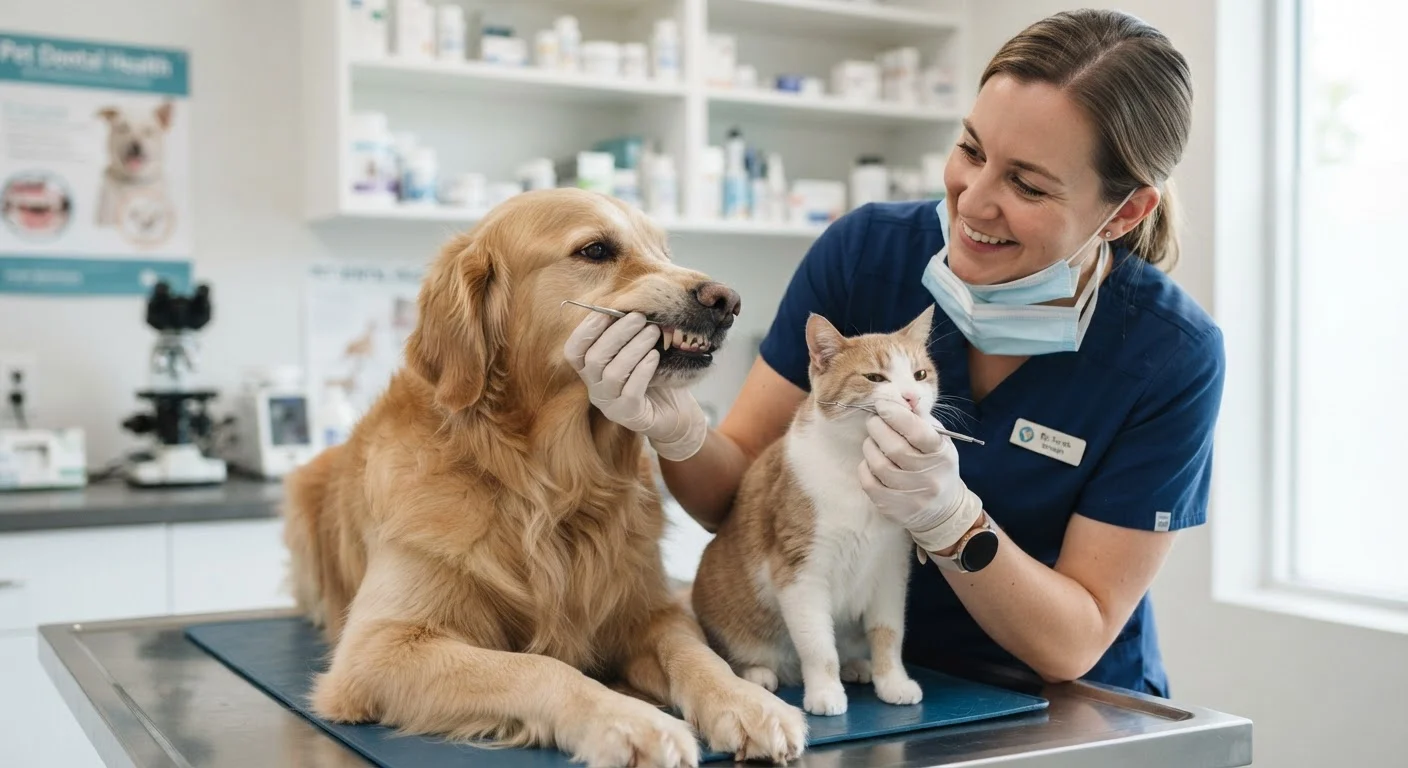
Why Pet Dental Health Gets Overlooked
Most pet owners are diligent about vaccines, parasite prevention, and annual checkups - yet dental care often falls off the list entirely. Part of the reason is visibility: a pet's mouth is easy to ignore when there's no obvious sign of trouble. But the absence of visible symptoms doesn't mean the absence of disease.
According to the American Veterinary Medical Association, periodontal disease is the most common clinical condition diagnosed in adult dogs and cats. By age three, most pets have some degree of dental disease. Left untreated, it doesn't just cause tooth loss - the bacteria involved can enter the bloodstream and are associated with damage to the heart, kidneys, and liver over time.
Understanding what good dental care actually involves - and what's commonly missed - is one of the most impactful things an owner can do. See our daily pet routine checklist for a broader look at where dental habits fit into everyday care.
Brush your pet's teeth daily using pet-safe toothpaste and a soft-bristled brush.
Daily brushing disrupts plaque before it hardens into tartar, which can only be removed by a veterinary professional. Even a 30-second brushing session provides meaningful benefit when done consistently. Starting slowly and building the habit over days or weeks makes it more likely to stick.
Schedule regular professional dental cleanings as recommended by your veterinarian.
At-home care reduces plaque accumulation but cannot remove tartar that has already formed, especially below the gumline. Professional cleanings address these areas and allow vets to identify early-stage disease through dental radiographs that aren't visible during a physical exam.
Look for the VOHC seal when choosing dental chews, treats, or rinses.
The Veterinary Oral Health Council evaluates products against standardized protocols for plaque and tartar reduction. Products without this seal may offer little to no measurable oral health benefit despite their marketing claims.
Start dental care habits when your pet is young to reduce resistance.
Puppies and kittens are generally more adaptable to new handling experiences, including mouth touching. Introducing brushing early normalizes the routine and reduces the likelihood of fear or avoidance as the animal matures.
Include a dental check in every routine veterinary visit.
Dental disease can progress quickly between annual exams, and early detection of gum disease or fractured teeth allows for less invasive treatment. Asking your vet to specifically assess your pet's teeth - not just note general condition - gives you a clearer picture.
What the Evidence Supports for At-Home Care
Not all dental products marketed for pets carry the same weight of evidence. Owners are often surprised to learn how few options are truly backed by veterinary research.
The Veterinary Oral Health Council (VOHC) awards its seal to products - including certain toothpastes, chews, and rinses - that meet established standards for plaque or tartar reduction in clinical trials. Checking for the VOHC seal is a practical way to evaluate whether a product is likely to offer genuine benefit rather than just marketing language.
That said, no chew, treat, or additive has been shown to equal the effectiveness of brushing. Think of supplementary products as support, not substitutes. And always use toothpaste specifically formulated for pets - human toothpaste contains ingredients, including fluoride and xylitol, that are toxic to animals.
Professional Cleanings: What Happens and Why They Matter
Many owners hesitate when a vet recommends a professional dental cleaning, often because it requires general anesthesia. That concern is understandable - but anesthesia-free dental cleanings performed without sedation, while widely marketed, are not considered an adequate substitute by veterinary dental specialists. Without anesthesia, it's not possible to safely clean below the gumline, where disease originates, or to take dental X-rays that reveal problems hidden beneath the surface.
Professional cleanings allow veterinarians to scale tartar from all tooth surfaces and under the gumline, probe for pockets of infection, take full-mouth radiographs (X-rays), extract teeth that are no longer viable, and apply fluoride or sealants as indicated. How often a pet needs a professional cleaning varies by individual factors including breed, diet, genetics, and home care habits. Your vet is the right person to advise on frequency. This fits naturally into the broader preventive picture covered in annual wellness exams.
Signs Your Pet May Already Have Dental Disease
Pets instinctively mask pain, so many owners don't notice a problem until it's advanced. Some signs worth discussing with your veterinarian include:
- Persistent bad breath (beyond normal "pet breath")
- Dropping food, chewing on one side, or reluctance to eat hard kibble
- Pawing at the mouth or face
- Visible tartar buildup - a yellow or brown crust near the gumline
- Red, swollen, or bleeding gums
- Drooling more than usual
- Loose or missing teeth
Cats are especially good at hiding discomfort, so behavioral changes like decreased appetite or increased irritability can sometimes signal oral pain. If you notice any of these signs, a veterinary evaluation is the right next step. This article is for general educational purposes and is not a substitute for professional veterinary guidance tailored to your pet.
Small Breeds and Flat-Faced Pets Face Higher Risk
Small dog breeds (such as Chihuahuas and Yorkshire Terriers) and brachycephalic animals - those with flat faces, like Bulldogs and Persian cats - often have crowded or misaligned teeth that accelerate plaque accumulation and periodontal disease. If your pet falls into one of these categories, ask your veterinarian whether more frequent dental monitoring is warranted. Genetics play a real role in oral health outcomes, independent of home care habits.
This article provides general information about pet dental health for educational purposes only. It is not a substitute for professional veterinary advice, diagnosis, or treatment. Always consult your veterinarian about your individual pet's oral health needs.
The content on this site is for informational purposes only and is not a substitute for professional advice. Always consult a qualified professional for guidance specific to your situation.