

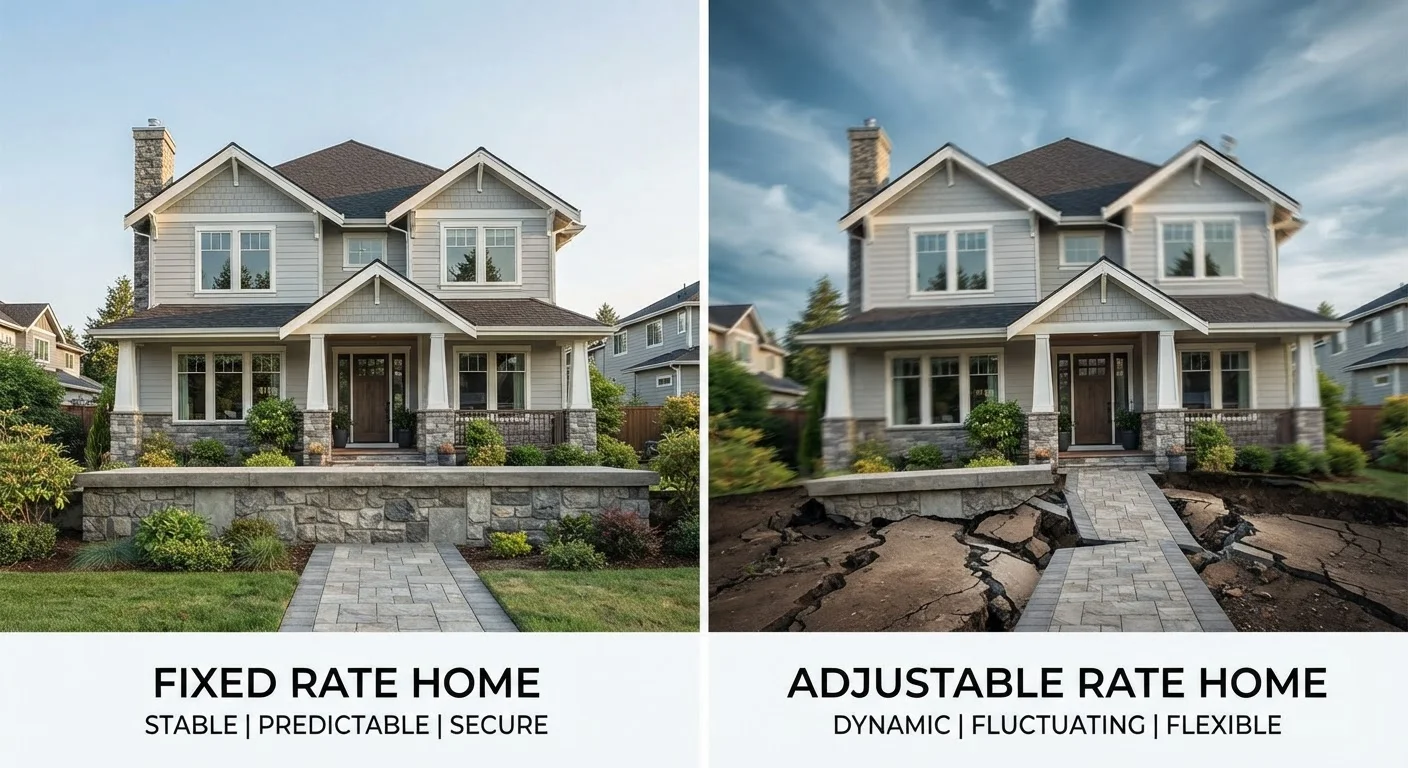
Option A
Fixed-Rate Mortgage
The predictable, long-term stability choice.
Best for: Buyers planning to stay in their home long-term who prioritize consistent monthly payments and protection from rate increases.
Option B
Adjustable-Rate Mortgage (ARM)
The flexible, lower-entry-cost alternative.
Best for: Buyers with shorter ownership timelines or those who expect income growth and can tolerate some payment variability.
How Each Mortgage Structure Works
A fixed-rate mortgage carries the same interest rate from the first payment to the last - whether that's 15 or 30 years. Your principal and interest payment never changes, regardless of what happens to broader interest rates in the economy. This makes monthly budgeting straightforward and protects you from rate volatility.
An adjustable-rate mortgage (ARM) works differently. It starts with a fixed introductory rate - often for 5, 7, or 10 years - then adjusts periodically based on a referenced market index, such as the Secured Overnight Financing Rate (SOFR). ARMs are typically expressed as two numbers: a 5/1 ARM means the rate is fixed for 5 years, then adjusts once per year thereafter. Lenders apply a margin on top of the index rate, and most ARMs include caps that limit how much the rate can change per adjustment period and over the loan's lifetime.
Understanding how these structures interact with the broader market is valuable context - learn how mortgage rates ripple through home prices for additional perspective on what drives rate movement.
| Criterion | Fixed-Rate Mortgage | Adjustable-Rate Mortgage (ARM) |
|---|---|---|
| Interest Rate | Locked for entire loan term | Fixed initially, then adjusts periodically |
| Monthly Payment Stability | Completely predictable | Can rise or fall after fixed period |
| Initial Rate | Typically higher | Typically lower |
| Long-Term Risk | Low - no rate exposure | Moderate to high - depends on rate trends |
| Best Loan Term Fit | 10, 15, or 30-year terms | Common: 5/1, 7/1, or 10/1 structures |
| Rate Caps | Not applicable | Most ARMs include periodic and lifetime caps |
| Ideal Ownership Horizon | Long-term (10+ years) | Shorter-term (under 7 years) |
The Real Trade-Offs: Risk, Savings, and Timing
The central trade-off comes down to certainty versus cost. Fixed-rate mortgages typically carry a higher starting interest rate than ARMs because lenders are absorbing the long-term risk of rate movement. You pay a premium for predictability. ARMs, conversely, reward borrowers willing to take on some risk with a lower initial rate - which can translate to meaningful monthly savings during the introductory period.
The risk with an ARM materializes if rates rise sharply after the fixed period ends. A borrower whose payment increases by several hundred dollars a month due to rate adjustments can face real financial strain, particularly if their income hasn't grown proportionally. Rate caps provide some protection but don't eliminate the risk of substantially higher payments over time.
30 years
Most common fixed-rate mortgage term in the U.S.
The 30-year fixed mortgage has historically been the most widely chosen loan structure among American homebuyers, according to Freddie Mac data.
5/1
Most common ARM structure offered
The 5/1 ARM - fixed for five years, then adjusting annually - is among the most frequently issued adjustable-rate products in the U.S. mortgage market.
2%/5%
Typical ARM rate cap structure
Many ARMs carry caps of 2% per adjustment period and 5% over the life of the loan, though specific terms vary by lender and product.
Timing matters enormously. If you buy when prevailing rates are high and expect them to fall, an ARM could work in your favor - your adjusted rate might drop. If rates are already low, locking in a fixed rate can preserve that advantage for decades. However, predicting rate direction reliably is difficult even for market professionals.
For buyers weighing the broader decision of whether to buy at all, renting vs. buying across life stages offers a useful framework grounded in income, mobility, and long-term goals.
This article provides general educational information about mortgage structures and is not personalized financial or legal advice. Consult a licensed mortgage professional or financial adviser before making decisions about your specific situation.
The content on this site is for informational purposes only and is not a substitute for professional advice. Always consult a qualified professional for guidance specific to your situation.