

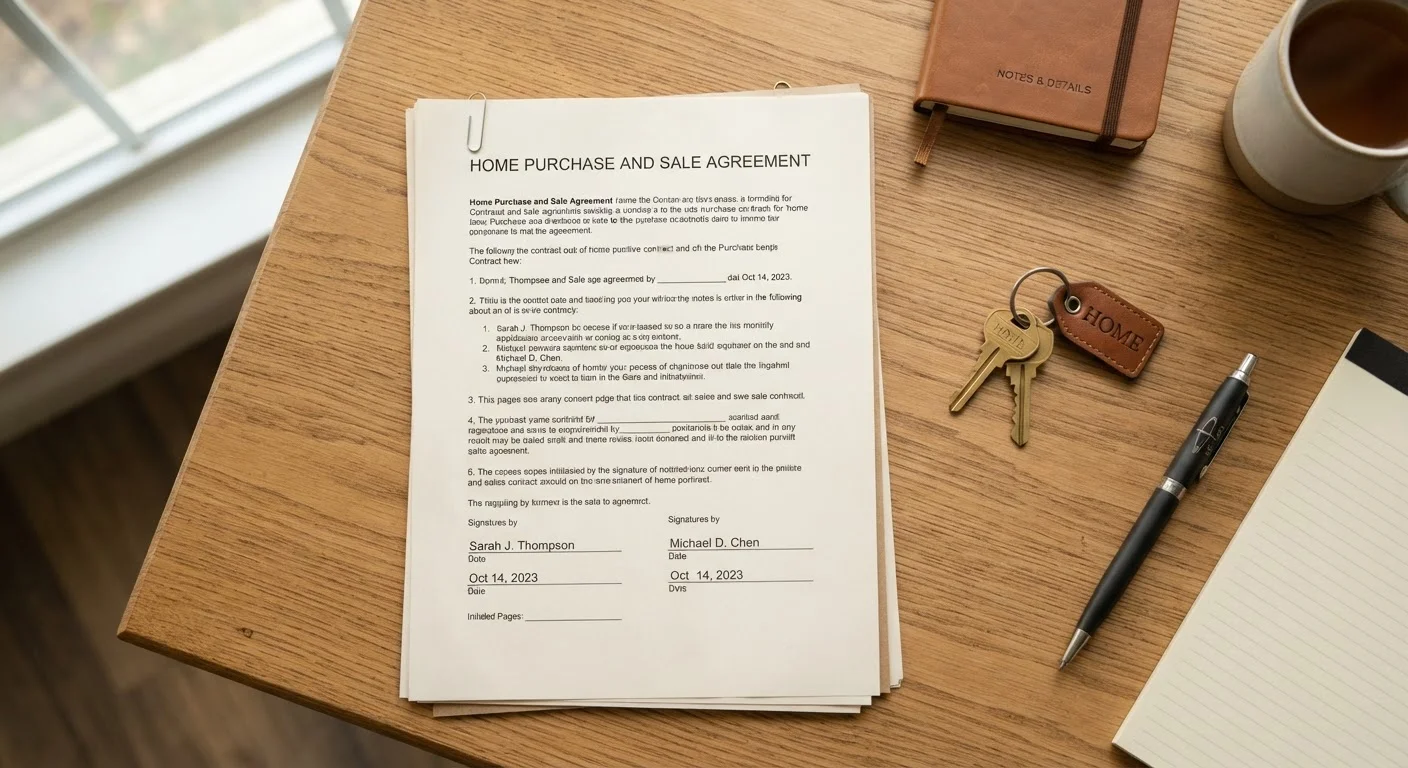
Why Homebuying Vocabulary Matters
The homebuying process involves dozens of documents, disclosures, and deadlines - each packed with terms that can feel foreign to a first-time buyer. Missing the meaning of a single phrase (like contingency or earnest money) can lead to costly misunderstandings. This reference guide defines the terms you are most likely to encounter from the moment you start shopping to the day you receive your keys.
For a broader look at market conditions that affect your purchase, see our Housing Market hub, and if you want to understand market jargon in the news, the Housing Market Glossary is a natural companion to this guide.
Pre-Approval
A lender's conditional commitment to loan you a specific amount, based on a review of your credit, income, and assets. It is stronger than pre-qualification and signals to sellers that your financing is credible.
Earnest Money
A deposit made by the buyer when submitting an offer, held in escrow to demonstrate good faith. It is typically applied toward the down payment or closing costs at settlement.
Contingency
A clause in a purchase agreement that allows the buyer or seller to exit the deal without penalty if a specific condition is not met. Common examples include financing, inspection, and appraisal contingencies.
Title Insurance
A one-time insurance policy that protects against losses stemming from defects in a property's title, such as undisclosed liens, errors in public records, or ownership disputes.
Appraisal Gap
The dollar difference when a home's appraised value comes in below its agreed purchase price. Buyers must decide whether to cover the gap in cash, renegotiate, or invoke an appraisal contingency.
Private Mortgage Insurance (PMI)
Insurance required by most lenders when the buyer's down payment is less than 20% of the purchase price. PMI protects the lender - not the buyer - if the borrower defaults.
Closing Disclosure
A standardized federal form provided to buyers at least three business days before closing, detailing final loan terms, monthly payment amounts, and all fees due at settlement.
Escrow
A neutral third-party account used to hold funds and documents during a real estate transaction. Earnest money, down payments, and closing funds are typically held in escrow until the sale is finalized.
Loan-to-Value Ratio (LTV)
The ratio of the loan amount to the home's appraised value, expressed as a percentage. A higher LTV can result in higher rates or additional insurance requirements.
Annual Percentage Rate (APR)
The yearly cost of a mortgage, expressed as a percentage, that includes the interest rate plus applicable fees. APR allows more accurate comparisons between loan offers than the interest rate alone.
Prorations
Adjustments made at closing to fairly split prepaid or unpaid recurring costs - such as property taxes or HOA dues - between buyer and seller based on the date of transfer.
Deed of Trust
A legal document used in many states as an alternative to a mortgage, giving a trustee authority to sell the property if the borrower defaults on the loan.
Financing and Mortgage Terms
Financing is where most buyers encounter the steepest learning curve. These terms appear in loan estimates, closing disclosures, and conversations with lenders.
| Typical Earnest Money Range | 1%-3% of purchase price (National Association of Realtors general guidance) |
| Pre-Approval Validity Window | 60-90 days (varies by lender) |
| Closing Disclosure Timing | At least 3 business days before closing (CFPB TRID rule requirement) |
| PMI Trigger Threshold | Down payment below 20% (Standard conventional loan requirement) |
| LTV for PMI Removal | 80% or lower (Per federal Homeowners Protection Act guidelines) |
- Pre-qualification vs. Pre-approval: Pre-qualification is an informal estimate of how much you may be able to borrow based on self-reported information. Pre-approval is a more rigorous lender review of your income, assets, and credit - and carries significantly more weight with sellers.
- Loan-to-Value Ratio (LTV): The percentage of the home's value you are borrowing. A $280,000 loan on a $350,000 home equals an 80% LTV. Higher LTV often means higher interest rates or a requirement for private mortgage insurance (PMI).
- Annual Percentage Rate (APR): The true yearly cost of your loan, including interest and certain fees. The APR is always higher than the stated interest rate and is the better number to use when comparing loan offers.
- Earnest Money: A good-faith deposit made when you submit an offer. It is typically held in escrow and applied to your down payment or closing costs at settlement. To learn how escrow fits into the full transaction, see how escrow works.
Many buyers also carry misconceptions about down payments. The down payment myths article addresses what today's loan programs actually require.
Offer, Inspection, and Closing Terms
Once you move from financing into making an offer and closing, a new set of terms takes center stage.
- Contingency: A condition that must be met for the sale to proceed. Common contingencies include financing (you must secure a loan), inspection (the home must pass review), and appraisal (the home must be valued at or above the purchase price).
- Appraisal Gap: When a home is appraised below the agreed purchase price, the difference is called an appraisal gap. Buyers may need to cover this gap in cash, renegotiate the price, or walk away depending on the terms of their contract.
- Title Insurance: Protects against claims on the property's ownership history - such as undisclosed liens or errors in prior deeds. Lenders typically require a lender's policy; buyers can also purchase an owner's policy for their own protection.
- Closing Disclosure: A five-page document provided at least three business days before closing that itemizes the final loan terms, monthly payment, and all closing costs. Review it carefully against your Loan Estimate.
- Prorations: At closing, costs like property taxes and HOA fees are divided between buyer and seller based on the closing date. These adjustments appear as credits or debits on the settlement statement.
Understanding whether you are negotiating in a buyer's market or a seller's market can help you decide which contingencies to include or waive. If you are comparing the homebuying vocabulary here with rental terms, the Renting Essentials hub covers lease-specific language.
Once you close, the vocabulary shifts toward maintenance and ownership. Our Home Maintenance for First-Time Owners guide is a practical next step.
This article is for general informational and educational purposes only and does not constitute legal, financial, or real estate advice. Consult a licensed real estate professional, lender, or attorney for guidance specific to your situation.
The content on this site is for informational purposes only and is not a substitute for professional advice. Always consult a qualified professional for guidance specific to your situation.