

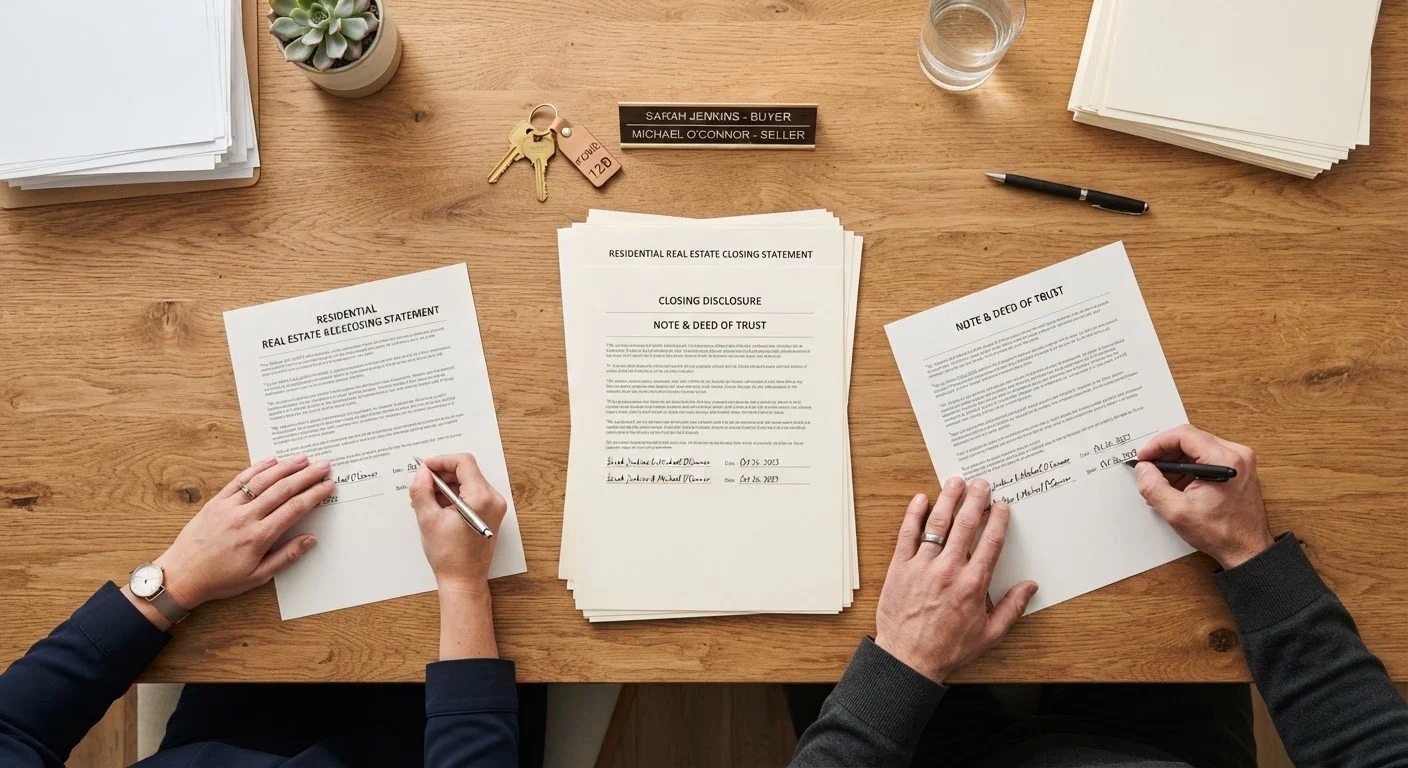
Why Escrow Exists
Buying a home involves transferring hundreds of thousands of dollars and legal title between strangers. Neither party wants to go first - the buyer won't hand over funds before receiving the deed, and the seller won't hand over the deed before receiving payment. Escrow solves this standoff by placing a neutral third party in the middle.
The escrow holder - typically a licensed title or escrow company, or in some states an attorney - receives instructions from both buyer and seller and acts only when those instructions are satisfied. This arrangement is a core part of the American homebuying process and is required in virtually every residential transaction financed by a mortgage lender.
Escrow Rules Vary by State
In Western states like California and Washington, independent escrow companies typically handle closings. In many Eastern and Southern states, real estate attorneys perform the same function. In others, title companies manage the entire process. Always confirm who will serve as escrow holder early in your transaction.
The Key Players in Escrow
Understanding who does what prevents confusion during the process:
- Escrow officer or agent: The neutral administrator who collects documents and funds, follows written instructions, and coordinates closing logistics.
- Buyer: Deposits earnest money, provides loan documents, and signs closing disclosures.
- Seller: Provides the deed, satisfies any liens, and delivers required disclosures.
- Mortgage lender: Wires loan funds into escrow once the loan is cleared to close.
- Real estate agents: Coordinate between parties but do not hold funds.
- Title company: Conducts a title search to confirm the seller has clear ownership and issues title insurance.
Familiarizing yourself with these roles - and the broader vocabulary of the process - is easier with a resource like our homebuying vocabulary guide.
The Escrow Timeline, Step by Step
Escrow officially opens when the buyer and seller sign a purchase agreement and the buyer delivers an earnest money deposit - typically 1% to 3% of the purchase price - to the escrow account.
- Opening escrow: Both parties submit signed contract instructions to the escrow officer.
- Due diligence period: The buyer arranges a home inspection, orders an appraisal (required by the lender), and reviews seller disclosures. Contingencies can be removed or exercised here.
- Title search and insurance: The title company searches public records to confirm clear ownership and prepares title insurance policies for buyer and lender.
- Loan underwriting: The lender verifies the buyer's financials and the property's value before issuing a clear-to-close.
- Final walkthrough: The buyer inspects the property shortly before closing to confirm its condition.
- Closing day: Both parties sign final documents. The lender wires loan funds. The escrow officer disburses proceeds to the seller, pays off any existing mortgage, and records the new deed. The buyer receives the keys.
30-45 days
Typical escrow period for financed home purchases
Industry data consistently shows most U.S. residential transactions with mortgage financing close within this window, depending on loan type and market conditions.
1%-3%
Earnest money deposit as a share of purchase price
This is the customary range in most U.S. markets, though competitive markets sometimes see higher deposits to signal buyer seriousness.
~80%
Financed home purchases requiring lender escrow accounts
Most conventional loans with less than 20% down, and all FHA and VA loans, require ongoing escrow accounts for taxes and insurance.
Ongoing Escrow: Taxes and Insurance
Escrow doesn't end at closing for most homeowners. Lenders commonly require a post-closing escrow account - sometimes called an impound account - that collects a portion of your monthly mortgage payment to cover property taxes and homeowners insurance premiums.
Each month, roughly one-twelfth of your annual tax and insurance bills is set aside. When those bills come due, your lender pays them directly. This protects the lender's collateral and simplifies budgeting for homeowners, though it does mean your monthly payment can change annually when taxes or insurance premiums are adjusted.
Understanding what escrow costs are bundled into your payment is essential for interpreting your loan estimate. Our breakdown of closing costs on closing day explains how prepaid escrow amounts appear in your final figures.
This article is for general informational purposes only and does not constitute legal or financial advice. Escrow laws, requirements, and customs vary by state. Consult a licensed real estate professional or attorney for guidance specific to your transaction.
Frequently Asked Questions
Most residential escrow periods last 30 to 45 days, though cash transactions can close faster - sometimes in under two weeks. The timeline depends on loan processing, inspections, appraisals, and how quickly both parties satisfy contract contingencies.
Your earnest money deposit is held by the escrow company in a separate trust account. If the sale closes successfully, it is applied toward your down payment or closing costs. If the deal falls apart, who keeps the money depends on the terms spelled out in your purchase contract.
Many mortgage lenders require borrowers to maintain an ongoing escrow account that collects a portion of each monthly mortgage payment to cover property taxes and homeowners insurance. The lender pays those bills on your behalf when they come due.
Yes. Escrow can fail to close if a buyer cannot secure financing, the home appraises below the purchase price and the parties cannot renegotiate, or a major issue surfaces during inspection. Contract contingencies determine what remedies each party has in these situations.
Either party can propose the escrow or title company, though local customs vary by state. In some markets the seller traditionally selects it; in others, the buyer does. It is always negotiable and should be agreed upon early in the transaction.
The content on this site is for informational purposes only and is not a substitute for professional advice. Always consult a qualified professional for guidance specific to your situation.