

What Changed When the Office Stopped Being Mandatory
For most of the 20th century, where Americans worked determined where they could reasonably live. A job in downtown Chicago meant living within commuting distance of Chicago. That constraint governed housing markets: urban cores commanded premium prices, and suburban rings derived their value from highway and transit access to employment centers.
The widespread adoption of remote work - accelerated by necessity in 2020 - broke that constraint for a significant portion of the workforce. Knowledge workers in finance, technology, consulting, and other sectors suddenly found their employer indifferent to their physical location. Almost immediately, housing preferences shifted.
Buyers and renters began prioritizing square footage, home office space, proximity to nature, and local quality of life over commute time. Markets that had previously seemed geographically peripheral became genuinely competitive. To understand the broader forces at play, see our introduction to housing market fundamentals.
~3M
Net domestic migrants to Sun Belt states in a single recent year
U.S. Census Bureau data has shown millions of Americans relocating from the Northeast and West Coast to Southern and Mountain West states during the height of remote work adoption.
~60%
Remote-capable jobs worked remotely at peak
Stanford economist Nicholas Bloom's research estimated that roughly 60% of workers in remote-capable jobs were working from home at the height of the pandemic shift.
40-60%
Home price increase in some Sun Belt metros
Markets like Austin and Phoenix saw median home prices rise between 40% and 60% between 2020 and 2022, driven in part by remote worker demand, according to housing data tracked by the S&P CoreLogic Case-Shiller index.
Where Americans Moved - and Why Those Places
The destinations that gained the most from remote work migration share a recognizable profile: lower costs than coastal metros, warm or pleasant climates, growing infrastructure, and enough cultural amenity to attract workers accustomed to urban living. Sun Belt metros absorbed an outsized share of this demand.
Austin, Texas became a widely cited example - home prices rose dramatically as tech workers relocated from the Bay Area and Seattle. Phoenix, Raleigh-Durham, Nashville, and Tampa followed similar arcs. Mid-sized cities in the Mountain West, like Boise and Salt Lake City, also drew significant inflows despite limited housing supply, which amplified price pressure.
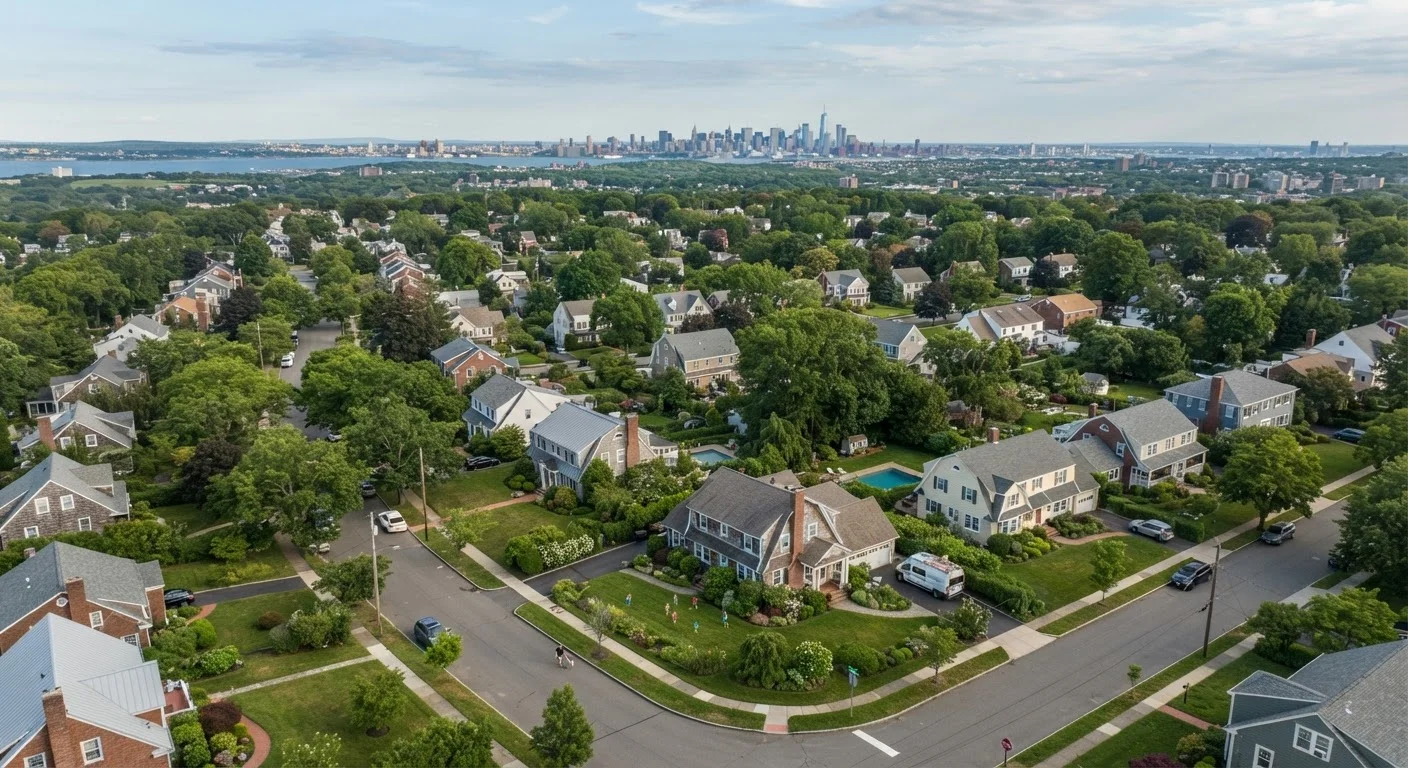
Equally important was the suburban and exurban shift within existing metro areas. Even workers who didn't change cities often moved farther from downtown cores, trading proximity for space. A buyer who once needed to live 20 minutes from the office could suddenly afford to live 45 or 60 minutes away - dramatically expanding where demand concentrated.
A software engineer in San Francisco relocates to Tucson, Arizona, while keeping the same job and salary.
A family in Chicago moves from a two-bedroom city condo to a four-bedroom house 55 miles from downtown after the parent's employer adopts a three-day-a-week hybrid policy.
A small city in North Carolina that historically had modest home prices sees a surge of new listings under contract within days.
The Affordability Ripple Effect
One of the most consequential - and underreported - consequences of remote work migration was what it did to housing affordability in destination markets. When higher-income workers from San Francisco or New York relocated to Boise or Tucson, they arrived with purchasing power well above the local median income. Local buyers competing for the same homes faced a structural disadvantage.
Rents in many Sun Belt cities rose sharply. Homeownership rates among local residents in some destination metros stagnated or declined even as the broader metro population grew. This pattern illustrates how housing market trends are deeply connected to broader economic indicators - a dynamic explored further in our piece on economic indicators that move housing markets.
For households weighing their own next move, the rent-versus-buy calculation shifted considerably in these markets. Our framework on renting vs. buying at different life stages can help contextualize those tradeoffs.
What Hybrid Work Means for Housing Markets Going Forward
As fully remote arrangements gave way to hybrid schedules - requiring workers to be in the office two or three days per week - the migration dynamic became more nuanced. Workers no longer needed to live in a different metro to find relief from urban costs; they simply needed to live farther from the office than before.
This extended the geographic radius of demand around major employment hubs rather than redirecting it entirely to new cities. Commuter suburbs and second-ring suburbs in metros like Boston, Washington D.C., and Chicago regained relevance as hybrid workers accepted longer but less frequent commutes.
Meanwhile, housing markets in some high-cost gateway cities began to stabilize as fewer residents departed and some returned. The picture remains uneven, however - the effect varies considerably by local employer policies, industry mix, and housing supply. Understanding how these patterns follow seasonal rhythms is also useful; our overview of the seasonal rhythm of American home sales provides helpful context for timing decisions.
This article is for general informational purposes only and does not constitute financial, investment, or real estate advice. Readers should consult a qualified real estate or financial professional regarding decisions specific to their circumstances.
Frequently Asked Questions
Sun Belt metros like Austin, Phoenix, Tampa, and Raleigh saw some of the sharpest population and housing demand increases. Mid-sized cities with lower costs of living and good quality of life - such as Boise, Idaho and Huntsville, Alabama - also attracted significant inflows. These gains were driven largely by workers leaving higher-cost coastal metros.
Yes, in many cases significantly. When remote workers from high-income coastal markets relocated to lower-cost cities, they brought purchasing power that exceeded local wage levels. This increased competition for a limited housing supply, pushing prices and rents higher in markets that had previously been relatively affordable.
Many major metros have seen some population stabilization or modest rebound as hybrid work became more common and employers called workers back to offices part-time. However, the degree of recovery varies by city, and long-term patterns are still developing. Local market conditions, rental pricing, and job availability all play a role.
Suburban and exurban areas benefited considerably. Buyers prioritized larger homes, home offices, and outdoor space - features more affordable outside dense urban cores. Commute tolerance also increased for hybrid workers willing to travel a few days per week, expanding the practical radius around major employment centers.
It is not fully permanent, but it has had lasting effects. Many workers who relocated during the height of remote work did not return, and their moves have permanently altered local housing markets. The spread of hybrid work means some geographic flexibility remains, though fully remote arrangements have become less universal than during the pandemic period.
Tracking local inventory levels, median prices, and days on market over time gives a clearer picture of whether your area is absorbing remote-worker demand or adjusting after an influx. National housing data from sources like the U.S. Census Bureau and the National Association of Realtors provide useful benchmarks for comparison.
The content on this site is for informational purposes only and is not a substitute for professional advice. Always consult a qualified professional for guidance specific to your situation.