

Why River Cruises Surprise Even Experienced Travelers
European river cruises are marketed as effortless - unpack once, drift through picturesque scenery, step ashore in historic cities. That framing isn't dishonest, but it's incomplete. The logistics of river travel involve variables that ocean cruising doesn't, and passengers who don't research those variables ahead of time are the ones who feel blindsided when the reality diverges from the glossy brochure.
The mistakes below aren't rare edge cases. They're patterns that travel professionals and experienced cruisers consistently flag. Understanding them before you book helps you set realistic expectations and ask better questions of any cruise line you're considering.
Assuming the published itinerary will run exactly as printed, regardless of river conditions.
Why it happens: Brochures present itineraries as fixed schedules. Passengers reasonably assume the ship will call at each listed port on the listed day.
Booking without understanding that water levels can ground the ship or require passengers to transfer to buses mid-trip.
Why it happens: Water level disruptions aren't prominently disclosed in sales materials. Passengers only learn about them when researching after a problem occurs.
Underestimating the solo traveler supplement or assuming the listed fare applies to a single occupant.
Why it happens: Cruise fares are almost universally quoted per person based on double occupancy. Solo pricing is listed separately and often carries a 50-100% surcharge.
Overlooking mobility and accessibility limitations on river ships and shore excursions.
Why it happens: Images of beautiful riverside towns don't communicate that cobblestone streets, steep gangways, and multi-level ships without elevators are common. Passengers with limited mobility may not anticipate these obstacles.
Treating the all-inclusive label as comprehensive without confirming what's actually included.
Why it happens: "All-inclusive" is a marketing term with no universal definition. Gratuities, premium beverages, specialty dining, Wi-Fi, and optional excursions are excluded by some operators even when the package is billed as inclusive.
What Passengers Frequently Misunderstand About the Experience
Beyond the logistical pitfalls, there are softer mismatches in expectation that commonly disappoint first-time river cruisers.
~180 ft
Typical maximum river ship length
European waterway bridge and lock constraints limit ship dimensions significantly compared to ocean vessels, affecting cabin size and onboard space.
2-3 hrs
Average guided shore excursion duration
Most included river cruise excursions are structured group tours lasting two to three hours, which limits independent exploration time in each port.
Included excursions are a prime example. Most itineraries advertise daily shore excursions as part of the fare, which sounds generous - until passengers realize the tours are walking-pace group outings covering a curated route, not open-ended exploration. Independent time in port is often limited, and ports of call may be brief. If you're a traveler who prefers to wander freely, the structured format can feel restrictive.
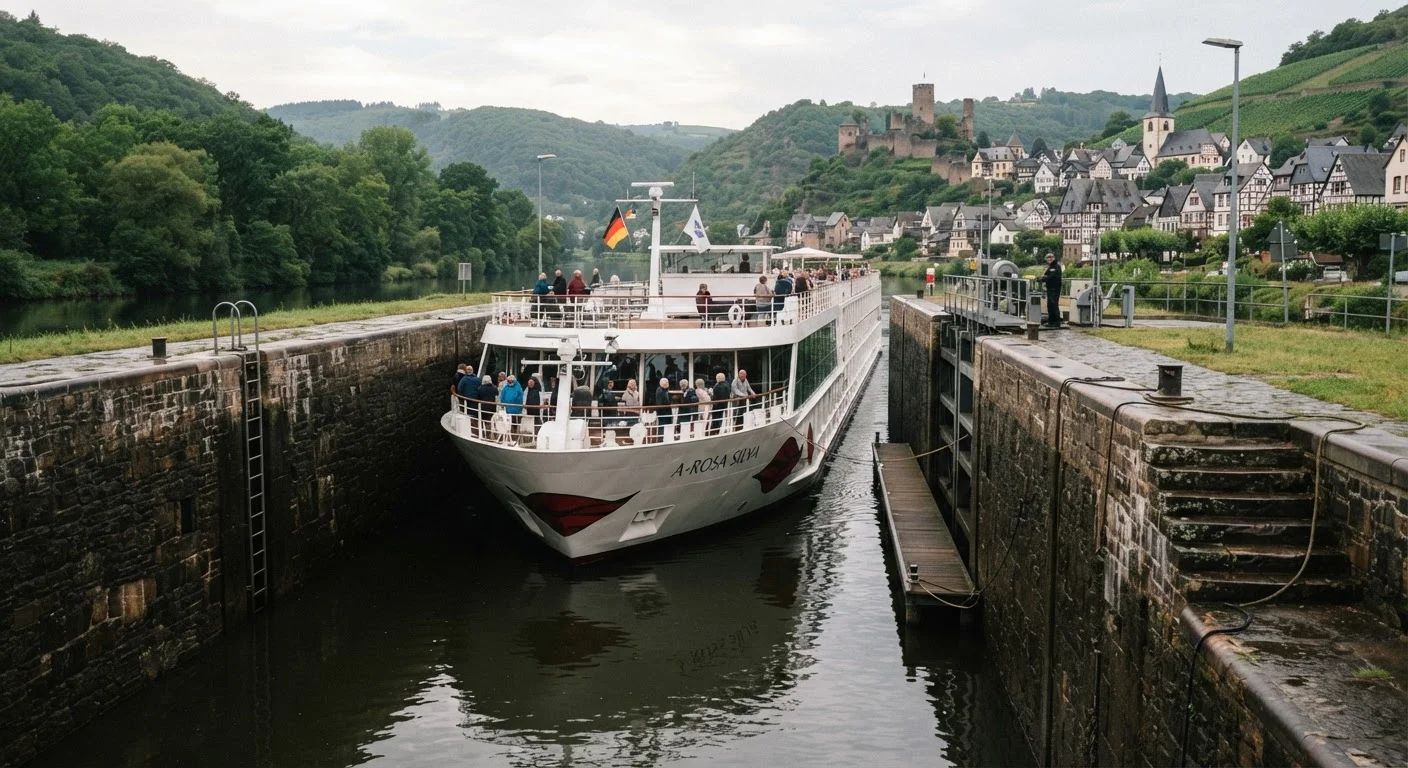
Cabin size is another area where expectations drift. River ships are engineered to fit European locks and bridges, which means they're long and narrow. Cabins - especially on the entry-level deck - are genuinely small, and noise from other guests, the engine, or dockside activity can carry more than on a large ocean vessel. Reviewing the actual ship layout, not just the promotional photography, matters.
Before finalizing any international booking, it's also worth verifying your travel documents are fully in order. Many passport rules - including the six-month validity requirement and Schengen entry rules - catch travelers off guard. See our guide to passport rules travelers often miss for specifics worth checking before you book.
Don't Confuse River and Ocean Cruise Expectations
River cruising is a genuinely different product from ocean cruising - smaller ships, shallower itineraries, more weather dependency, and fewer onboard amenities. Passengers who transfer ocean cruise expectations to a river trip often feel shortchanged, not because the product is inferior but because it's different. Approach it on its own terms.
The content on this site is for informational purposes only and is not a substitute for professional advice. Always consult a qualified professional for guidance specific to your situation.