

What the Ring Road Actually Covers (And What It Doesn't)
Most first-time visitors to Iceland plan their trip almost entirely around Route 1 - the Ring Road - and that's a reasonable starting point. It's well-marked, mostly paved, and connects the country's most photographed sites: the Golden Circle, Jökulsárlón glacier lagoon, Skógafoss, and the Snæfellsnes Peninsula on a good day. But the Ring Road hugs Iceland's coastline and completely bypasses the interior, which covers more than half the country's total land area.
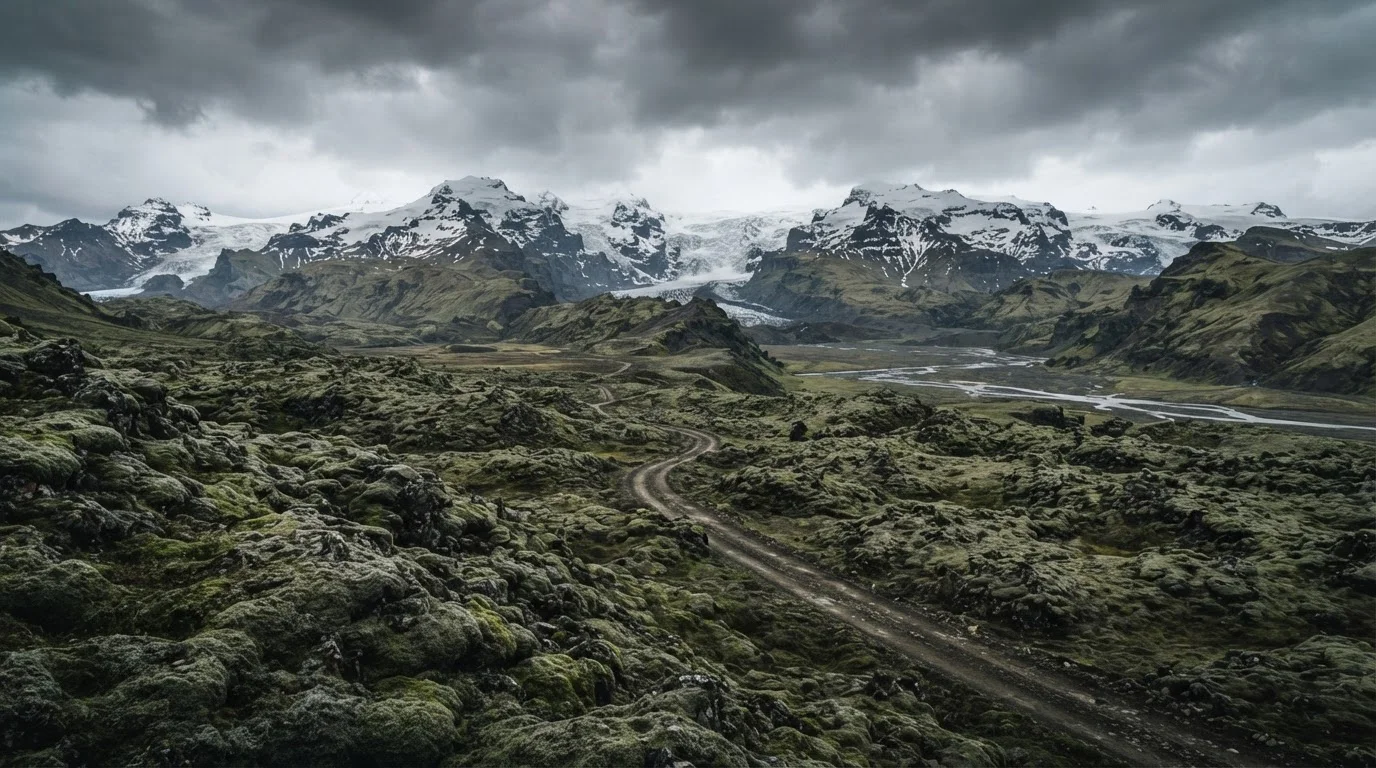
The Icelandic Highlands - known as the interior - include some of the most otherworldly terrain on the planet: obsidian deserts, boiling geothermal fields at Landmannalaugar, and the Kjölur route between Iceland's two largest glaciers. None of this is accessible from the Ring Road. Interior F-roads are unpaved mountain tracks that require proper four-wheel-drive vehicles, open only during summer, and demand genuine off-road experience. Treating them as a casual detour is where many visitors go wrong.
F-Road Access Is Strictly Regulated
Iceland's highland F-roads are designated mountain tracks, not ordinary roads. Driving any non-4WD vehicle on an F-road violates both Icelandic law and standard rental car agreements. Additionally, many F-roads cross glacial rivers without bridges - these crossings carry real risk and should only be attempted by experienced drivers in appropriate vehicles. Always check current road status at road.is before setting out.
The Regions Most Visitors Skip
The Westfjords - Iceland's northwestern peninsula - are perhaps the country's most overlooked destination. Reaching them requires either a significant detour from the Ring Road or a short domestic flight into Ísafjörður. The roads are narrower, services are sparse, and the fjords themselves are steep and isolated. That remoteness is precisely the draw for travelers who seek genuine solitude. Dynjandi waterfall, which cascades in wide tiers down a clifftop, is one of Iceland's most striking sights and sees only a fraction of the visitor traffic that Skógafoss or Seljalandsfoss receives.
The Eastfjords are also frequently rushed or skipped. Travelers hurrying to complete the Ring Road circuit often drive the eastern section without stopping - a mistake, given the quiet fishing villages, narrow fjords, and hiking trails that define the region. The town of Seyðisfjörður, accessible via a dramatic mountain pass, has a distinct artistic character unlike anywhere else in Iceland.
~828 mi
Total length of Iceland's Ring Road
Route 1 circles the entire perimeter of Iceland, but the interior highlands - covering more than half the country - lie entirely beyond its reach.
~2.3M
Annual tourist arrivals to Iceland
Iceland Tourism Board figures indicate the country receives several times its own population in visitors annually, with the vast majority concentrated in summer months.
~5 hrs
Daylight hours in December
In contrast, late June brings nearly 24 hours of daylight - Iceland's daylight extremes are among the most dramatic of any destination accessible to American travelers.
Seasonal Realities That Shape Every Visit
Iceland's daylight extremes are more dramatic than most visitors anticipate. In late June, you'll have nearly 24 hours of daylight - which is disorienting, affects sleep, and means you can hike at midnight. In December, you may have fewer than five hours of usable daylight. Both extremes require planning adjustments that go beyond simply packing different clothing.
Summer (June-August) brings the crowds. Accommodation in popular areas books out months in advance, and well-known sites like the Blue Lagoon or Geysir can feel overwhelmingly busy. Spring (April-May) and autumn (September-October) offer a middle ground - fewer visitors, better chances of Northern Lights in autumn, and most roads still accessible. Winter travel is viable but demands respect for conditions: ice, wind, and rapidly changing weather are genuine safety factors, not minor inconveniences.
For guidance on entry requirements, visas, and pre-travel logistics, see our ground-up guide for first-time international travelers. Americans traveling to Iceland should also verify current entry requirements through official government sources before booking.
“Iceland is a place that rewards the traveler who slows down. The people who see the most are rarely the ones who drive the fastest.”
— Árni Johnsen, Icelandic tourism researcher and author on sustainable travel in Iceland
Setting Realistic Expectations Before You Go
Iceland regularly tops travel wish lists, and the reality can match the expectation - if you approach it honestly. Popular attractions are genuinely stunning, but they're also genuinely crowded during peak season. Puffins are present only from May through August. The Northern Lights require clear skies and solar activity; no tour operator can guarantee a sighting. Hot spring access at well-known pools like the Blue Lagoon requires advance booking and entry fees - these are not free, spontaneous experiences.
Wildlife encounters are modest by global standards. Iceland has no native land predators, and birdwatching is the primary wildlife draw for most visitors. The landscapes are the main event, and they reward slow, attentive travel far more than a rushed drive.
Common planning missteps - from underestimating distances to ignoring cultural customs - aren't unique to Iceland. Our article on what tourists get wrong about visiting Japan illustrates how destination-specific research prevents the most avoidable mistakes. The same principle applies here: verify conditions, read official sources, and build flexibility into your itinerary. If this is your first time traveling internationally, our practical starting framework for Americans heading abroad covers the foundational logistics worth reviewing before any trip.
Frequently Asked Questions
Yes, the Northern Lights are visible from many points along the Ring Road, provided there's minimal light pollution, clear skies, and sufficient solar activity. They're most reliably seen between September and March. Light pollution near Reykjavík makes the capital a poor viewing spot.
Not for the Ring Road itself, which is fully paved. However, any F-roads leading into the highlands are legally off-limits to standard vehicles. Rental agreements typically void coverage if you drive a non-4WD car on an F-road - check your contract carefully.
Yes, but with adjusted expectations. Winter offers Northern Lights opportunities and dramatic scenery, but daylight is limited to roughly four to five hours and many highland areas are inaccessible. Road conditions can be hazardous; always check the Icelandic Road and Coastal Administration website before driving.
The Ring Road is about 828 miles total. Driving it without stops takes around 16-17 hours, but most travelers spread the circuit across seven to ten days to allow for sightseeing, weather delays, and detours. Rushing it means missing most of what makes the route worthwhile.
The Westfjords and the Eastfjords are the two most overlooked regions. The Westfjords in particular require either a long detour from the Ring Road or a domestic flight, which deters most visitors - but it's considered by many travelers to be the country's most dramatic landscape.
Iceland is consistently ranked among the more expensive travel destinations in Europe. Accommodation, fuel, food, and rental vehicles all carry high price tags by American standards. Budgeting carefully and booking accommodation well in advance - especially during peak summer - is strongly advisable.
The content on this site is for informational purposes only and is not a substitute for professional advice. Always consult a qualified professional for guidance specific to your situation.