

Start here
Passports and Visas: Your Starting Point
Next
Building Your Itinerary and Timeline
Then
Managing Money Abroad
When you're ready
Staying Connected and Staying Safe
Before you land
Customs, Culture, and Arrival Basics
Passports and Visas: Your Starting Point
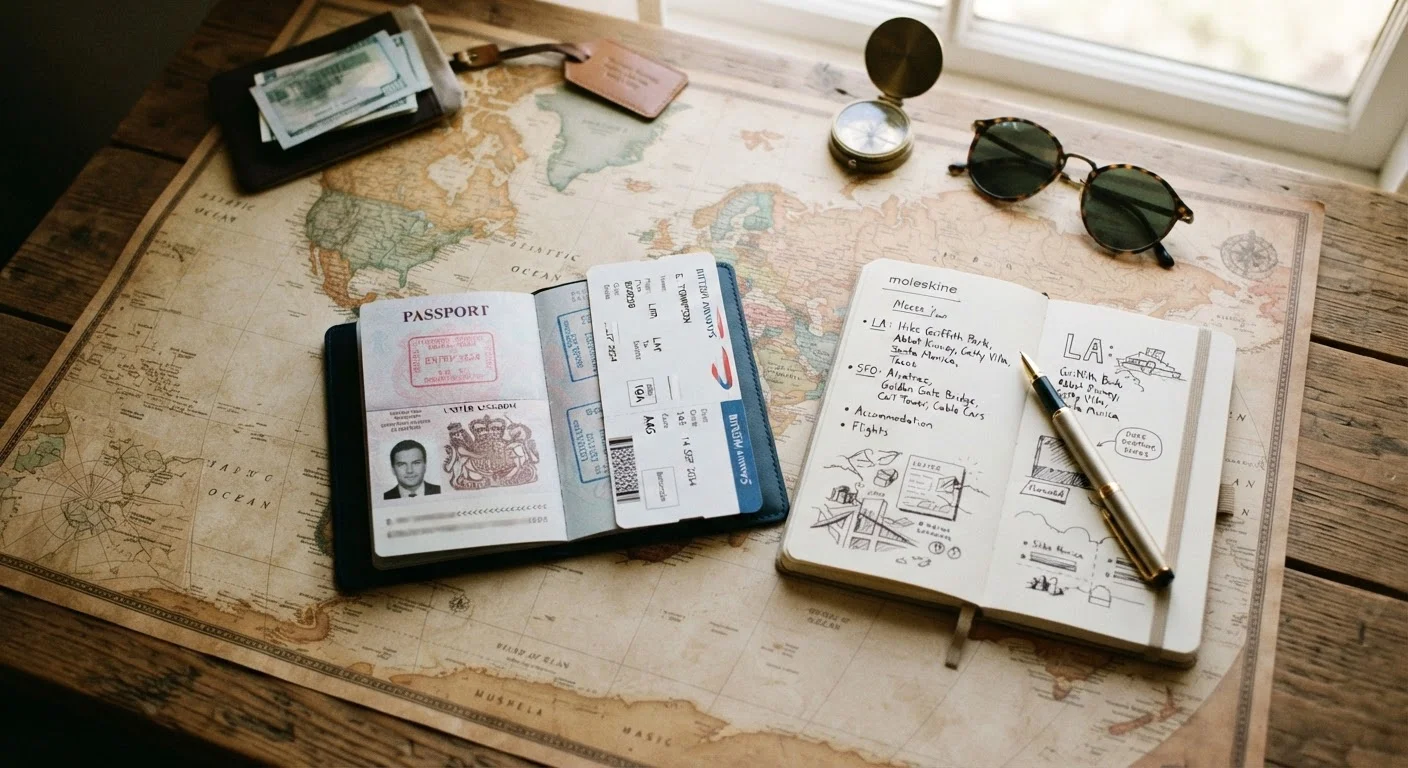
Before you book anything, confirm you have - or can obtain - the documents required to leave the U.S. and enter your destination. Your passport is the foundation of international travel.
Passport
An official government document that proves your identity and citizenship, required for international travel. U.S. passports are issued by the State Department.
Visa
An official permission, issued by a foreign country's government, allowing you to enter and stay for a specified purpose and duration.
Customs declaration
A legal form completed upon entering a country that discloses what goods, food items, or amounts of currency you are bringing in.
Foreign transaction fee
A charge, typically 1-3%, that some banks and credit card issuers add to purchases made in a foreign currency or processed through a non-U.S. bank.
eSIM
A digital SIM card built into your phone that can be programmed with a local carrier plan without needing a physical SIM swap.
STEP (Smart Traveler Enrollment Program)
A free U.S. State Department service that registers your international trip so the nearest embassy can contact you during a crisis or emergency.
U.S. passports are issued by the State Department. If you're applying for the first time, you'll need to appear in person at an acceptance facility with your application, proof of citizenship, a government-issued photo ID, and a passport photo. Processing times fluctuate seasonally, so check the official State Department website for current estimates and plan accordingly.
Your passport should be valid for at least six months beyond your planned return date. Many countries enforce this rule strictly and will deny boarding or entry if your passport expires sooner.
Visas are separate permissions granted by your destination country. Requirements depend on your nationality, the country you're visiting, and your purpose of travel. Some destinations offer visa-free access to U.S. citizens for short tourism stays; others require a pre-approved visa obtained through the country's embassy or consulate. Always verify current requirements through official embassy websites or the U.S. State Department's travel information pages - never rely solely on third-party summaries, which may be outdated.
Building Your Itinerary and Timeline
First-time international travelers often underestimate how far in advance planning needs to begin. International flights, particularly to popular destinations, can sell out or surge in price many months ahead. Lodging in high-season destinations follows the same pattern.
A practical approach: anchor your trip around your must-have experiences, then work outward. Decide on a destination, research the best time of year to visit (considering weather, crowds, and local events), and set a departure window. From there, flights are typically the first booking, followed by accommodation for at least your first night.
Our trip planning timeline guide walks through a month-by-month breakdown of what to arrange first so nothing critical gets left until the last minute. Once you've locked in the major bookings, use a pre-departure checklist to confirm documents, finances, health prep, and digital essentials before you leave home.
Build Breathing Room Into Your Schedule
Resist the urge to pack every hour with activities, especially on your first international trip. Jet lag, unfamiliar transit systems, and longer-than-expected mealtimes all eat into your day. Scheduling two or three must-do experiences per day - rather than five or six - typically leads to a more enjoyable, less exhausting trip.
Leave intentional gaps in your itinerary. Over-scheduling is a common first-trip mistake - jet lag, slower-than-expected transit, and spontaneous discoveries all take time.
Managing Money Abroad
How you handle money internationally has a direct impact on both your budget and your peace of mind. Start by notifying your bank and credit card issuers of your travel dates and destination - banks sometimes flag foreign transactions as fraud and freeze your account if they have no prior notice.
Understand the fees your cards charge abroad. Many cards add a foreign transaction fee of 1-3% on every purchase. Some travel-oriented cards waive these fees entirely - review your card's terms before you leave. For a practical breakdown of exchange rates, ATM withdrawals, and when cash still matters in a digital world, see our guide on managing money across borders.
Carry a modest amount of local currency for arrival - small purchases, transit, or tipping in cash-preferred settings. Avoid currency exchange kiosks at airports when possible, as their rates are typically less favorable than ATMs affiliated with established banks.
Staying Connected and Staying Safe
Connectivity abroad requires a plan. Using your domestic phone plan without adjustments can result in significant roaming charges. Before you leave, explore your carrier's international day-pass options, or consider purchasing a local SIM card or an eSIM compatible with your destination upon arrival. Many airports sell these at dedicated telecom kiosks.
Download offline maps (such as Google Maps offline areas) and key apps - translation tools, local transit apps, your accommodation confirmation - before you lose reliable Wi-Fi. Don't count on having a strong connection at all times.
For safety, register your trip with the U.S. State Department's Smart Traveler Enrollment Program (STEP) - a free service that allows the nearest U.S. embassy to contact you in an emergency. Keep digital copies of your passport, visa, travel insurance, and key contacts stored securely in cloud storage or email. Our guide on staying safe abroad covers situational awareness, money handling, and emergency preparation in practical detail.
Travel Insurance Is Worth Considering
Standard U.S. health insurance often provides limited or no coverage outside the country. Travel insurance policies can cover medical emergencies, trip cancellations, lost luggage, and evacuation - but policies vary widely. Review the terms carefully and consult the provider directly to understand what is and isn't covered before purchasing.
Customs, Culture, and Arrival Basics
Every country has its own customs declaration process when you arrive. You'll typically complete a declaration form on the plane or at a digital kiosk stating what goods you're bringing in, whether you've visited farms or carried certain foods, and how much currency you're carrying. Providing false information on customs declarations is a legal violation - be accurate and research your destination's restrictions in advance.
Beyond the legal process, cultural customs vary significantly. Tipping norms, appropriate dress codes, greetings, and local etiquette differ from country to country. Researching these basics before arrival isn't just polite - it helps you avoid unintentional offenses and navigate situations more confidently. Many travelers find that even a few words in the local language go a long way in establishing goodwill.
For broader first-time guidance tailored to Americans heading abroad, our practical starting framework for U.S. travelers covers entry requirements, currency, connectivity, and culture shock in a grounded, checklist format. The Travel Tips hub also offers additional smart habits that make every trip safer and more enjoyable.
This article provides general travel information and education only. Entry requirements, visa rules, health regulations, and local laws change frequently. Always verify current requirements with official government sources and relevant authorities before traveling.
Frequently Asked Questions
The U.S. State Department recommends applying at least six months before your trip, though routine processing can take longer during peak seasons. Expedited service is available for an additional fee if your travel date is sooner. Always check the current processing times on the State Department's official website.
Not always. Many countries allow U.S. citizens to enter visa-free or with a simple visa-on-arrival for short stays. However, requirements vary widely by country and purpose of travel. Always verify entry requirements through the destination country's official embassy website or the U.S. State Department before booking.
Neither option is universally better, but airport kiosks and hotel desks typically offer the least favorable rates. Withdrawing local currency from a bank-affiliated ATM at your destination often provides competitive rates. Research your destination's norms, since some places are largely cash-based while others are card-friendly.
Contact your carrier before you leave to understand your international options - many offer temporary global plans. Alternatively, purchasing a local SIM card or an eSIM for your destination can significantly reduce costs. Turn off data roaming by default until you have a plan in place to avoid unexpected charges.
Always carry your passport, any required visas, your return or onward travel itinerary, travel insurance information, and emergency contact details. Keep digital and physical copies stored separately from the originals. Some countries may also require proof of sufficient funds or accommodations.
Register your trip with the U.S. State Department's Smart Traveler Enrollment Program (STEP) so the nearest embassy can contact you in an emergency. Research your destination's common scams, keep valuables secure, and stay aware of your surroundings. Travel insurance that covers medical emergencies is strongly advisable.
The content on this site is for informational purposes only and is not a substitute for professional advice. Always consult a qualified professional for guidance specific to your situation.