

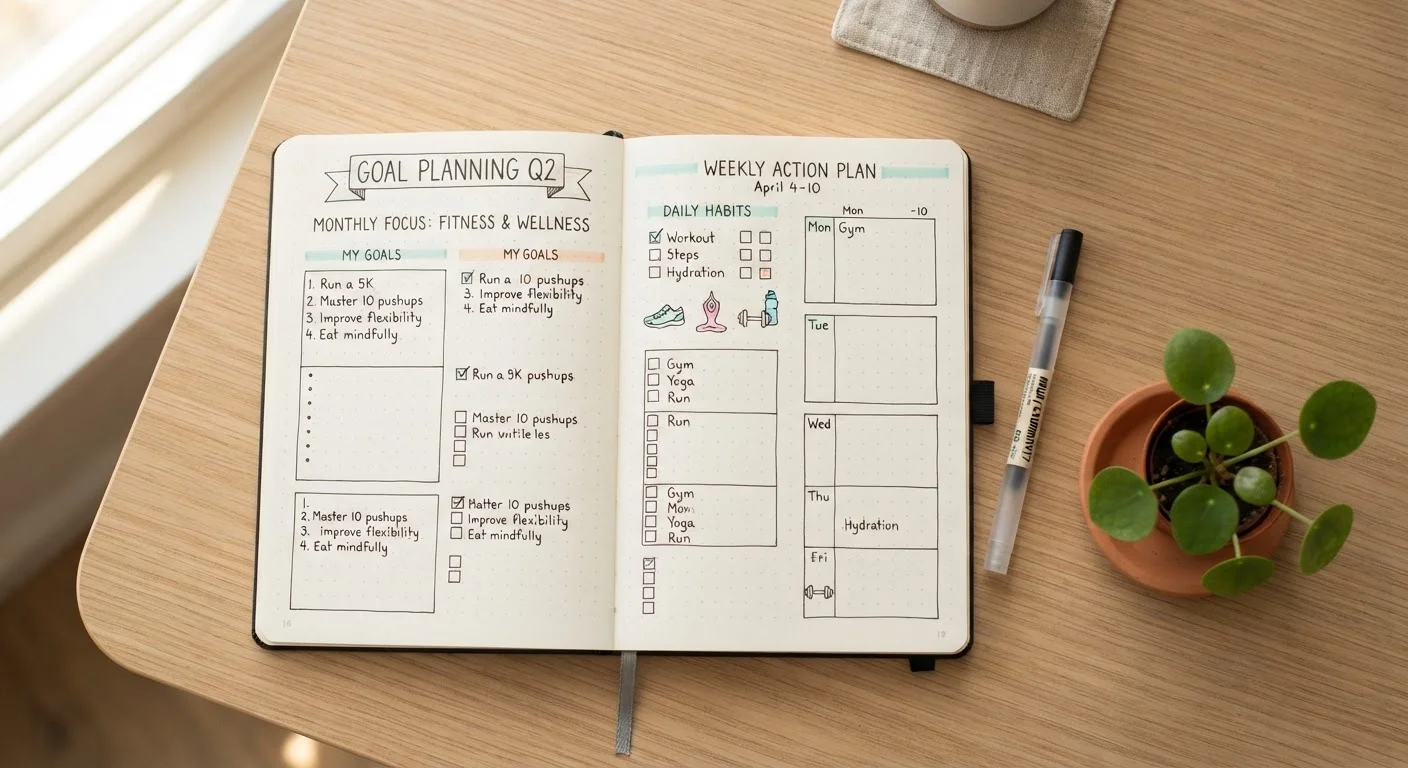
Why Most Fitness Goals Fail Before They Start
The gap between intending to exercise and actually doing it consistently is one of the most studied phenomena in behavioral psychology. A common culprit is goal design itself. Intentions framed as "I want to get in shape" or "I need to be more active" lack the structure that the brain needs to translate motivation into action.
Vague goals offer no clear starting point, no way to measure progress, and no natural feedback signal when things go well or off-track. They also tend to be entirely outcome-focused - defined by an endpoint rather than by the behaviors required to get there. Behavioral research consistently shows that behavior-based goals outperform outcome-only goals for sustaining effort over time.
Understanding this isn't about being hard on yourself for past attempts. It's about recognizing that goal design is a learnable skill - and one that meaningfully changes results. Before reviewing the step-by-step process, it helps to have the right materials and a baseline understanding in place.
What you will need
Goal-tracking journal or notebook
Used to write down SMART goals, record weekly check-ins, and note adjustments over time.
Calendar or scheduling app
Used to block specific workout times and schedule milestone review dates.
Fitness tracking app or wearable
Helps log activity data and visualize progress trends over days and weeks.
The Framework: Turning Intention into a Structured Plan
The steps below walk through a goal-setting process grounded in behavioral science. They apply whether your focus is cardiovascular fitness, strength, flexibility, or simply building the habit of regular movement. If you're new to exercise or returning after a long break, also review what to consider before starting a new exercise routine as an important pre-start checklist.
This Is General Information, Not Medical Advice
The goal-setting strategies discussed here are for general educational purposes only. Before starting a new fitness program - especially if you have an existing health condition, injury, or have been inactive for an extended period - consult a qualified healthcare professional. They can help you set goals that are safe and appropriate for your individual circumstances.
Identify your genuine motivation
Before writing a single goal, spend a few minutes asking why fitness matters to you right now. Research on self-determination theory suggests that goals connected to intrinsic motivations - such as energy, stress relief, or long-term health - tend to produce more sustained effort than those driven purely by external pressure or aesthetics.
Write down two or three honest reasons. These become the anchor you return to when momentum fades.
Apply the SMART framework to your goal
The SMART framework - Specific, Measurable, Achievable, Relevant, and Time-bound - is one of the most widely supported goal-setting structures in behavioral research. Transform a vague intention like "get fit" into something like: "Complete three 30-minute strength training sessions per week for the next eight weeks."
- Specific: Clearly define the activity and frequency.
- Measurable: Attach a number you can track (sessions per week, minutes, distance).
- Achievable: Set a target that is realistic given your current schedule and fitness level.
- Relevant: Tie the goal back to the motivations you identified in Step 1.
- Time-bound: Set a defined review date - four to eight weeks is a practical starting window.
Break the goal into weekly milestones
Long-horizon goals can feel abstract and distant. Breaking an eight-week goal into weekly checkpoints gives your brain more frequent feedback loops - and frequent feedback is a key driver of habit formation according to behavioral science literature.
For each week, define one specific action focus: for example, in week one, the focus might simply be showing up consistently without worrying about performance. By week four, you might add a progression element. Keep each milestone small enough to feel manageable.
Schedule workouts like appointments
Intention without scheduling rarely survives a busy week. Block your workout times in your calendar the same way you would a meeting or medical appointment. Research on implementation intentions - the "when, where, and how" of planned behavior - shows that specifying the exact time and context of a behavior significantly increases the likelihood of follow-through.
If a session must be skipped, reschedule it immediately rather than letting it lapse. Consistency of the habit structure matters more than perfection of execution.
Track process, not just outcomes
Log whether you completed each planned session - not just what the scale or a fitness test shows. Process tracking keeps attention on what you can control and reduces the discouragement that comes when outcome metrics are slow to move. A simple checkmark system in a journal or app is sufficient.
Review your log weekly. Looking back at a string of completed sessions is one of the most reliable sources of intrinsic motivation available.
Schedule a formal goal review and adjust
At your pre-set review date (typically four to eight weeks in), evaluate honestly: Did the goal fit your life? Did you hit your milestones? What got in the way? Use this review to either advance the goal - adding frequency, duration, or intensity - or to recalibrate if real-world constraints made it unrealistic.
Adjusting a goal is not failure. It is the intelligent, evidence-informed response to new information about your circumstances. See why early progress often stalls for context on what to expect as your fitness evolves.
Write Your Goals Down - It Actually Helps
Studies in goal-setting research consistently find that writing goals down increases commitment compared to keeping them mental. Keep your written goals somewhere visible - a notebook, a phone note, or a whiteboard - and review them at least once a week to stay connected to your intentions.
Once you've built a working goal structure, the next challenge is making the behavior feel natural over time. Our guide on building a sustainable workout habit offers practical strategies for people who struggle to find enjoyment in exercise. For a deeper understanding of how effective training programs are built, the training principles behind every effective fitness program provides a useful foundation.
Common Pitfalls and How to Sidestep Them
Even well-designed goals can stall when a few predictable patterns emerge. The most common is the "all-or-nothing" mindset - treating one missed session as evidence that the entire effort has failed. Behavioral science frames this as the "what-the-hell effect," and it accounts for a large share of abandoned fitness plans. The antidote is a predetermined recovery rule: missing one session means you simply show up to the next one as planned.
Avoid Setting Goals That Depend Only on Outcomes
Goals framed purely around weight, appearance, or performance metrics can be fragile - they rely on results that may not arrive on a predictable timeline, which often leads to discouragement. Research in behavioral psychology suggests that process-oriented goals (showing up, completing workouts, building consistency) are more durable drivers of long-term change than outcome-only targets.
Another common pitfall is social comparison - measuring your progress against someone else's timeline or body. Fitness adaptations vary substantially between individuals based on genetics, sleep, nutrition, stress, and training history. Comparing your week three to someone else's year three is a reliable source of discouragement with no productive outcome.
Nutrition also plays a meaningful supporting role in any fitness goal. Nutrition basics for anyone starting a fitness journey offers grounded guidance on food choices that support everyday physical activity without restrictive rules.
This article is for general informational and educational purposes only and does not constitute medical advice. Always consult a qualified healthcare professional before beginning a new fitness program, particularly if you have existing health conditions or concerns.
The content on this site is for informational purposes only and is not a substitute for professional advice. Always consult a qualified professional for guidance specific to your situation.