

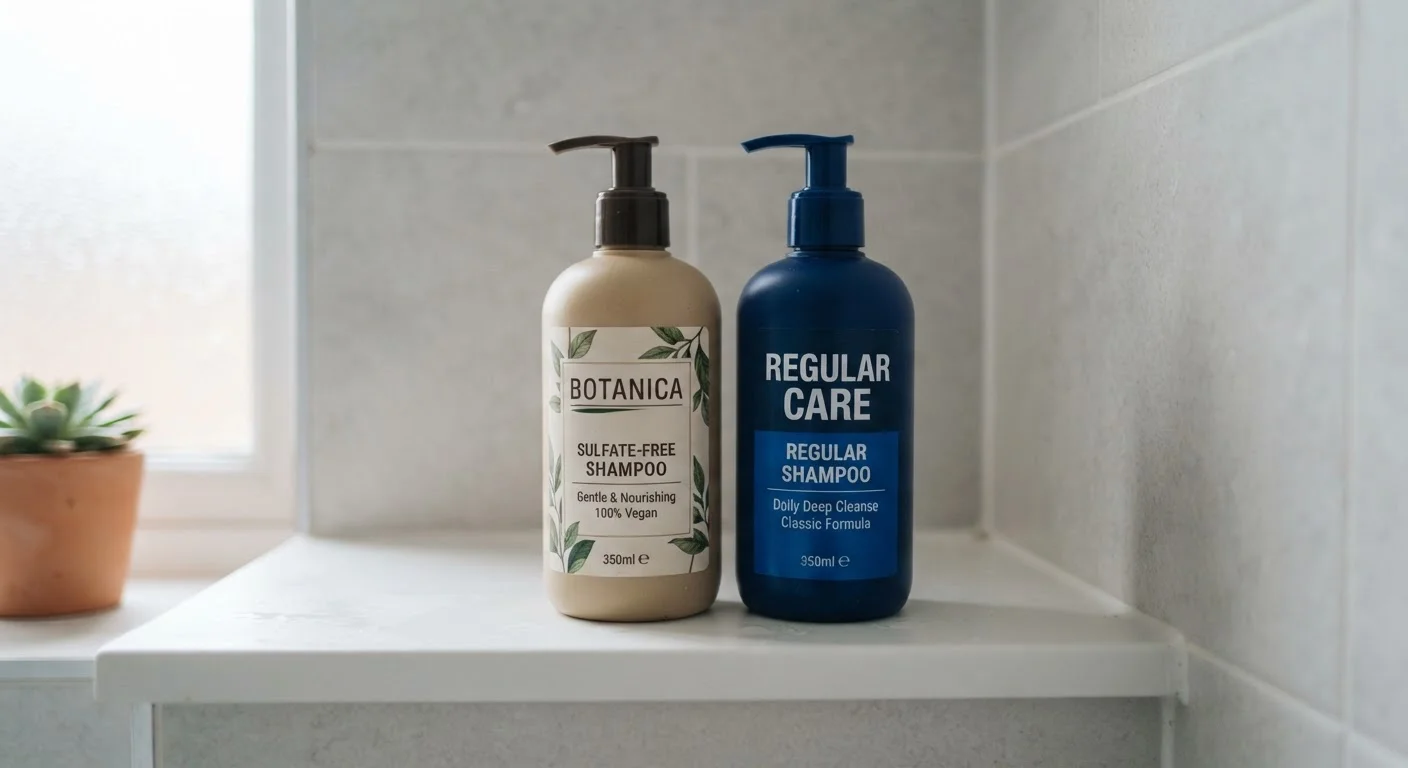
Option A
Sulfate-Free Shampoo
The gentler, moisture-preserving cleanse.
Best for: Best for color-treated, chemically processed, dry, curly, coily, or sensitive-scalp hair types that need a less stripping wash.
Option B
Regular (Sulfate-Containing) Shampoo
The thorough, deep-cleaning workhorse.
Best for: Best for oily scalps, fine straight hair, or anyone who uses heavy styling products and needs a powerful, efficient cleanse.
What Are Sulfates and What Do They Actually Do?
Sulfates are a class of surfactants - short for surface-active agents - that give shampoo its signature cleansing ability. The most common types found in hair care are sodium lauryl sulfate (SLS) and sodium laureth sulfate (SLES). Surfactants work by having a molecular structure with one end that attracts water and another that attracts oil, allowing them to lift sebum, dirt, and product residue from the hair and scalp so everything rinses away cleanly.
That effectiveness comes with a trade-off. Because sulfates are powerful emulsifiers, they don't distinguish well between unwanted oil buildup and the natural lipids your scalp and hair shaft actually need. For some hair types and scalp conditions, that thoroughness can tip into over-stripping - leaving hair feeling dry, rough, or frizzy after washing.
For a deeper dive into how these and other common ingredients work, see our guide on reading a shampoo ingredient label.
How Sulfate-Free Formulas Cleanse Differently
Sulfate-free shampoos substitute gentler surfactant families - such as cocamidopropyl betaine, sodium cocoyl isethionate, or coco-glucoside - that still remove oil and buildup but with notably less aggression. The immediate difference most people notice is significantly less lather. This surprises many first-time switchers who equate foam with cleanliness, but foam volume is largely cosmetic and has no bearing on how well a shampoo actually cleanses.
Because these milder surfactants leave more of the hair's natural oils intact, hair often feels softer or more moisturized after washing. The scalp's sebum production may also recalibrate over several weeks if it had been ramping up production to compensate for aggressive stripping - a process sometimes called the "transition period."
| Criterion | Sulfate-Free Shampoo | Regular Shampoo |
|---|---|---|
| Surfactant strength | Mild to moderate | Moderate to strong |
| Lather volume | Low to moderate | High |
| Oil removal | Gentler; retains more natural oils | Thorough; strips more oils |
| Color longevity | Better; less cuticle disruption | May accelerate fade |
| Product buildup removal | Less effective on heavy buildup | More effective |
| Best scalp type | Dry, sensitive, or reactive | Oily or normal |
| Best hair texture | Curly, coily, or chemically treated | Fine, straight, or oily-prone |
If you have textured or natural hair, moisture retention is especially important. Our article on washing natural hair covers how wash day choices affect curl health and moisture balance in more detail.
What Actually Changes When You Make the Switch
The first few washes after switching to a sulfate-free formula can feel unfamiliar. Hair may feel heavier or less "squeaky clean" - which is often a sign that natural oils are being retained rather than completely removed, not that the shampoo isn't working. For most people, this sensation fades within a few wash cycles as hair and scalp adjust.
~40%
Of shampoos sold in the U.S. are now sulfate-free
Market trend data from industry analysts reflects growing consumer demand for gentler cleansing formulas across all hair types.
4-6 weeks
Typical scalp adjustment period after switching
Hair care educators and trichologists commonly note a multi-week transition as sebum production normalizes after a formula change.
2x
How much faster color fades with sulfate shampoos
Research published in hair science literature suggests sulfate-based cleansers can roughly double the rate of color pigment loss compared to gentler alternatives.
For color-treated hair, the shift can be noticeably positive. Sulfates are known to open the hair cuticle during washing, which accelerates the loss of color pigment. Switching to a milder cleanser is a commonly recommended step for extending dye longevity. Similarly, those who use chemical treatments like relaxers may find that gentler surfactants reduce post-process dryness and breakage. If you're weighing a chemical service, our guide on chemically straightening or relaxing your hair outlines the key factors to consider.
One area where regular shampoos maintain an edge is heavy product buildup. Waxes, silicones, and thick styling creams may not rinse fully with milder surfactants alone. In these cases, many people use a clarifying or sulfate-containing shampoo occasionally while relying on sulfate-free formulas for everyday washing. Pairing the right cleanser with an appropriate conditioner matters too - see our breakdown of conditioner, deep conditioner, and hair mask to complete your routine.
This article is for general informational purposes only and does not constitute medical or dermatological advice. If you have persistent scalp concerns, consult a qualified healthcare or dermatology professional.
The content on this site is for informational purposes only and is not a substitute for professional advice. Always consult a qualified professional for guidance specific to your situation.