

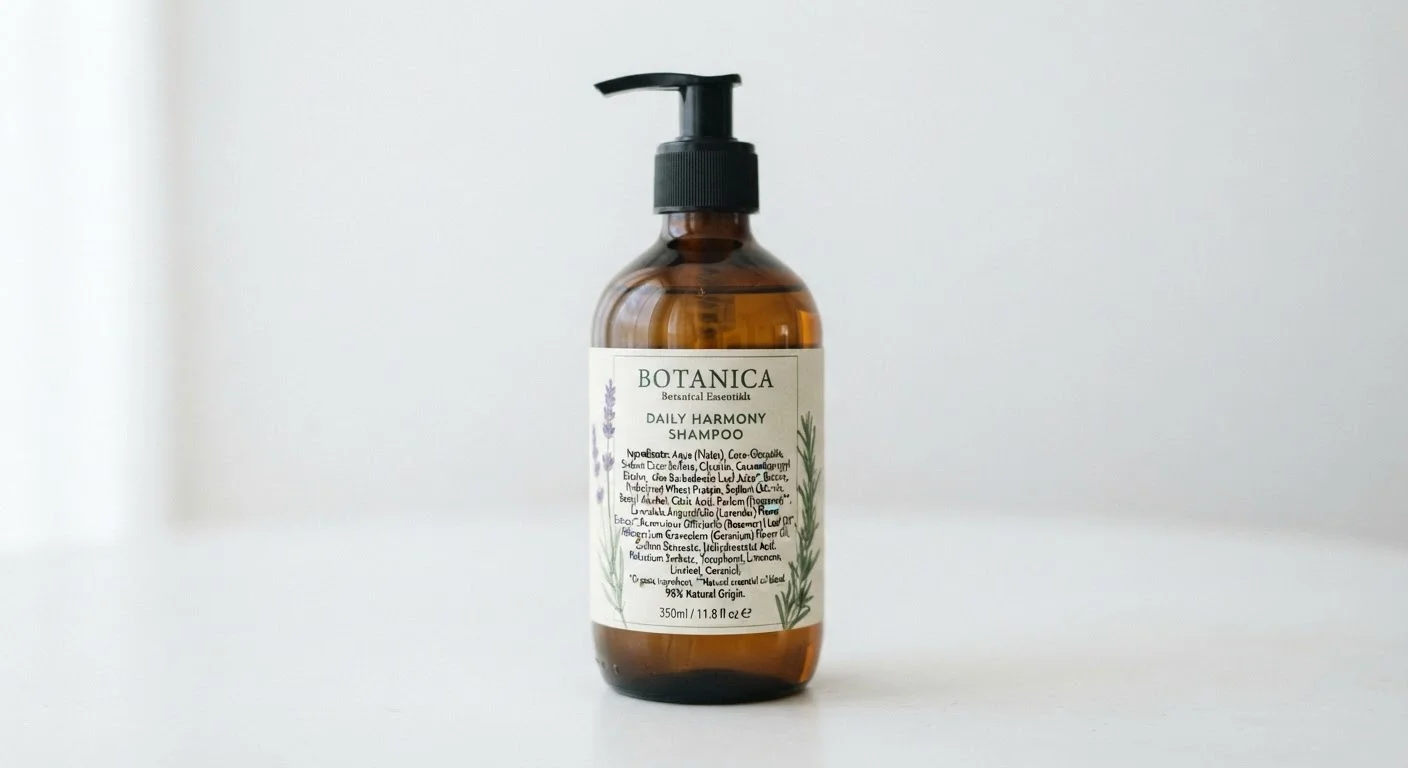
How the List Is Organized (and Why That Matters)
By law, cosmetic ingredient lists in the United States must follow INCI naming conventions and list ingredients in descending order of concentration - from the most abundant to the least. That single rule is the most useful thing to internalize before reading any shampoo label.
Practically speaking, the first five to eight ingredients make up the bulk of the formula. Ingredients listed after that - especially those appearing near fragrance, preservatives, or colorants - are typically present at less than 1%, often well under that threshold. So when you spot a buzzy botanical extract near the bottom of a long list, its actual concentration in the bottle may be quite small.
This doesn't automatically make it ineffective - some actives work at low percentages - but it does put marketing claims in perspective. Understanding how to decode ingredient lists applies equally to hair products as it does to skincare.
| Listing order | Highest to lowest concentration (FDA cosmetic labeling regulations) |
| Naming standard | INCI (International Nomenclature of Cosmetic Ingredients) (Personal Care Products Council) |
| Typical 1% threshold | Ingredients after this point can be listed in any order (FDA 21 CFR Part 701) |
| "Fragrance" or "Parfum" | Single label term that may represent many undisclosed compounds (FDA cosmetic labeling rules) |
| Water / Aqua | Almost always the first ingredient - the base of most formulas |
| Preservatives | Usually appear near the bottom of the list at low concentrations |
The Most Common Shampoo Ingredients Decoded
Most shampoos share a core set of functional ingredients. Here's what the most frequently encountered terms actually mean:
- Sodium Lauryl Sulfate (SLS) / Sodium Laureth Sulfate (SLES): These are surfactants - detergents that lift oil and dirt from the scalp and hair shaft. SLES is milder than SLS because it has undergone additional processing. If you have a sensitive scalp or color-treated hair, you may want to explore gentler alternatives. See our deeper look at how sulfate-free formulas differ.
- Cocamidopropyl Betaine: A mild, foam-boosting surfactant derived from coconut oil. Frequently used alongside sulfates to reduce irritation potential.
- Dimethicone / Amodimethicone: Silicones that coat the hair shaft to reduce frizz and add shine. They do not penetrate the strand; they form a film on the surface.
- Glycerin: A humectant that draws moisture from the environment into the hair. Found in many moisturizing formulas.
- Citric Acid: Adjusts the pH of the formula; also helps close the cuticle after cleansing, contributing to smoother-feeling hair.
- Fragrance / Parfum: A catch-all term that can represent dozens of undisclosed chemical compounds. For a detailed discussion of sensitivities associated with fragrance ingredients, see why fragrance labeling is complicated.
Surfactant
A cleansing agent that lowers surface tension between water and oils, allowing dirt and sebum to be rinsed away. Most shampoos contain at least one surfactant as a primary ingredient.
Humectant
An ingredient that attracts and retains moisture from the surrounding environment. Common humectants in shampoo include glycerin and panthenol.
Emollient
A substance that softens and smooths the hair shaft or skin surface. Oils and certain silicones function as emollients in hair care formulas.
INCI Name
International Nomenclature of Cosmetic Ingredients - the standardized, often Latin-based naming system used on cosmetic labels worldwide. Water, for example, is listed as 'Aqua.'
Silicone
A group of synthetic polymers (such as dimethicone) used in hair products to coat the cuticle and reduce frizz. They do not absorb into the hair shaft but form a surface-level film.
pH Adjuster
An ingredient added to bring a formula to the optimal acidity level for hair (generally 4.5-5.5). Citric acid and sodium hydroxide are common examples.
Matching Ingredients to Your Hair's Needs
Knowing what an ingredient does is only half the picture - the other half is understanding whether your hair actually benefits from it. Hair porosity, texture, and scalp condition all influence how your hair responds to different formulas. Our guide on why hair type matters for every product walks through those variables in detail.
As a general starting point: highly porous or chemically treated hair often benefits from formulas emphasizing humectants and emollients, while fine hair may feel weighed down by heavy silicones or oils listed early in the ingredient order. If your scalp is dry or reactive, ingredients near the top of the list - especially surfactants - are worth paying attention to.
If you're building a hair care routine from scratch, reading labels is a skill that compounds over time: the more formulas you examine, the faster patterns become recognizable.
This article is for informational and educational purposes only. It does not constitute medical or dermatological advice. Consult a qualified healthcare professional if you have concerns about scalp conditions, allergies, or sensitivities.
The content on this site is for informational purposes only and is not a substitute for professional advice. Always consult a qualified professional for guidance specific to your situation.