

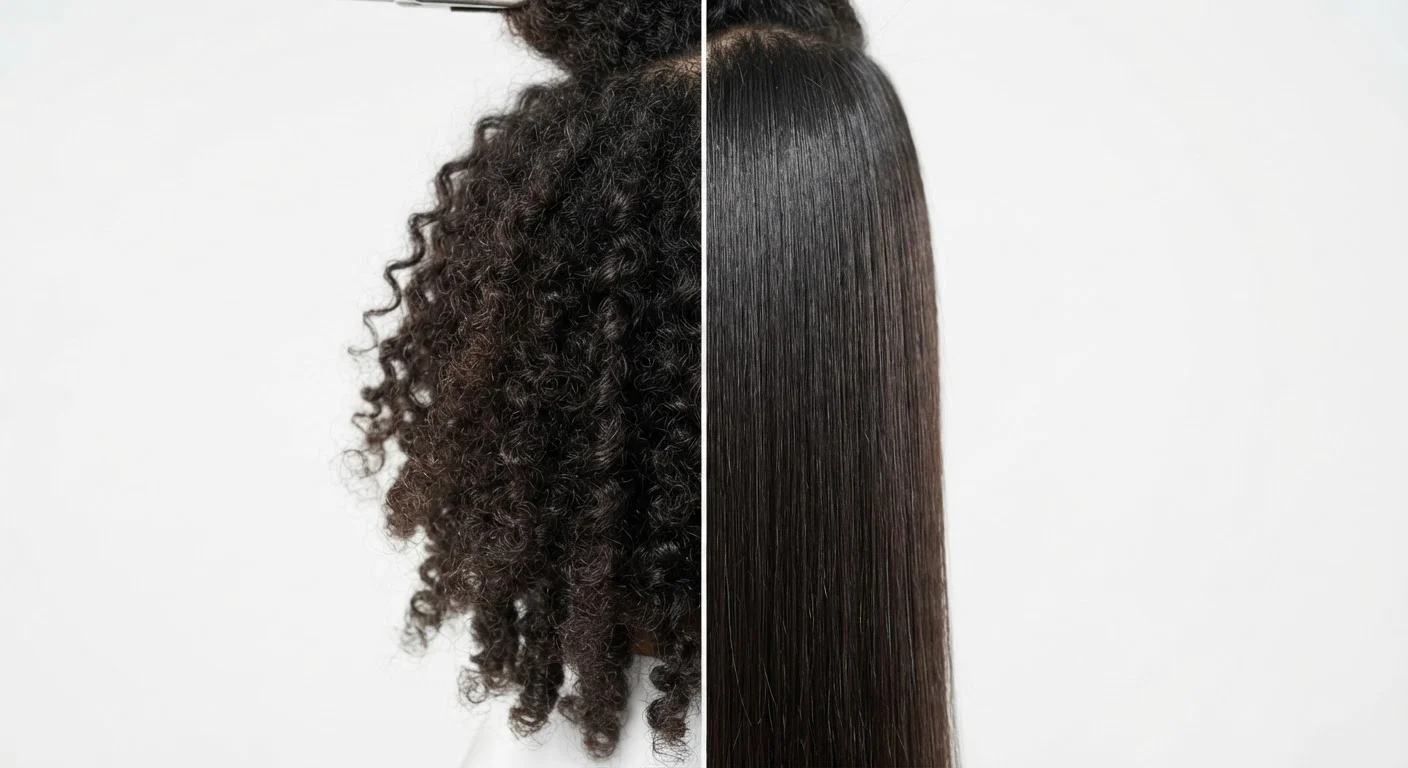
Our Verdict
Chemical relaxers can be a practical, liberating choice for those who want low-maintenance straight hair and are willing to commit to a structured upkeep routine. However, the permanence of the process, the cumulative chemical exposure, and the potential for damage mean this decision deserves careful thought and professional guidance rather than an impulse choice.
Best suited to adults who have researched the process thoroughly, consulted a licensed cosmetologist, and are prepared for the ongoing maintenance commitment that relaxed hair requires.
How Chemical Relaxers Actually Work
Chemical relaxers work by penetrating the hair shaft and permanently breaking the disulfide bonds that give curly or coily hair its shape. Most relaxers use either sodium hydroxide (commonly called lye) or guanidine carbonate (no-lye formulas) to achieve this. Once the bonds are restructured in their new, straighter configuration, the change cannot be reversed - only grown out.
This is a key distinction from heat styling. As explained in our related article on what heat styling does to your hair shaft, tools like flat irons alter the hair temporarily and wash out over time. A relaxer, by contrast, is permanent at the treated length. Understanding this irreversibility is the first and most important thing to consider before proceeding.
Lye vs. No-Lye Relaxers: A Quick Clarification
Lye relaxers use sodium hydroxide and are generally considered faster-acting and more effective, but require careful professional application. No-lye formulas use guanidine carbonate or similar compounds and are often marketed for at-home use, though they can still cause dryness and irritation. Neither type is inherently 'safer' than the other - both permanently alter hair structure and carry risks if misused. A licensed cosmetologist can help determine which formulation, if any, is appropriate for a given hair type and scalp condition.
The Pros: Why Many People Choose to Relax Their Hair
Reduces daily styling time significantly
Straight or looser-textured hair generally requires less manipulation to detangle and style, which can shorten morning routines considerably for people with dense, tightly coiled natural hair.
Consistent texture regardless of humidity
Unlike heat-straightened natural hair, relaxed hair does not revert in humid conditions, giving some people a more predictable styling experience day to day.
Broader range of hairstyles accessible
Chemically straightened hair can be cut, curled, or styled in a variety of ways that may be more challenging or time-consuming to achieve on tightly textured natural hair.
Can reduce heat tool dependency
Some people use relaxers to achieve straight styles without reaching for a flat iron daily, which may reduce the frequency of direct heat exposure on the hair shaft.
For many people - particularly those with tightly coiled or highly textured hair - a relaxer can genuinely simplify the day-to-day experience of managing their hair. Wash days tend to be shorter, detangling becomes easier, and a broader range of styles becomes more accessible without extended heat exposure on every occasion.
For those whose natural hair routines are already labor-intensive, the tradeoff can feel worthwhile. As our guide on washing natural hair notes, coily and curly hair already demands significant moisture management - some people find that a relaxer fits better into their lifestyle and self-care priorities.
The Cons: What to Weigh Before You Commit
Permanent and irreversible chemical change
Once applied, a relaxer cannot be undone - the treated portion of hair will remain straight until it is cut off. Transitioning back to natural hair requires growing out new growth while managing two distinct textures simultaneously.
Risk of scalp irritation and chemical burns
Sodium hydroxide and other active ingredients in relaxers are highly alkaline and can cause scalp burns, sores, or inflammation if applied incorrectly, left on too long, or used on a pre-irritated scalp.
Ongoing maintenance adds cost and effort
Touch-up appointments every eight to ten weeks are typically required, alongside investment in specialized conditioning treatments, protein masks, and moisture-focused products to maintain hair health.
Heightened breakage risk at line of demarcation
The boundary between relaxed and new natural growth is structurally weaker than either section alone, making hair especially prone to snapping if not handled with extra care during styling and washing.
Emerging research raises health considerations
Some scientific studies have examined associations between frequent long-term use of certain chemical straighteners and adverse health outcomes. While research is ongoing, the topic warrants informed discussion with a healthcare provider.
Incompatible with certain other chemical services
Relaxed hair generally cannot safely undergo other chemical processes - such as permanent color or perms - without significantly elevated risk of breakage, requiring a more limited overall hair-service menu.
The disadvantages of chemical relaxers are significant and should be weighed honestly. Beyond the permanence, the application process itself carries real risk - overlapping relaxer onto previously treated hair (known as overprocessing), leaving the product on too long, or applying it to a compromised scalp can result in breakage, scalp burns, or thinning.
It's also worth noting that several studies have examined potential links between long-term, frequent use of certain chemical hair straighteners and health concerns. This is an area of ongoing scientific and regulatory discussion, and anyone considering a relaxer - particularly those who may use one regularly over many years - is encouraged to discuss their individual risk profile with both a dermatologist and a licensed cosmetologist.
Everyday habits matter too. Chemically treated hair is more vulnerable to breakage, so common grooming habits that quietly damage hair - like aggressive brushing or skipping trims - become higher stakes after a relaxer.
Maintenance, Cost, and Long-Term Commitment
A relaxer is not a one-time event. New growth emerges from the roots with the hair's natural texture every four to six weeks, creating a line of demarcation - the boundary between treated and untreated hair - that is vulnerable to breakage. Touch-up applications are generally recommended every eight to ten weeks by professionals, though individual growth rates vary.
8-10 weeks
Typical time between relaxer touch-ups
Hair care professionals generally recommend this interval to minimize overprocessing while managing new growth texture.
~1 cm/month
Average human hair growth rate
The American Academy of Dermatology notes that scalp hair grows approximately half an inch per month on average, which determines how quickly new texture appears at the roots.
The cumulative cost - including professional applications, specialized shampoos, deep conditioning treatments, and protein treatments - adds up meaningfully over time. Relaxed hair typically thrives with sulfate-free, moisturizing cleansers; our overview of sulfate-free vs. regular shampoo explains why gentler formulas are generally preferred for chemically treated strands.
Alternatives Worth Considering First
If the goal is manageable length or reduced styling time without permanent commitment, there are options to explore before choosing a relaxer. Protective styles like braids and twists can reduce daily manipulation significantly and support length retention without chemical processing. Blow-outs and flat ironing offer temporary straightening on natural hair, though repeated heat use carries its own risks covered in our heat styling article.
Ultimately, the right choice depends on your hair's current health, your lifestyle, your personal preferences, and an honest conversation with a licensed professional. This article provides general educational information only and is not a substitute for personalized guidance from a qualified cosmetologist or dermatologist.
This article is for informational purposes only and does not constitute medical or professional cosmetology advice. Consult a licensed dermatologist or cosmetologist before undergoing any chemical hair treatment.
The content on this site is for informational purposes only and is not a substitute for professional advice. Always consult a qualified professional for guidance specific to your situation.