

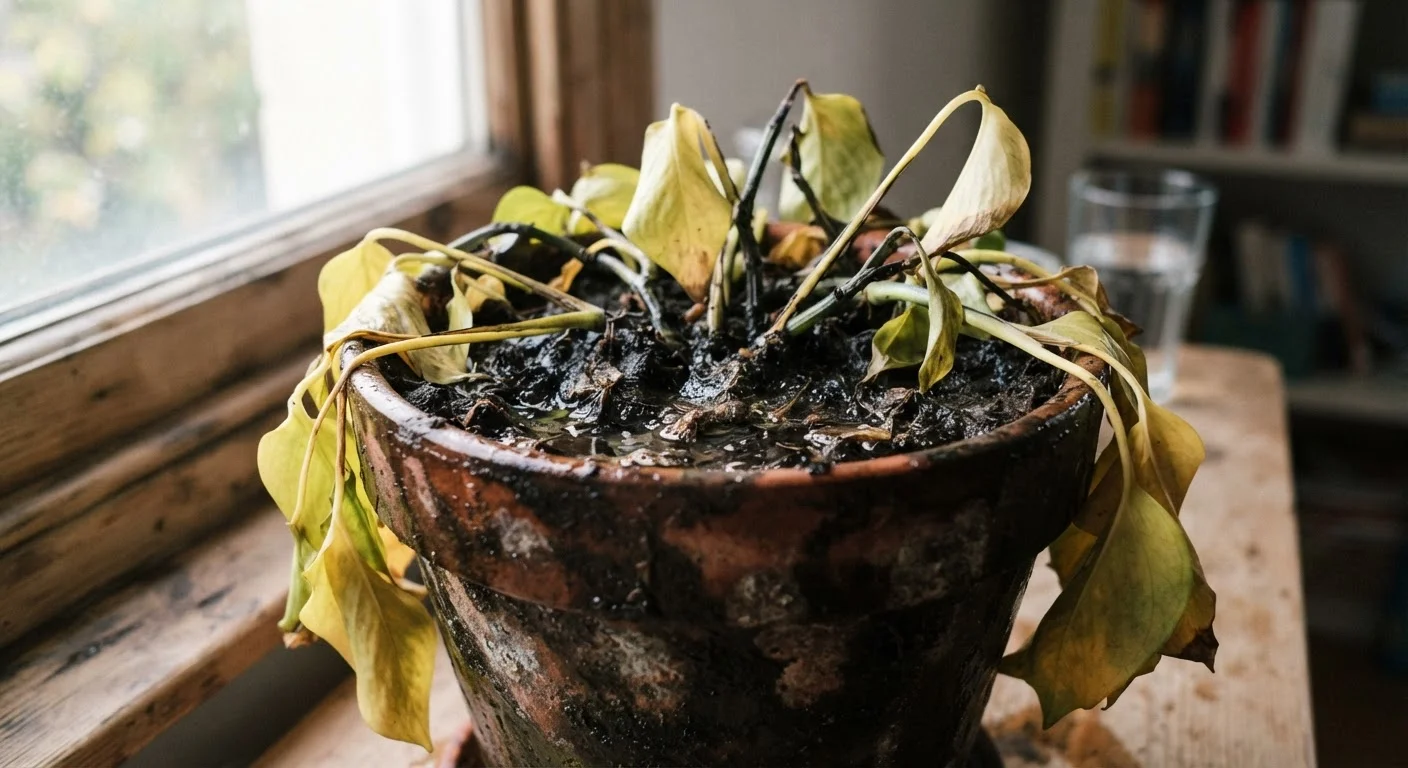
Why Too Much Water Is More Dangerous Than Too Little
It seems counterintuitive: water is essential for plant life, yet too much of it is a leading cause of plant death in home gardens. The reason lies underground. Plant roots need both water and oxygen to function. Healthy soil contains a balance of solid particles, water, and air pockets. When soil stays saturated, those air pockets fill with water, cutting off the oxygen supply to roots.
Without oxygen, roots cannot absorb nutrients or water efficiently - a cruel irony. They begin to die back, and the decaying tissue creates ideal conditions for root-rot fungi like Phytophthora and Pythium to colonize. By the time symptoms appear above ground, the damage below is often already severe.
Drought, by contrast, triggers a plant's built-in survival mechanisms: stomata close, growth slows, and the plant conserves resources. Many species can bounce back from a dry spell in days. Recovery from advanced root rot is far less predictable.
#1
Cause of houseplant death among home gardeners
Overwatering is widely cited by horticultural educators and extension programs as the single most common reason container plants fail.
~48 hrs
Time before oxygen deprivation damages roots in saturated soil
University extension research on root physiology indicates roots in fully waterlogged soil can begin experiencing oxygen stress within one to two days.
Common Overwatering Mistakes - And How to Avoid Them
Most overwatering isn't intentional neglect - it's misplaced care. Understanding where gardeners go wrong is the first step toward building habits that actually support plant health.
Watering on a fixed schedule regardless of soil conditions.
Why it happens: Routines feel responsible, and it's easy to assume plants need water every Monday and Thursday regardless of weather, season, or recent rain.
Misreading yellow leaves as a sign of underwatering.
Why it happens: Yellowing foliage is a well-known drought signal, so many gardeners immediately water more when they see it - even when overwatering is already the root cause.
Using pots or garden beds with inadequate drainage.
Why it happens: Decorative pots without drainage holes look attractive, and compacted or clay-heavy garden soil is often planted into without amendment.
Applying the same watering amount to every plant in the garden.
Why it happens: It's simpler to treat a garden uniformly, and many gardeners don't account for the different moisture needs of succulents versus ferns or tomatoes versus lavender.
Overwatering newly planted or dormant plants.
Why it happens: Gardeners often want to give new transplants or recently divided perennials extra care, assuming more water means faster establishment.
For gardeners weighing different growing setups, the drainage advantages of raised beds vs. in-ground planting are worth exploring - raised beds naturally shed excess water more efficiently than compacted in-ground soil.
Root Rot Can Kill a Plant in Days
Once root rot takes hold - caused by the fungal pathogens that thrive in saturated soil - it spreads quickly and is often irreversible. If you pull a plant from its pot and find black, mushy roots with a foul smell, immediate action is needed: trim affected roots, repot in fresh dry mix, and drastically reduce watering. Prevention is far easier than recovery.
Building a Smarter Watering Routine
The goal isn't to water less - it's to water right. A few practical shifts can transform how you think about moisture management in the garden.
- Water deeply, not frequently. Infrequent deep watering encourages roots to grow downward seeking moisture, building drought resilience. Shallow, frequent watering keeps roots near the surface where they are vulnerable.
- Water at the base, not the leaves. Wet foliage invites fungal disease. Direct water to the root zone and aim for morning watering so any incidental leaf moisture evaporates during the day.
- Account for rain. Use a simple rain gauge or check local precipitation data before irrigating. A quarter inch of rain often displaces the need for supplemental watering for several days.
- Adjust by season. Plants need less water during cooler months and periods of slower growth. A schedule that works in August will likely overwater the same plants in October.
Understanding which plants you're growing also shapes your approach. Perennials and annuals have different root depths and seasonal rhythms - our article on perennials vs. annuals explains how their lifecycles affect care needs throughout the year.
With consistent attention to soil conditions rather than the calendar, most gardeners find they water significantly less - and grow healthier plants as a result.
The content on this site is for informational purposes only and is not a substitute for professional advice. Always consult a qualified professional for guidance specific to your situation.