

Our Verdict
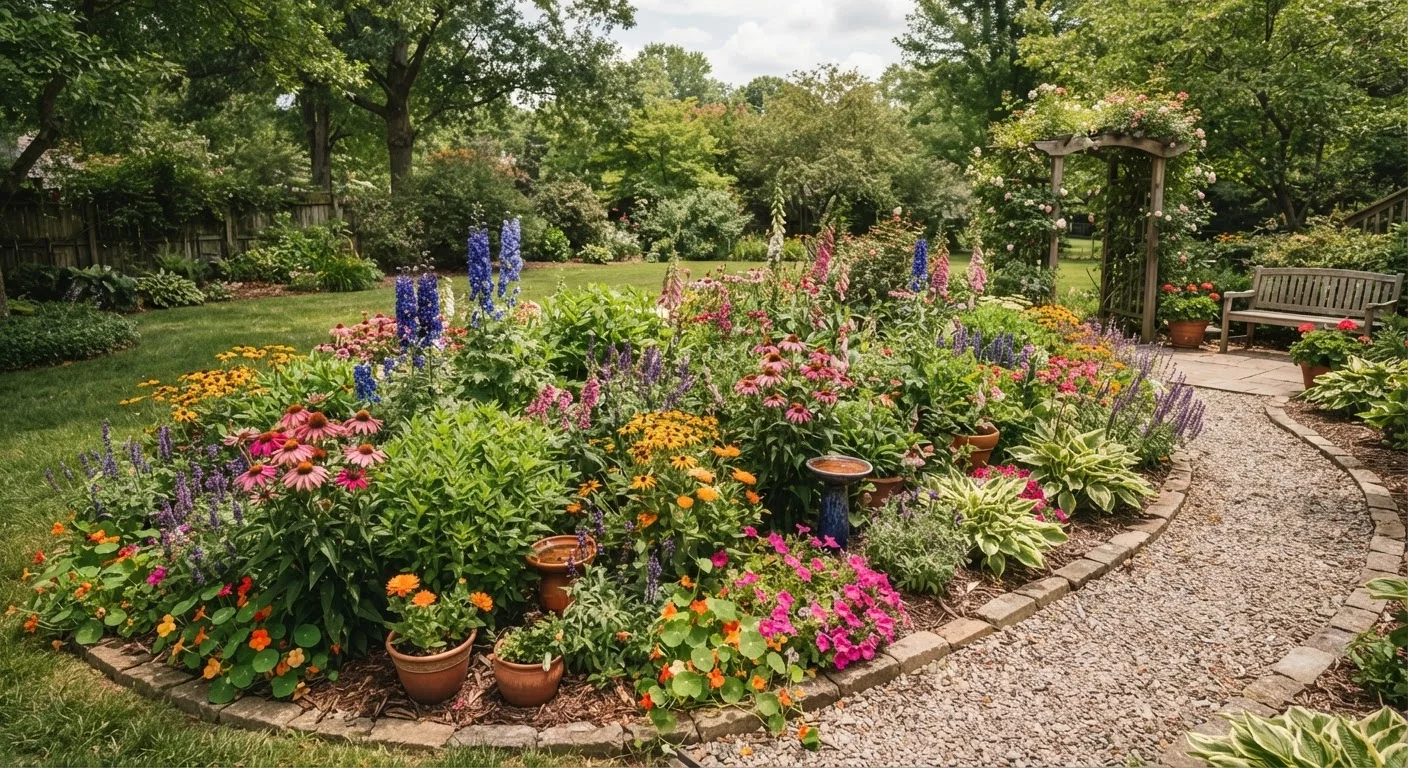
Neither perennials nor annuals are universally superior - the strongest gardens use both intentionally. Perennials build the bones of a garden that matures and rewards patience, while annuals give you the freedom to refresh color and composition each season without long-term commitment.
| Best for | Recommended |
|---|---|
| Gardeners who want low-maintenance, long-term structure | Perennials |
| Those who love seasonal color changes and design flexibility | Annuals |
| New gardeners learning what works in their climate and soil | Annuals |
| Experienced gardeners building a self-sustaining landscape | A mixed perennial-annual planting strategy |
What Makes a Plant a Perennial or an Annual?
The distinction between perennials and annuals comes down to their natural lifecycle. Annuals germinate, grow, flower, set seed, and die - all within a single growing season. Plants like marigolds, zinnias, and petunias fall into this category. They pour all their energy into producing blooms and seeds before frost ends their cycle.
Perennials, by contrast, die back to the ground in winter but regrow from their roots each spring. Coneflowers, hostas, black-eyed Susans, and ornamental grasses are familiar examples. In their first year, perennials focus heavily on root development, which is why they often bloom modestly at first. By years two and three, they reward that patience with stronger, wider displays.
A third category worth knowing: biennials, which complete their lifecycle over two years - growing foliage in year one and flowering in year two before dying. Foxglove and hollyhock are common examples. For most gardeners, biennials behave practically like short-lived perennials.
Understanding these lifecycles is the foundation for planning a garden that performs season after season. Before you dig in, check out our guide on reading a plant tag to decode the USDA hardiness zone and bloom time information that determines whether a plant will thrive in your yard.
How Perennials and Annuals Compare
Choosing between the two - or deciding how to blend them - depends on what you value most in a garden. Here's how they stack up across the factors that matter most to everyday gardeners.
| Perennials | Annuals | |
|---|---|---|
| Lifespan | Return each year from roots | Complete lifecycle in one season |
| First-year color impact | Often modest while establishing | Strong, immediate bloom display |
| Long-term cost | Lower - plants multiply over time | Higher - repurchased each season |
| Design flexibility | Less - plants return to same spot | High - change palette every year |
| Maintenance intensity | Moderate (divide every few years) | Consistent deadheading and watering |
| Wildlife and ecological value | High - deep roots, multi-year habitat | Moderate - varies by species |
| Best for | Structural, low-replanting gardens | Seasonal color and experimentation |
One nuance the table doesn't capture: annuals often outperform perennials in first-season impact. If you're preparing for a summer event or want an impressive garden quickly, annuals deliver. Perennials, however, compound over time - each year the planting gets fuller, requires less intervention, and becomes more ecologically valuable as its root system deepens.
Building a Garden That Uses Both
The most satisfying home gardens don't force a choice - they layer perennials and annuals strategically. Think of perennials as the architecture and annuals as the seasonal décor.
Use Perennials for Structure
Plant perennials in the middle and back of beds where they'll expand over the years. Group them in odd numbers (threes or fives) for a natural look, and choose varieties with staggered bloom times so something is always in flower from spring through fall. A well-planned perennial border can provide bloom continuity from early spring bulbs through late-season asters.
Use Annuals to Fill Gaps and Add Seasonal Pop
In the first two to three years, perennials leave noticeable bare space as they establish. Annuals are ideal for filling those gaps without competing aggressively. Tuck fast-growing annuals between young perennials, and swap them out each season to keep the beds looking intentional rather than sparse.
Annuals also let you experiment. Try a new color palette or plant combination one year with zero long-term commitment. If a combination doesn't work, next year you simply plant something else.
Start With a 70/30 Rule
If you're establishing a new garden bed, a practical starting point is filling roughly 70% with perennials and 30% with annuals. As your perennials mature and spread over two to three years, you can gradually reduce the annual portion or shift it to container plantings near seating areas. This ratio balances early visual impact with long-term sustainability.
For gardeners interested in supporting local wildlife, consider that many native perennials - like milkweed, coneflower, and wild bergamot - provide essential habitat and food for pollinators. Our guide on attracting pollinators covers how to choose plants that make your garden a genuine refuge for native bees and butterflies.
Cost, Maintenance, and Long-Term Value
Budget is often where gardeners feel the most uncertainty. Perennials typically cost more per plant at purchase, but because they return each year - and many can be divided and multiplied - the per-season cost decreases over time. Annuals are generally less expensive individually, but since you're buying new plants or seed every year, the cumulative cost adds up.
Maintenance also differs. Perennials may need dividing every three to five years to stay vigorous, and some benefit from deadheading (removing spent blooms) to encourage reblooming. Annuals need consistent deadheading and watering throughout the season to keep performing.
For practical garden budgeting ideas, you can explore general strategies through resources like budgeting basics - many of the same principles of planning ahead and tracking costs apply surprisingly well to seasonal garden spending.
A smart approach: invest in perennials for the bones of your garden over several seasons, then allocate a modest annual budget for seasonal color through annuals. This hybrid approach balances upfront cost with long-term value.
Also consider your planting setup. Whether you're working with raised beds or traditional borders affects how you manage both plant types - our comparison of raised beds vs. in-ground planting can help you think through the drainage and maintenance differences before committing to a layout.
Designing With Bloom Time in Mind
One of the most common garden disappointments is a beautiful spring bed that looks completely bare by July. Thoughtful plant selection across both categories solves this. When planning your garden, map out when each plant blooms:
- Early spring: Perennials like bleeding heart and creeping phlox, or cool-season annuals like pansies and snapdragons
- Summer: Coneflower, black-eyed Susan, and shasta daisy (perennials); zinnias, cosmos, and impatiens (annuals)
- Late summer to fall: Asters, sedum, and ornamental grasses (perennials); celosia and begonias (annuals)
Layering bloom times ensures you always have something drawing the eye. You can take this further by exploring companion planting pairings that actively benefit each other - for instance, pairing nitrogen-fixing plants near heavy bloomers to naturally support soil health.
A garden designed around bloom succession - supplemented annually with flexible annuals - is one that earns admiring looks from neighbors in May and October. That kind of seasonal reliability is what transforms a yard into a true outdoor living space. For ideas on how to extend that design thinking beyond the planting beds, see our guide to designing a backyard you'll actually use.
The content on this site is for informational purposes only and is not a substitute for professional advice. Always consult a qualified professional for guidance specific to your situation.