

Our Verdict
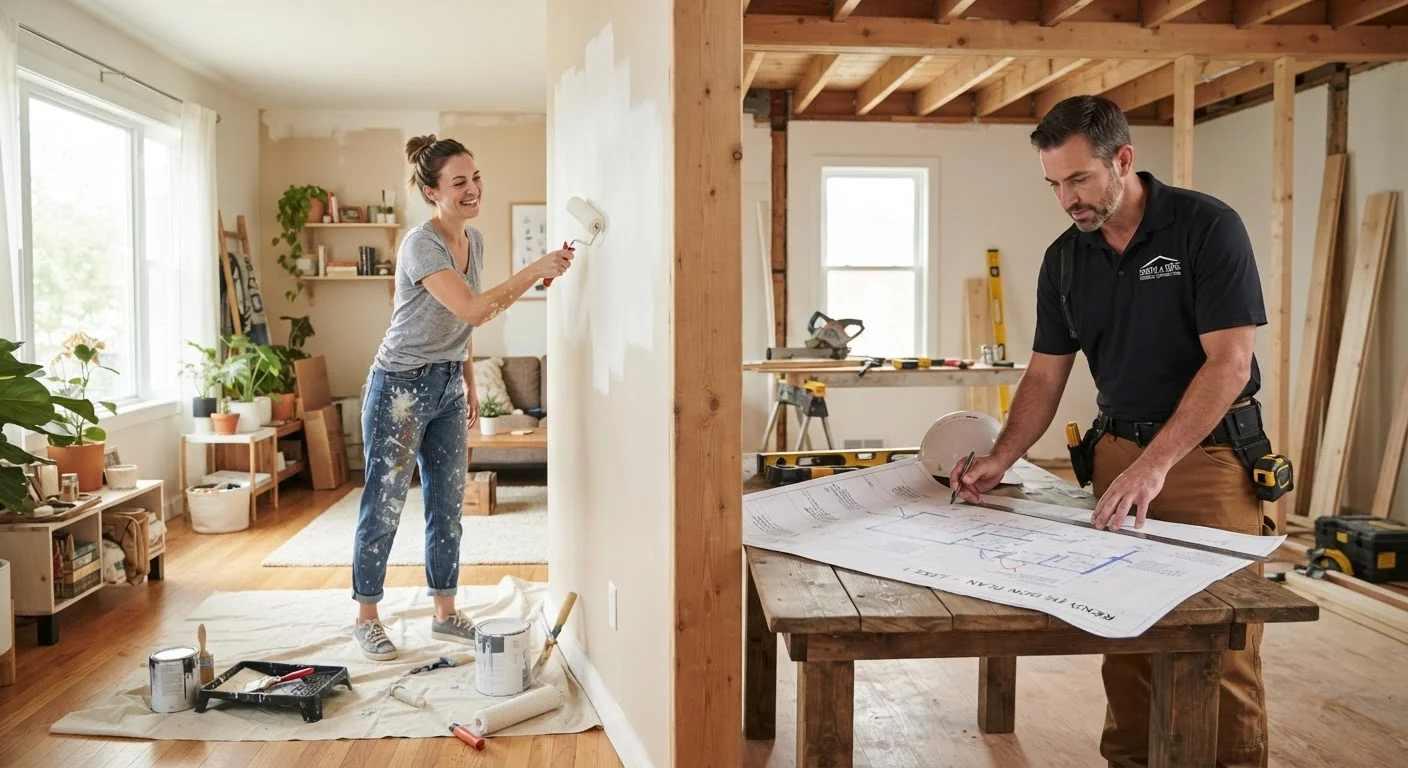
Most homeowners can confidently handle cosmetic, low-risk projects with basic tools and preparation. But work involving structural integrity, electrical systems, gas lines, or permits almost always belongs in professional hands - not because the task looks hard, but because the consequences of errors are serious and sometimes irreversible.
| Best for | Recommended |
|---|---|
| Homeowners comfortable with tools and patient with prep work | DIY |
| Projects involving permits, electrical, gas, or structural elements | Licensed Contractor |
| Those working within strict time or cost constraints | Licensed Contractor |
| Maintenance tasks that repeat regularly and carry low failure risk | DIY |
Why the DIY-vs.-Contractor Question Matters
Every homeowner eventually faces the moment: something needs fixing or upgrading, and the first instinct is to pull up a tutorial. Sometimes that instinct is exactly right. Other times, it leads to costly mistakes, failed inspections, or even safety hazards. The honest truth is that the DIY-or-hire decision isn't just about skill - it's about risk, code compliance, and what happens if something goes wrong.
Understanding where the line actually falls can save you money on projects you can genuinely handle, and protect you on the ones where professional work is non-negotiable. For a broader look at how renovation assumptions lead to budget overruns, see common renovation myths that cost homeowners real money.
| DIY | Licensed Contractor | |
|---|---|---|
| Typical cost | Materials only; labor is your time | Labor + materials; higher upfront outlay |
| Permit handling | Homeowner's responsibility; varies by locale | Contractor typically pulls and manages permits |
| Skill requirement | Low to moderate for suitable tasks | Licensed and insured for regulated work |
| Risk if error occurs | Usually correctable on low-risk tasks | Contractor liability covers regulated work |
| Code compliance | Homeowner must self-research requirements | Professional is accountable to code |
| Insurance implications | Unpermitted DIY can void claims | Licensed work generally supports claims |
Projects That Are Genuinely DIY-Friendly
A wide range of home improvement tasks are well within reach for homeowners who are patient, have basic tools, and take time to prepare properly. These generally share a few characteristics: mistakes are correctable, no permits are required, and the risk of injury or structural damage is low.
- Interior painting - Proper prep (cleaning, taping, priming) matters more than technique. Most rooms are approachable with a weekend and some practice.
- Caulking and weatherstripping - Sealing gaps around windows, doors, and fixtures is straightforward and has a meaningful impact on energy efficiency.
- Replacing hardware and fixtures - Swapping cabinet pulls, door handles, light switch covers, or faucet aerators requires minimal tools and no permits.
- Patching drywall - Small holes and dings are manageable DIY repairs. Larger sections involving structural framing or moisture damage are a different matter.
- Basic landscaping and garden beds - Planting, mulching, and seasonal cleanup are classic DIY tasks. Grading that affects drainage near the foundation is more complex.
- Gutter cleaning and minor maintenance - Routine clearing of debris is something most homeowners can manage safely with proper ladder technique.
Start Small to Build Confidence
If you're new to home improvement, begin with low-stakes tasks like painting a single room or replacing cabinet hardware before tackling anything more involved. Each completed project builds both skill and the judgment to recognize when a job exceeds your current abilities. Document your work with photos - it can be useful for future reference and for buyers if you ever sell.
Where You Should Call a Professional
Some projects look manageable on the surface but carry real consequences when they go wrong. These are the categories where licensed professionals aren't just preferable - they're often legally required.
- Electrical work beyond basics - Adding circuits, upgrading panels, or working inside the breaker box requires a licensed electrician in most jurisdictions. Permits and inspections exist because wiring errors cause fires.
- Gas lines - Any work involving gas supply lines, connections, or appliance tie-ins should be handled only by a licensed plumber or gas fitter. There is no margin for error.
- Structural changes - Removing or modifying walls, especially load-bearing ones, affects your home's structural integrity. Before you swing a hammer, read up on what to check before opening a wall.
- Roofing - Beyond replacing a few shingles on an accessible low-pitch roof, roofing involves fall hazards, waterproofing complexity, and warranty implications that favor professional installation.
- Plumbing into the mains - Connecting to supply or drain lines typically requires permits and a licensed plumber. A failed connection can mean water damage, mold, and code violations.
- Deck building - Footings, ledger attachment, and load calculations for decks are regulated and inspected. See structural decisions every homeowner should understand before adding a deck.
The Hidden Cost of Skipping Permits
One of the most significant - and underappreciated - risks of DIY work in regulated categories is performing it without the required permits. Unpermitted work can create serious problems:
- It may need to be torn out and redone when you sell the home, as buyers' inspectors and lenders increasingly flag it.
- Homeowners insurance may deny claims for damage traced to unpermitted work.
- Local code enforcement can require correction at your expense, sometimes years after the work was done.
Permit requirements vary by municipality, so it's always worth a quick call to your local building department before starting any project that touches electrical, plumbing, HVAC, or structural systems. If you're hiring out, verify the contractor pulls permits - not just promises to. Our guide on questions to ask a contractor before work begins covers exactly what to confirm upfront.
Making the Call: A Practical Framework
When you're sizing up a project, run through these questions before deciding which path to take:
- What's the worst-case outcome if I make a mistake? A crooked tile can be re-grouted. A miswired circuit can start a fire. The consequence gap matters enormously.
- Does this project require a permit in my area? If yes, understand that pulling a permit as a homeowner-owner is sometimes allowed for your own residence - but the work may still need inspection by a licensed professional in certain jurisdictions.
- Do I have the tools, time, and realistic skill level? Watching a tutorial is not the same as having hands-on experience. Be honest about your starting point.
- What will this look like at resale? Buyers, inspectors, and lenders scrutinize work quality and permit history. Reading a home inspection report can give you a sense of how professionals assess these issues.
When the answers point toward risk, a licensed contractor isn't a concession - it's a sound investment in your home's safety and value.
The content on this site is for informational purposes only and is not a substitute for professional advice. Always consult a qualified professional for guidance specific to your situation.