

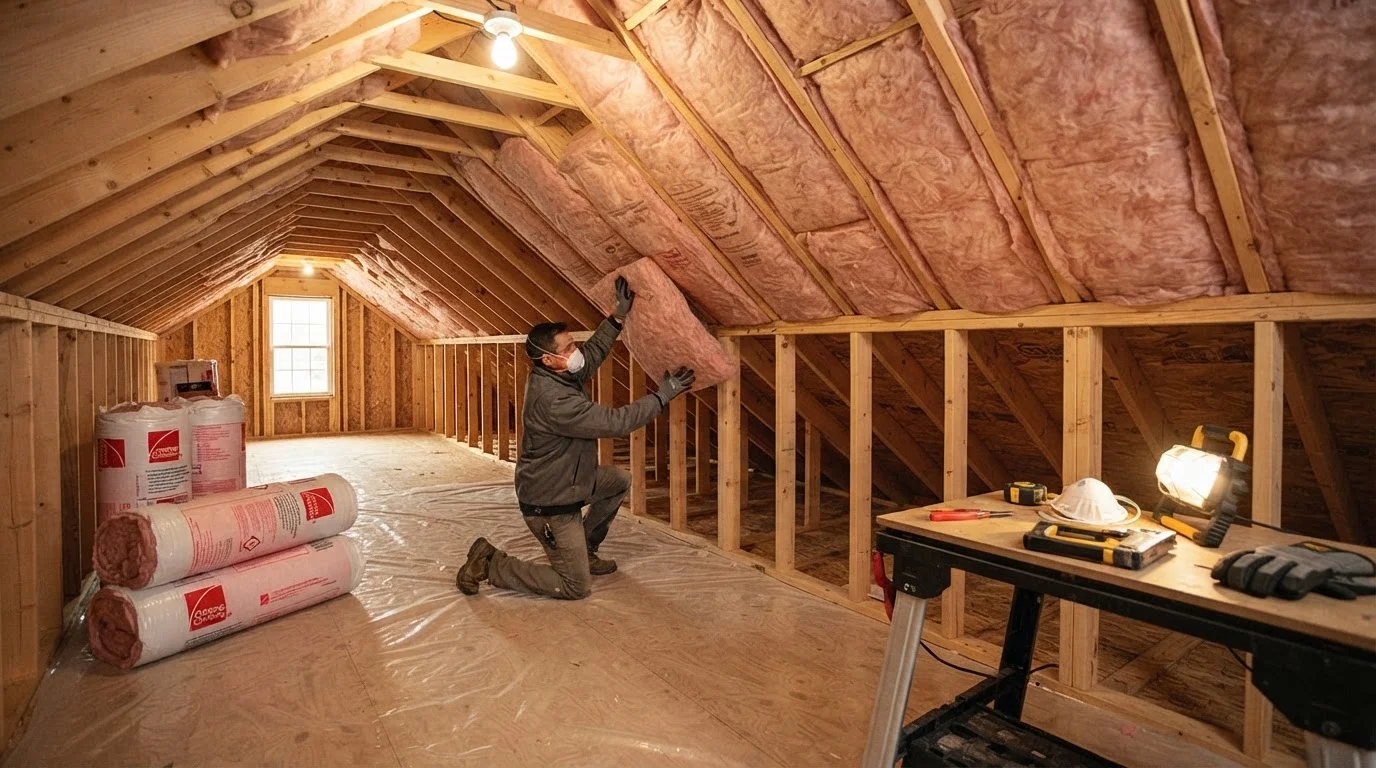
The Renovation That Rarely Gets the Credit It Deserves
Walk through any home improvement showroom and you'll find kitchens, bathrooms, and flooring front and center. Attic insulation, by contrast, is invisible once installed - and that invisibility is exactly why it gets overlooked. But among all the upgrades a homeowner can make, few deliver as consistent and measurable a return as improving what's above the ceiling.
Unlike a kitchen refresh, which depends heavily on taste, timing, and resale market conditions, attic insulation works quietly every single day. It reduces the energy your HVAC system expends, smooths out temperature swings between rooms, and lowers the stress placed on heating and cooling equipment. The payback isn't a maybe - it's physics.
That said, attic insulation isn't a one-size-fits-all project. Understanding how it works, what affects its performance, and when to call a professional makes the difference between a job that delivers and one that falls short.
How Heat Loss Through the Attic Actually Works
Heat moves in three ways: conduction (through solid materials), convection (through air movement), and radiation (through electromagnetic waves). Your attic is a battleground for all three. In winter, warm air rises to your ceiling and conducts heat upward through framing, drywall, and whatever insulation is present - or isn't. In summer, the sun heats your roof deck to extreme temperatures, and that heat radiates downward into living spaces.
The attic floor - the ceiling of your top floor - is the primary thermal boundary in most homes with unconditioned attics. When insulation there is thin, absent, or damaged, conditioned air escapes continuously. According to the U.S. Department of Energy, heating and cooling account for roughly half of a typical home's energy use, and the attic is one of the most common sources of loss.
~50%
Share of home energy use from heating and cooling
The U.S. Department of Energy estimates that heating and cooling account for roughly half of a typical American home's total energy consumption.
15%
Potential heating/cooling savings from air sealing and insulation
The EPA's ENERGY STAR program has estimated that properly sealing and insulating a home can save an average of 15% on heating and cooling costs, though individual results vary.
Air leakage compounds the problem. Gaps around recessed lighting fixtures, attic hatches, plumbing penetrations, and electrical boxes allow conditioned air to escape directly - no insulation value offsets that. This is why professionals always recommend air sealing before adding insulation. Sealing those bypasses first ensures the insulation can do its job.
R-Value, Insulation Types, and What the Numbers Mean
R-value is the standard measure of thermal resistance. A higher R-value means the material resists heat flow more effectively. The appropriate R-value for your attic depends on your climate zone - the DOE's climate zone map divides the country into zones with different recommendations, typically ranging from R-30 in the mildest regions to R-60 in the coldest.
Common attic insulation types include:
- Fiberglass batts: Rolls of material designed to fit between joists. Easy to handle for DIY, but gaps around framing reduce effectiveness significantly.
- Blown-in fiberglass or cellulose: Loose material distributed with a blower machine, which fills irregular spaces more thoroughly. Cellulose is made largely from recycled material and performs well in cold climates.
- Spray polyurethane foam: Applied as a liquid that expands and cures, forming both an air barrier and insulation. Often used for unvented attic assemblies or sealing complex penetrations. Requires a licensed professional to install safely.
No insulation type substitutes for proper installation. Even high-R materials underperform when compressed, poorly fitted, or installed without addressing air leaks first. If you're evaluating older insulation, look for signs of moisture damage or compression - both reduce performance significantly. See our guide on deferred maintenance costs for how neglected insulation can quietly compound into bigger problems.
Always Air Seal Before You Insulate
Adding more insulation over existing air gaps delivers only a fraction of the expected benefit. Before installing any new material, seal around recessed light cans, the attic hatch, top plates, and any penetrations for pipes or wiring. Use caulk for small gaps and rigid foam or fire-rated caulk for larger openings. This step is often more impactful than the insulation itself.
When to DIY and When to Call a Professional
Adding blown-in insulation to an accessible attic floor is within reach for confident DIYers. Many home improvement stores rent blower equipment, and cellulose or fiberglass bags are sold with coverage charts to guide you. The work itself - once air sealing is done - is physically manageable, though it requires protective gear including a respirator, goggles, and disposable coveralls.
However, certain attic conditions warrant a licensed professional:
- Presence of older vermiculite insulation, which may contain asbestos (do not disturb it; have it tested first)
- Signs of moisture damage, mold, or pest intrusion in the attic space
- Homes with knob-and-tube wiring, which requires specific precautions around insulation coverage
- Unvented attic designs involving spray foam at the roof deck level
A home energy auditor can provide an unbiased assessment of your attic's current performance and recommend a scope of work. Many utilities offer subsidized or free energy audits - check with your local utility provider. This kind of professional input is especially useful if you're also weighing broader HVAC improvements, since the two systems work together. Our HVAC maintenance guide covers how insulation and your heating and cooling system interact.
Attic insulation may never be the most exciting renovation you do. But it may well be the one that earns back the most - in comfort, in lower monthly bills, and in reduced wear on your home's mechanical systems. That's a return worth understanding.
Frequently Asked Questions
Check whether you can see the attic floor joists - if you can, your insulation is likely too thin. Uneven indoor temperatures, high energy bills, and ice dams forming on your roof in winter are other common signs. A home energy auditor can measure existing R-values and identify gaps.
There is no single best type - the right choice depends on your attic's structure, climate zone, and budget. Blown-in cellulose and fiberglass are common for attic floors; spray foam is often used for roof decks in unvented attic designs. A qualified contractor can help you weigh the options for your specific situation.
In many cases, yes - new insulation can be layered over old material as long as the existing insulation is dry, undamaged, and free of mold. Wet or compacted insulation should be removed first. Always air seal any gaps before adding new layers.
Yes. In summer, a well-insulated attic slows the transfer of outdoor heat into your living space, reducing the burden on your air conditioning system. The benefit works in both directions throughout the year.
Permit requirements vary by location. Many jurisdictions do not require a permit for adding insulation, but some do - especially if the work involves changes to ventilation or is tied to a larger renovation. Check with your local building department before starting any project.
The content on this site is for informational purposes only and is not a substitute for professional advice. Always consult a qualified professional for guidance specific to your situation.