

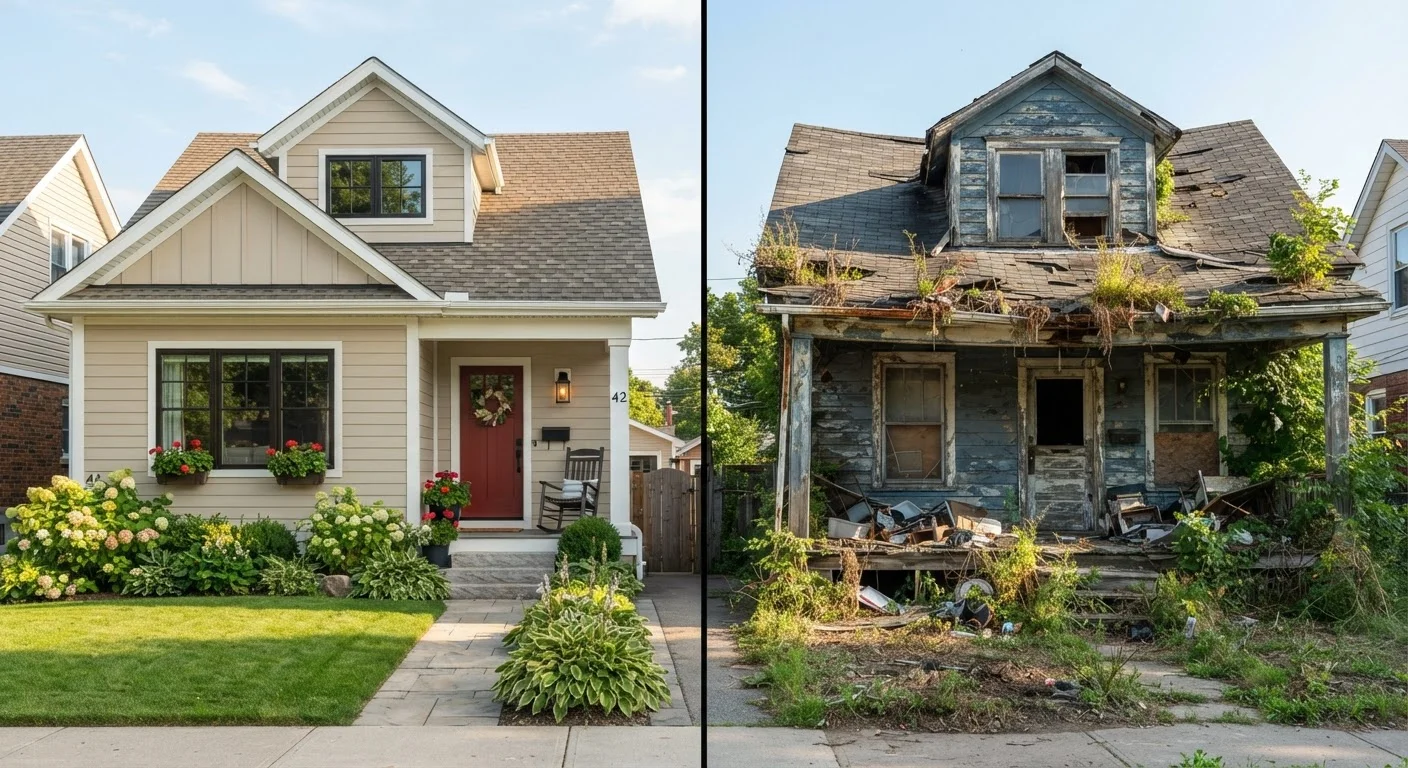
Why Delay Rarely Saves Money
When a household budget is stretched, postponing a home repair can feel like a rational decision. But most home systems don't hold steady while you wait — they deteriorate. What starts as a $200 problem can silently become a $2,000 one, and in some cases, far more.
The core reason is interconnection. Your home's systems don't operate in isolation. A compromised roof allows moisture into the attic, which degrades insulation, which drives up heating and cooling costs, which stresses your HVAC system. Each failure creates conditions for the next. The longer any one issue goes unaddressed, the wider its impact becomes.
This is also why the financial logic of delay is flawed. Deferring maintenance doesn't eliminate the cost — it defers and compounds it. Understanding this dynamic is the first step toward making smarter decisions about when to act.
Maintenance vs. Renovation: A Key Distinction
Maintenance tasks preserve existing function — replacing worn caulk, cleaning a drain, servicing an appliance. Renovation improves or upgrades. Both matter, but deferred maintenance creates urgent, unavoidable costs, while renovation can be planned on your timeline. Prioritize keeping what you have in good condition before investing in upgrades. Common home renovation myths can cause homeowners to invest in improvements while ignoring underlying maintenance needs.
The Systems Most Vulnerable to Neglect
Some home systems tolerate a short delay in maintenance better than others. Cosmetic issues like scuffed paint or a sticky door hinge rarely escalate into structural emergencies. But several categories of deferred maintenance carry disproportionately high risk:
- Roofing and gutters: Clogged gutters cause water to back up against fascia boards and foundations. A minor gutter cleaning job, if skipped season after season, can lead to foundation water intrusion — one of the most expensive repairs a homeowner faces.
- HVAC systems: Skipping annual tune-ups and filter replacements reduces efficiency and shortens equipment lifespan. Our related guide covers HVAC maintenance myths that quietly drive up costs.
- Plumbing: Slow leaks under sinks or around toilets create sustained moisture that promotes mold and wood rot. A small drip left for months can damage subfloors, cabinets, and drywall.
- Exterior sealing: Caulking around windows and doors degrades over time. Gaps let in drafts, moisture, and pests — each adding cost in a different way.
For a fuller picture of what commonly skipped tasks actually lead to, see our article on tasks homeowners routinely skip.
1–2%
Annual home value to budget for maintenance
A widely cited rule of thumb among housing experts suggests setting aside 1–2% of your home's value each year for routine maintenance and repairs.
10x
Cost multiplier when small repairs are ignored
Industry estimates from home inspection and contracting professionals suggest that minor issues left unaddressed can cost ten times more to fix once they've spread to adjacent materials.
14,000+
Home water damage claims filed daily in the U.S.
According to the Insurance Information Institute, water damage is among the most common — and most preventable — causes of homeowner insurance claims.
The Financial Compounding Effect
Deferred maintenance follows a pattern that financial professionals would recognize: it compounds. A $50 task ignored for a year might cost $300 to address once the problem has spread. Ignore it another year, and you may be looking at $1,500 in repairs — plus collateral damage to surrounding materials.
This matters especially for homeowners who view their property as a long-term financial asset. Building and protecting savings is harder when a surprise $5,000 HVAC replacement or $8,000 foundation repair drains reserves that took years to accumulate. Routine maintenance spending is, in many ways, a form of financial protection.
Deferred maintenance also surfaces at the worst possible times — during a sale, refinance, or insurance claim. Inspectors are trained to identify it, and lenders sometimes require repairs before approving financing. What felt like a cost-saving postponement can become a deal-blocking obstacle.
Building a Maintenance Habit Before Problems Build Up
The antidote to deferred maintenance isn't a large, overwhelming catch-up project — it's consistency. Spreading smaller tasks across the year keeps any single maintenance moment from becoming a financial burden.
A structured seasonal schedule is one of the most effective tools homeowners can use. Our Annual Home Maintenance Calendar breaks this down month by month so no system gets overlooked. For landlords, the stakes are even higher — see our guidance on maintenance responsibilities when renting out a property.
If managing it all feels like too much, a home maintenance service plan may be worth evaluating. Our honest look at the case for and against service plans can help you weigh whether that structure fits your situation.
The underlying principle is simple: address small problems while they're still small. Your home rewards consistent attention with fewer emergencies, lower long-term costs, and a better position when it matters most.
Start a Simple Home Maintenance Log
Keep a running record of when each system was last serviced — HVAC filters, roof inspections, gutter cleanings, exterior caulking, and so on. A basic spreadsheet or even a dated notebook works well. This log helps you spot tasks that are overdue, provides useful documentation if you sell the home, and removes the guesswork from scheduling future upkeep.
Frequently Asked Questions
The cost varies widely depending on the system involved and how long the problem has gone unaddressed. A $15 caulk repair that's ignored can eventually allow water intrusion that leads to thousands of dollars in subfloor or framing damage. Industry estimates suggest homeowners should budget 1–2% of their home's value annually for maintenance, partly to avoid the compounding costs of delay.
Yes. Home inspectors flag deferred maintenance during buyer inspections, which can give buyers leverage to negotiate down the sale price or request credits. In some cases, significant deferred maintenance — like roof damage or foundation issues — can cause a deal to fall through entirely. Keeping up with maintenance helps protect your home's market value.
Roofing, gutters, HVAC systems, plumbing, and the home's exterior envelope (siding, caulking, windows) tend to suffer most when neglected. These are interconnected systems where one failure often creates problems in adjacent areas, such as a clogged gutter leading to foundation water damage.
Some tasks carry more urgency than others. Delaying a cosmetic touch-up is very different from postponing a roof inspection or ignoring a slow leak. Prioritize any maintenance that involves water intrusion, structural integrity, or safety systems. For lower-stakes tasks, a planned delay with a set completion date is far better than open-ended postponement.
A seasonal maintenance calendar is one of the most practical tools available. Scheduling specific tasks by time of year — like gutter cleaning in fall and HVAC servicing in spring — keeps you ahead of problems. See our <a href="/home-and-garden/home-maintenance/your-annual-home-maintenance-calendar-season-by-season">Annual Home Maintenance Calendar</a> for a month-by-month framework.
It depends on the scope and complexity of the work. Many routine tasks — like cleaning gutters, caulking windows, or replacing HVAC filters — are manageable DIY projects. But work involving electrical, structural, or plumbing systems usually requires a licensed professional. Our guide on <a href="/home-and-garden/home-maintenance/diy-home-repairs-vs-hiring-a-pro-where-the-line-really-is">DIY vs. hiring a pro</a> can help you decide.
The content on this site is for informational purposes only and is not a substitute for professional advice. Always consult a qualified professional for guidance specific to your situation.