

Why HVAC Myths Are More Expensive Than They Seem
Heating and cooling accounts for roughly half of a typical American home's energy use, making the HVAC system one of the most consequential pieces of equipment a homeowner manages. Yet well-intentioned but inaccurate advice circulates constantly - passed along by neighbors, contractors of varying quality, and outdated rule-of-thumb wisdom.
The problem is that acting on these myths rarely causes immediate, visible damage. Instead, the consequences accumulate: slightly higher energy bills each month, a compressor that fails two years early, or refrigerant that runs low because a slow leak went undetected for a season. These are the hidden costs that deferred maintenance compounds into major repair bills.
Understanding what's actually true about HVAC upkeep helps homeowners protect both their comfort and their budget.
Myth
You only need to change your air filter once a year.
Fact
Most homes need a new filter every one to three months, depending on filter type, pets, and indoor air quality.
A dirty filter restricts airflow, forcing the blower motor to work harder and reducing the system's ability to maintain temperature. Over time, restricted airflow causes heat exchangers to overheat and can lead to premature compressor failure. Homes with pets, allergy sufferers, or high dust levels typically need filter changes closer to every four to six weeks. Check the filter's MERV rating - higher-MERV filters trap more particles but also clog faster and may require more frequent replacement.
Myth
Annual HVAC tune-ups are just a way for technicians to upsell services you don't need.
Fact
Professional annual inspections catch refrigerant leaks, electrical faults, and worn components before they cause system failures.
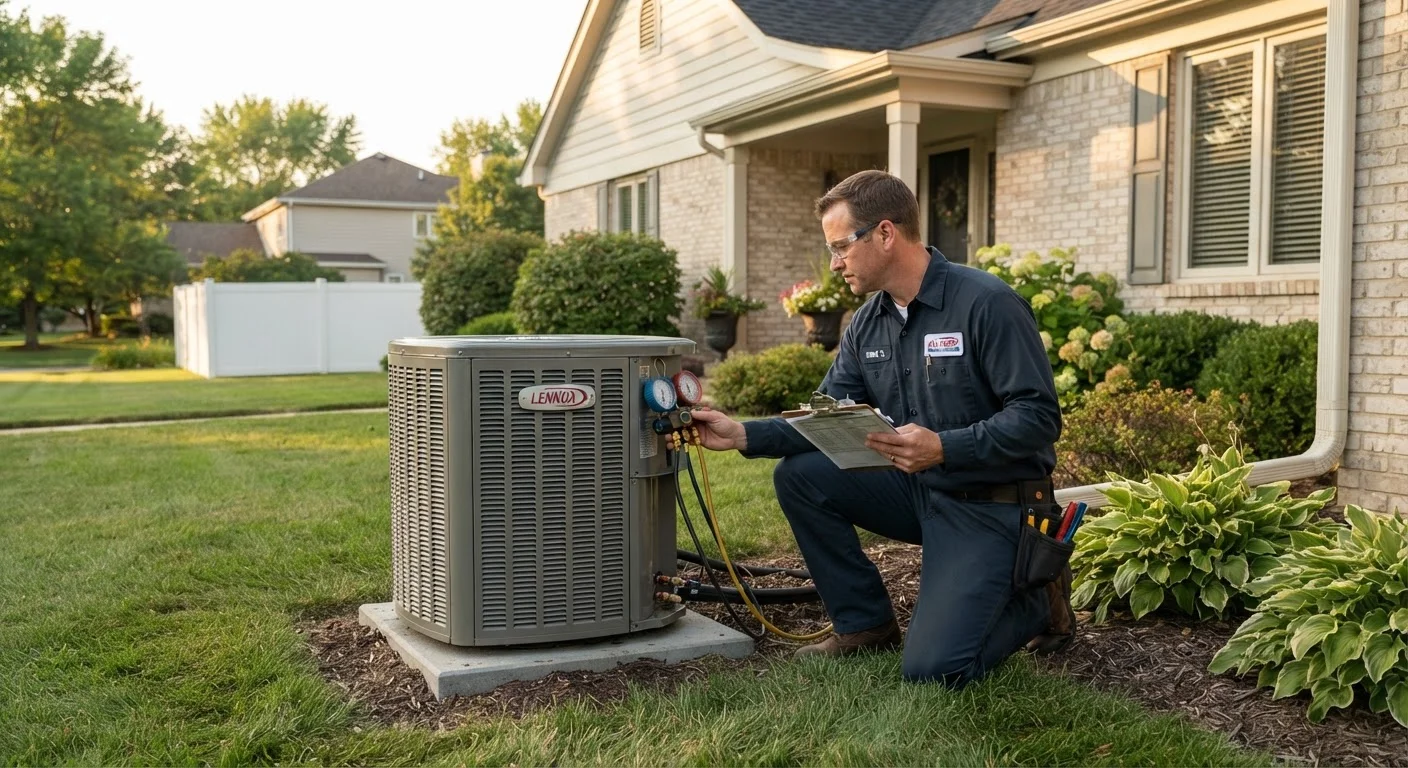
A qualified technician checks items that a homeowner simply cannot inspect without specialized equipment: refrigerant charge levels, electrical connection integrity, heat exchanger cracks, and coil cleanliness. A cracked heat exchanger, for example, can allow carbon monoxide to enter living spaces - a safety issue with no visible warning signs. Skipping annual service doesn't eliminate these risks; it just delays discovery until the problem is larger and more expensive to fix. The maintenance tasks homeowners most often skip include HVAC inspections at a disproportionately high rate.
Myth
Closing vents in unused rooms saves energy by redirecting airflow.
Fact
Closing vents increases static pressure in ductwork, reducing system efficiency and potentially damaging the equipment.
Central HVAC systems are designed and calibrated for a specific volume of airflow across all connected vents. When vents are closed, that airflow has nowhere to go, which raises pressure in the ducts. This forces the blower to work harder, increases duct leakage through gaps and seams, and can cause the evaporator coil to freeze (in cooling mode) or the heat exchanger to overheat (in heating mode). Zoning systems exist specifically to manage airflow to different areas - but they require the right equipment and ductwork design, not simply closing registers.
Myth
Setting the thermostat to an extreme temperature heats or cools the home faster.
Fact
Your HVAC system runs at the same output regardless of how far the thermostat is set from the current temperature.
A furnace or air conditioner operates at a fixed capacity - it doesn't ramp up effort because the target temperature is set aggressively high or low. Setting the thermostat to 85°F to heat a cold house won't warm it faster than setting it to 70°F; it will simply overshoot the desired temperature if you forget to adjust it. The only real effect is wasted energy and additional wear on the system running past the point of comfort. Programmable or smart thermostats let you pre-schedule setpoints so the home reaches a comfortable temperature by the time you need it, without this kind of overcorrection.
Myth
A brand-new HVAC system doesn't need maintenance for several years.
Fact
New systems require regular maintenance from year one to preserve manufacturer warranties and peak efficiency.
Many HVAC manufacturer warranties include clauses requiring documented annual professional maintenance. Skipping service in the early years of ownership doesn't just risk efficiency losses - it can void the warranty coverage you paid for. Additionally, new systems settle into their operating environment over the first year: refrigerant charge may need verification, ductwork connections may shift, and filters need replacement on schedule regardless of equipment age. The tasks most often deferred after a new installation frequently include these early check-ins.
Myth
Leaving the fan set to 'ON' instead of 'AUTO' improves air quality and efficiency.
Fact
Running the fan continuously often increases energy use and can reintroduce humidity into the air in cooling season.
In Auto mode, the fan runs only when the system is actively heating or cooling, which allows moisture removed from the air during a cooling cycle to drain properly. When the fan runs continuously in On mode, that condensed moisture can re-evaporate from the coil and blow back into the living space, raising indoor humidity. The fan motor also consumes electricity around the clock, adding to energy costs. Continuous fan operation can be useful in specific situations - such as improving air circulation in a home with distinct temperature zones - but it's not a blanket efficiency upgrade.
Building a Maintenance Routine That Actually Works
Separating fact from fiction is only the first step. Turning that knowledge into a consistent habit is what keeps systems running efficiently year after year. A few high-leverage practices make the biggest difference:
- Schedule filter checks monthly. Set a recurring calendar reminder to inspect the filter even if you don't always replace it. A quick visual check takes less than two minutes.
- Book a professional tune-up each fall and spring. Pre-season scheduling helps you avoid the rush when everyone else's system fails during the first heat wave or cold snap.
- Keep the outdoor unit clear. Trim vegetation at least two feet back from the condenser, and rinse debris off the fins with a garden hose seasonally.
- Check and seal ductwork. Leaky ducts can reduce system efficiency significantly; a qualified technician can perform a pressure test to identify losses.
HVAC maintenance fits naturally into a broader home upkeep rhythm. The seasonal home maintenance calendar covers where HVAC tasks slot alongside other routine checks, so nothing gets overlooked. If you're evaluating whether a professional service plan makes sense for your household, weigh the pros and cons carefully before committing.
DIY Refrigerant Work Is Regulated - and Risky
Handling refrigerants requires EPA Section 608 certification in the United States. Attempting to add or remove refrigerant without proper credentials is illegal and can result in fines. If your system is underperforming and you suspect a refrigerant issue, contact a licensed HVAC technician for diagnosis. Do not purchase or use DIY refrigerant recharge kits as a substitute for professional leak detection and repair.
The bottom line: an HVAC system that's properly maintained runs more efficiently, lasts longer, and costs measurably less to operate over time. The myths covered here don't just spread misinformation - they quietly transfer money from your wallet to your utility company and repair technician.
The content on this site is for informational purposes only and is not a substitute for professional advice. Always consult a qualified professional for guidance specific to your situation.