

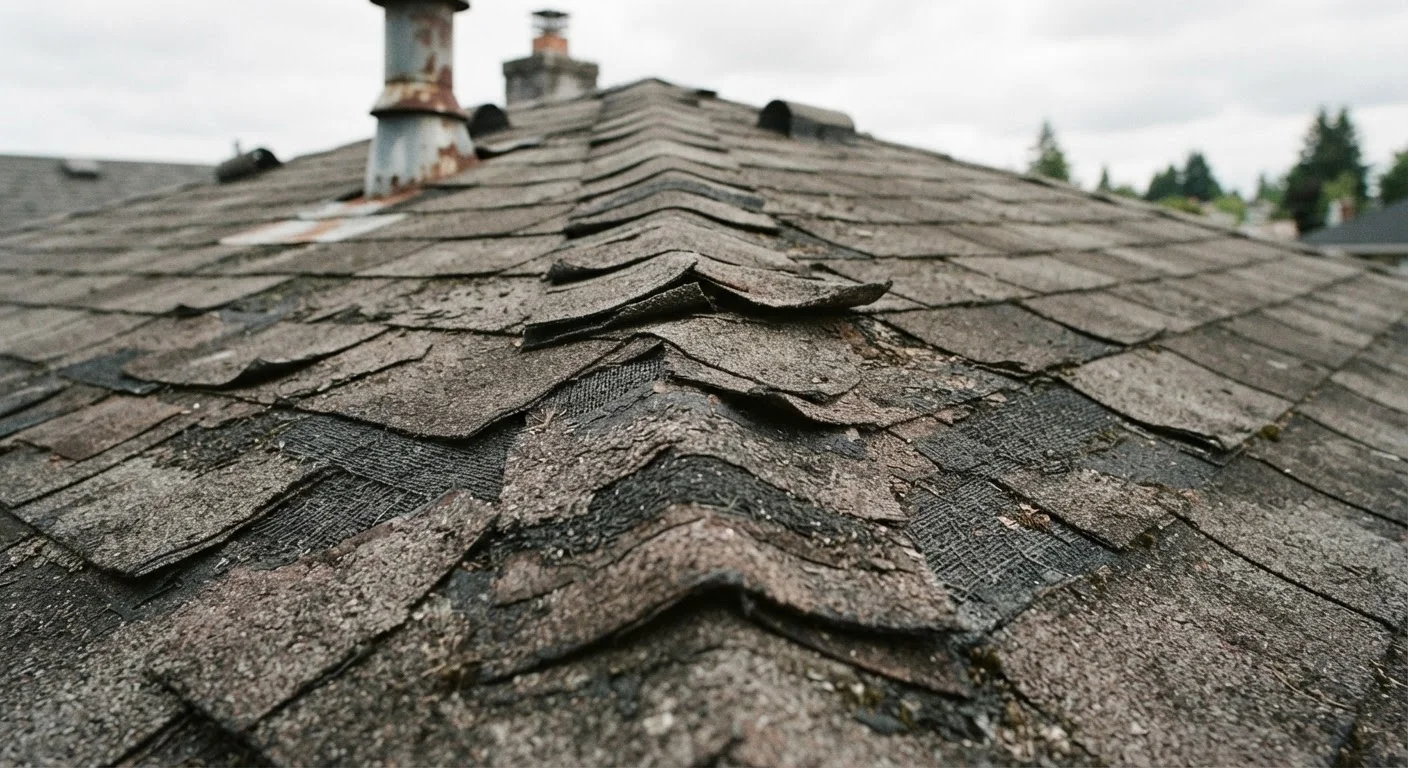
Your Roof Speaks - Are You Listening?
Most roofs don't fail overnight. They send signals weeks, months, or even years before a serious leak or structural problem develops. The challenge is that most homeowners only think about their roof when something goes wrong - and by then, the damage is already expensive.
A proactive approach costs far less. Industry guidance from roofing professionals consistently points to routine visual inspection as the most practical way to catch problems early. You don't need to climb up there - many warning signs are visible from the ground, inside the attic, or on the ceiling. Here are the key signals your roof may be trying to tell you something, and what each one typically means.
Curling or Buckling Shingles
Asphalt shingles that curl upward at the edges (called cupping) or buckle in the middle (called clawing) are a sign the shingle material is aging, was improperly installed, or has experienced moisture infiltration from below. Either form of curling exposes the underlayment to wind and rain.
Curling shingles are typically visible from the ground with binoculars or from an upper-story window. If you see widespread curling rather than isolated instances, the roof surface may be nearing the end of its serviceable life and a professional assessment is warranted.
Curling shingles expose your underlayment and often indicate widespread material fatigue.
Missing or Cracked Shingles
A missing shingle leaves a gap in the protective layer of your roof. Even a single absent shingle can allow water to reach the decking beneath, which can then rot or grow mold. Cracked shingles - often caused by wind, thermal cycling, or age - present a similar risk.
After a major storm, do a quick visual scan from ground level. Missing shingles after high winds are common and often repairable quickly if caught promptly. Delaying even minor repairs can allow water damage to expand significantly.
Even one missing shingle creates an entry point for water that can silently damage roof decking.
Granules Accumulating in Gutters
Asphalt shingles are coated with small mineral granules that protect the underlying material from UV degradation and add fire resistance. As shingles age, these granules loosen and wash off - often collecting in your gutters or at the base of downspouts.
Seeing a small amount of granules is normal for new shingles. But if your roof is more than 10-15 years old and you're finding consistent granule buildup after rain, that's a sign the shingles are deteriorating and losing protective capacity. Check your gutters regularly - our gutter inspection guide explains what else to look for during routine gutter checks.
Granule loss accelerates UV damage and is one of the clearest signs shingles are nearing end of life.
Water Stains on Ceilings or Interior Walls
Brown or yellowish stains on your ceiling - especially after rain - are a strong indicator that water is infiltrating through the roof or flashing. By the time moisture appears on an interior ceiling, it has typically already traveled through the decking and insulation, meaning the damage is more advanced than it looks.
The visible stain and the actual entry point of the leak are often not directly aligned, since water travels along framing and underlayment before dripping through. A professional inspection is usually needed to trace the true source. Don't confuse ceiling stains with condensation from HVAC systems - both are worth investigating.
A ceiling stain after rain means water has already passed through multiple layers of your roof system.
Daylight Visible Through the Attic
If you can safely access your attic during the day, look up. Any visible daylight coming through the roof boards is a clear indication of gaps, holes, or failed decking - all of which allow water and pests to enter. You may also notice damp insulation, dark staining on rafters, or a musty odor, all of which suggest ongoing moisture infiltration.
Attic inspections are one of the most effective ways to catch roof problems early, before they become visible on interior ceilings. Wear appropriate protective gear if you enter an attic space, and never walk on damaged or unsupported sections.
Daylight through attic boards signals a structural gap that lets in water, cold air, and pests.
Sagging Roof Sections
A roof that sags or dips in any section - whether visible from the street or identified during an attic inspection - is a serious structural warning. Sagging can indicate rotted decking, compromised rafters, or long-term water damage that has weakened the support system beneath the shingles.
Unlike cosmetic issues, a sagging roof is not a DIY repair. It typically requires a licensed contractor to assess the structural integrity of the framing and determine the appropriate course of action. Do not delay seeking a professional evaluation for any visible sag - the underlying issue generally worsens over time.
A sagging roofline is a structural red flag that demands immediate professional evaluation.
When to Call a Professional
Some roof concerns - granule buildup in gutters, a few lifted shingles after a storm - may be straightforward maintenance observations. Others, like sagging decking, daylight through the attic, or widespread shingle failure, require a licensed roofing contractor's assessment before you make any decisions.
Keep in mind that roofing work above a certain scope often requires permits in most U.S. jurisdictions. Always verify your local building code requirements and, when in doubt, get a professional inspection rather than attempting to diagnose structural issues yourself.
Schedule Roof Checks Twice a Year
Roofing professionals commonly recommend a visual inspection each spring and fall - ideally after storm season and before winter weather sets in. Walking the perimeter of your home and looking at the roofline from the ground with binoculars takes less than 15 minutes and can reveal problems long before they become emergencies. Add a quick attic walk-through to your seasonal home maintenance checklist for a more complete picture.
Water stains on your ceiling may seem like isolated roof issues, but they can overlap with plumbing problems too. Our guide to how small plumbing leaks escalate explains how moisture intrusion from multiple sources can compound damage quickly. Similarly, your roof and gutter system work as a unit - see our article on gutter care and failure signs for a fuller picture of exterior water management.
This article is for general informational and educational purposes only. Roof conditions vary by home, climate, and construction type. Always consult a licensed roofing professional before undertaking repairs or replacements.
The content on this site is for informational purposes only and is not a substitute for professional advice. Always consult a qualified professional for guidance specific to your situation.