

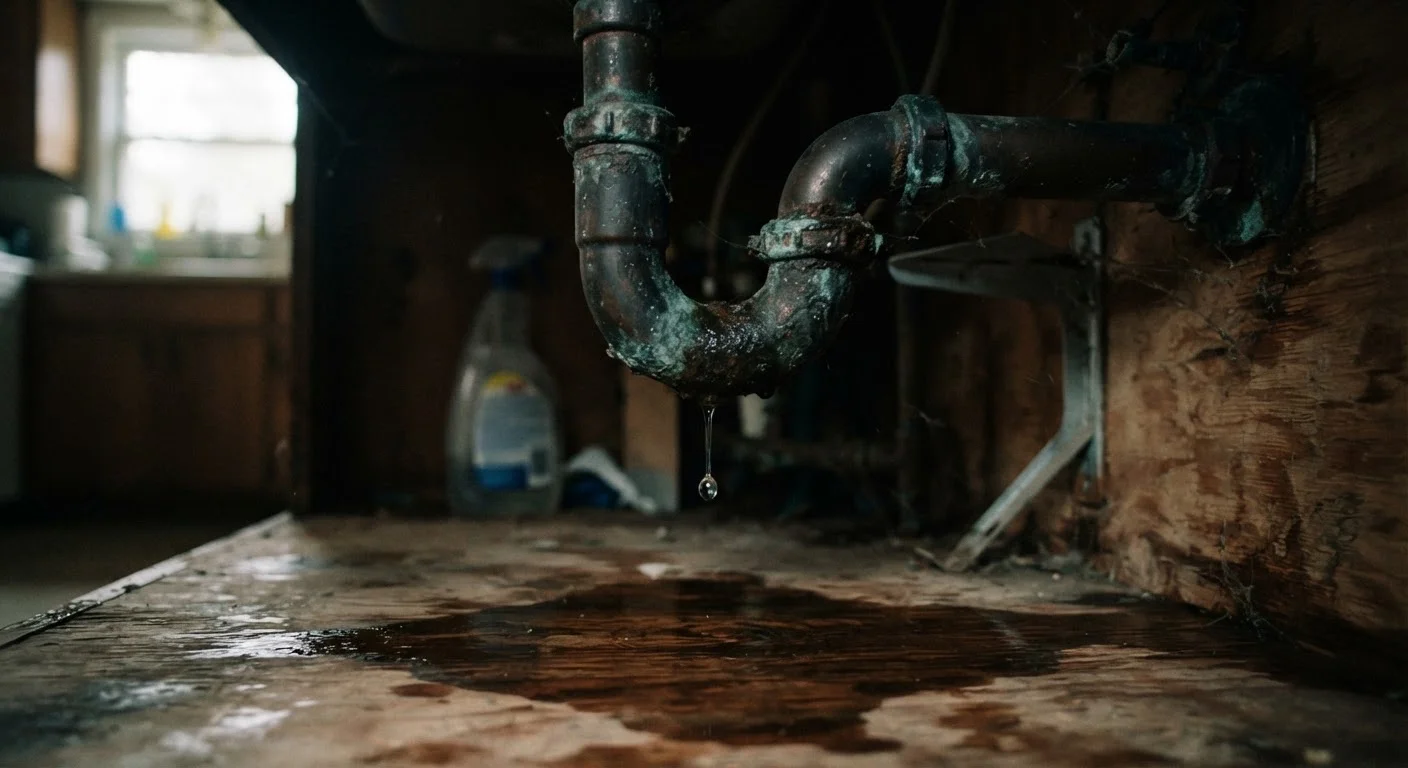
Why a Drip Is Never Just a Drip
A slow drip underneath your kitchen sink feels easy to put off - it's small, contained, and seemingly harmless. But water behaves in ways that make even modest leaks consequential over time. A faucet dripping once per second wastes roughly 3,000 gallons per year, according to the U.S. Environmental Protection Agency. That's water quietly saturating cabinet floors, soaking into subflooring, and creating the damp conditions that wood and mold both thrive in.
The real problem with small leaks isn't their size - it's their invisibility. Because they don't demand immediate attention, they often go unaddressed for months. During that window, moisture does its most damaging work: softening wood, corroding metal fittings, and creating the sustained humidity that mold spores need to colonize.
As the hidden costs of deferred home maintenance article explains, the pattern with neglected upkeep is consistent - what costs little to fix early tends to cost a great deal more once it's been left alone.
3,000 gal
Water wasted annually by a single dripping faucet
According to the U.S. Environmental Protection Agency's WaterSense program, a faucet dripping once per second wastes approximately 3,000 gallons of water per year.
24-48 hrs
Time for mold to begin growing on wet materials
The EPA notes that mold can begin to develop on damp building materials within 24 to 48 hours under the right conditions, making rapid response to leaks critical.
10%
Of homes have leaks wasting 90+ gallons daily
The EPA estimates that approximately one in ten U.S. homes has plumbing leaks that waste more than 90 gallons of water per day.
The Compounding Chain of Damage
Water damage rarely stays localized. Once moisture penetrates a surface - say, the particleboard floor of a vanity cabinet - it follows the path of least resistance. It seeps into seams, travels along framing members, and eventually reaches layers that were never meant to get wet. Here's a rough progression of how a minor leak typically escalates:
- Days 1-7: Visible dripping or puddle formation. Surface materials (cabinet liner, caulk) begin absorbing moisture.
- Weeks 2-4: Wood swells or softens. Paint bubbles near the source. A musty smell may begin to develop. Mold spores can activate on wet materials within 24-48 hours of initial saturation.
- Months 1-3: Subflooring or wall sheathing may begin to deteriorate. Corrosion accelerates on metal fittings. The leak may spread to adjacent spaces - adjoining walls, the floor below.
- Beyond 3 months: Structural wood can become compromised. Mold colonies may require professional remediation. Repairs shift from simple plumbing fixes to multi-trade restoration work.
This is also why the warning signs your roof is telling you something principle applies equally below: water stains on ceilings or walls are never cosmetic problems - they're evidence of an active process already underway.
Where Leaks Hide and How to Find Them
Many of the most damaging leaks are the ones you don't see. Supply lines behind toilets, washing machine hoses, refrigerator ice maker connections, and the compression fittings under bathroom sinks can all develop slow seeps that soak insulation or travel through wall cavities before they ever make themselves visible.
A simple habit goes a long way: a quick visual inspection of under-sink cabinets, water heater bases, and appliance connections every month or two. Look for:
- Mineral deposits or white crust around fittings (a sign of prior or ongoing seeping)
- Soft, discolored, or warped cabinet floors
- Musty or earthy odors that weren't there before
- Unexplained increases in your monthly water bill
You can also check your water meter during a period of zero water use. Shut off all faucets and appliances, then observe whether the meter dial moves. If it does, something is running somewhere in the system.
Make Inspections Part of Your Routine
Set a reminder once every two months to check under-sink cabinets, around the base of toilets, and near appliance connections. It takes less than five minutes and is one of the highest-return maintenance habits a homeowner can build. Catching a seeping fitting early almost always costs a fraction of addressing the damage it causes if left alone.
For a broader look at which upkeep tasks tend to get overlooked, the home maintenance tasks homeowners routinely skip piece covers the most common patterns - and what tends to follow.
Acting Early: What It Actually Looks Like
Early action on a plumbing leak doesn't necessarily mean a major repair. In many cases, it means tightening a fitting, replacing a worn washer, or reapplying plumber's tape to a threaded connection. These are tasks that take under an hour and cost very little in materials.
Where repairs go beyond simple fixes - leaks inside walls, corroded shut-off valves, or supply line failures - a licensed plumber is the appropriate resource. This is also worth noting from a permit and insurance standpoint: some jurisdictions require permits for certain plumbing work, and your homeowners insurance policy may treat a long-standing leak differently than a sudden one. Verifying your local code requirements and reviewing your policy language before starting any significant repair is always worthwhile.
The principle here mirrors sound financial thinking: small problems addressed promptly are manageable; ignored, they compound into something much harder to reverse. The same logic applies whether you're dealing with a corroded pipe fitting or, as the warning signs of financial trouble article illustrates, a slow financial drain that goes unexamined for too long.
This article is for general informational purposes only. Always consult a licensed plumber for professional assessment of plumbing issues in your home, and verify local code requirements before undertaking repairs.
Frequently Asked Questions
It depends on the leak rate and the materials affected. In humid conditions, mold can establish itself within 24 to 48 hours on wet drywall or wood. Structural softening can begin within weeks of continuous exposure. The longer a leak goes undetected, the more the remediation scope - and cost - tends to grow.
Common indicators include unexplained increases in your water bill, musty odors, soft or discolored spots on walls or ceilings, and warping near cabinets or baseboards. You can also check your water meter when no water is in use - if the dial is still moving, there may be an active leak somewhere in the system.
Minor repairs - like replacing a faucet washer or tightening a supply line fitting - are within reach for many homeowners with basic tools. However, leaks involving soldered joints, supply lines inside walls, or anything connected to main shut-off valves typically warrant a licensed plumber. When in doubt, professional assessment is the safer call.
Coverage varies by policy and circumstances. Sudden, accidental leaks are often covered, while damage resulting from a slow, long-term leak that was known but ignored may be excluded as a maintenance failure. Review your specific policy and speak with your insurer for accurate guidance on your situation.
Under-sink supply and drain connections, toilet supply lines, and the base of water heaters are among the most frequent culprits. Washing machine hoses and dishwasher connections are also common sources. These areas are easy to overlook because they're accessed infrequently.
The content on this site is for informational purposes only and is not a substitute for professional advice. Always consult a qualified professional for guidance specific to your situation.