

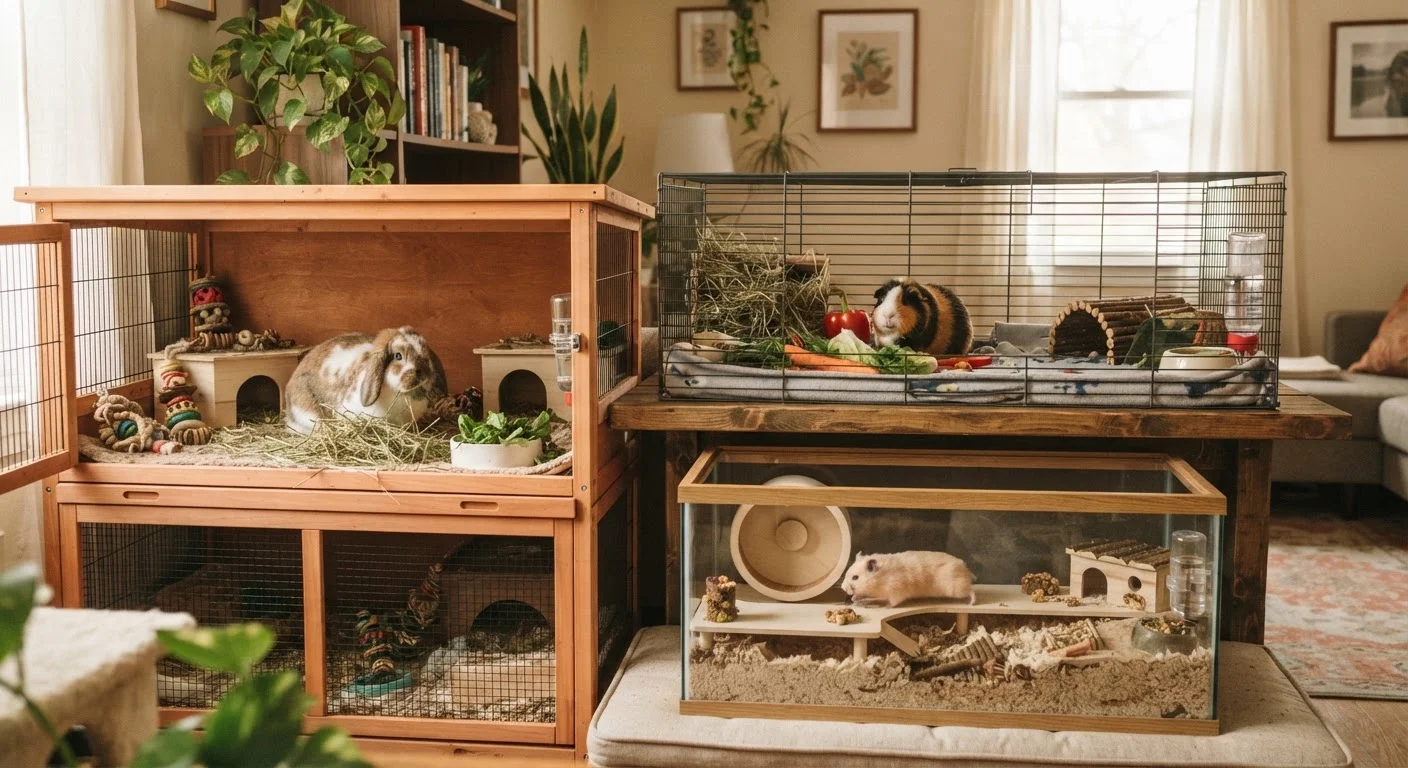
Why Routine Matters for Small Animals
Rabbits, guinea pigs, and hamsters may be compact companions, but their physical and behavioral needs are anything but minor. Each species has a distinct biology, social structure, and activity pattern - and a consistent daily routine is one of the most meaningful things an owner can provide. Without predictable feeding, cleaning, and enrichment schedules, small animals can develop stress behaviors, digestive problems, or preventable health issues.
If you're building habits for a new pet, the guide to setting up a first-pet routine is a useful starting point. This reference breaks down what each of these three species specifically needs each day.
| Rabbit lifespan (domestic) | 8-12 years with proper care (House Rabbit Society) |
| Guinea pig lifespan | 4-8 years (American Veterinary Medical Association) |
| Hamster lifespan | 2-3 years (Syrian); up to 2 years (dwarf species) (General veterinary consensus) |
| Hay proportion of rabbit/guinea pig diet | ~80% of daily intake (Widely cited veterinary guidance) |
| Guinea pig daily vitamin C need | 10-50 mg/day (varies by age and health) (Exotic animal veterinary guidelines) |
| Minimum rabbit out-of-cage exercise | 3-4 hours daily (RSPCA and rabbit welfare organizations) |
Feeding: Species-Specific Basics
Nutrition is the cornerstone of small pet health, and each species has non-negotiable dietary requirements.
Rabbits
Unlimited grass hay - such as timothy or orchard grass - should make up roughly 80% of an adult rabbit's diet. Hay supports healthy gut motility and wears down continuously growing teeth. Fresh leafy greens (like romaine lettuce or cilantro) should be offered daily, and high-quality pellets given in limited quantities. Fresh water must always be available.
Guinea Pigs
Like rabbits, guinea pigs need unlimited hay as their dietary base. Critically, guinea pigs cannot synthesize vitamin C on their own and require daily supplementation through fresh vegetables - bell peppers and leafy greens are reliable sources. Vitamin C degrades quickly in water, so adding it to a bottle is generally not considered reliable by veterinary professionals.
Hamsters
Hamsters are omnivores. They thrive on a commercial hamster-formulated mix alongside small amounts of fresh vegetables and occasional protein sources like mealworms or plain cooked egg. Hamsters naturally hoard food, so checking and cleaning the food cache regularly prevents spoilage. Food and water should be refreshed daily.
For a broader perspective on pet health and care, including dental needs linked to diet, see our guide on pet dental care.
Habitat Cleaning and Hygiene
Cleanliness directly affects the health and comfort of small animals, who are sensitive to ammonia buildup and damp bedding.
Substrate
The bedding or material that lines the floor of an animal's enclosure. Common options include paper-based bedding, aspen shavings, or hay. It provides comfort, absorbs waste, and supports natural burrowing behaviors.
Gut Motility
The movement of food through the digestive tract. In rabbits and guinea pigs, high-fiber hay is essential to keep gut motility functioning properly - a slowdown can rapidly become a life-threatening condition called GI stasis.
Crepuscular
Most active during twilight hours - dawn and dusk. Many hamster species are crepuscular, meaning their natural activity peaks outside typical daytime hours.
Vitamin C Supplementation
Guinea pigs lack the enzyme needed to produce vitamin C internally and must obtain it from their diet daily. Fresh vegetables are the most reliable delivery method, as vitamin C in water degrades quickly and may not provide adequate amounts.
Daily Tasks for All Three Species
- Remove soiled bedding from litter areas or corner spots
- Wipe down food dishes and refill water bottles or bowls
- Discard uneaten fresh food to prevent mold
- Spot-clean the enclosure floor where waste accumulates
Weekly Deep Cleaning
A full enclosure clean - removing all bedding, scrubbing surfaces with a pet-safe cleaner, and replacing substrate - is typically recommended weekly for rabbits and guinea pigs, and every one to two weeks for hamsters, whose enclosures benefit from leaving a small amount of familiar-scented material to reduce stress during the transition. Always consult your veterinarian for guidance tailored to your pet's specific setup and health status.
Enrichment, Exercise, and Social Needs
Mental stimulation and physical activity are as essential as food and hygiene. Boredom in small animals can manifest as bar-chewing, lethargy, over-grooming, or aggression.
Rabbits
Rabbits need multiple hours of out-of-enclosure exercise daily in a safe, supervised space. They are highly intelligent and benefit from tunnels, cardboard boxes, and foraging opportunities. Rabbits are also social animals - many veterinary and welfare organizations recommend keeping them in bonded pairs when possible.
Guinea Pigs
Guinea pigs are vocal, social creatures that generally do best in same-sex pairs or small groups. Daily gentle handling helps maintain their comfort with human interaction. Floor time in a pen with hiding places and safe chew materials keeps them mentally engaged.
Hamsters
Most domestic hamsters are solitary and territorial. A large enclosure - considerably bigger than many standard retail cages - with deep substrate for burrowing, a solid-surface exercise wheel, and nesting material is essential. Hamsters are crepuscular and most active around dawn and dusk, so scheduling interaction around their natural rhythm reduces stress.
For more ideas, see enrichment activities for any pet's daily routine. You can also explore a daily care checklist for busy households to keep all tasks on track.
This article provides general educational information about small pet care and is not a substitute for professional veterinary advice. Always consult a qualified veterinarian familiar with exotic or small animal medicine for guidance specific to your pet's health and needs.
The content on this site is for informational purposes only and is not a substitute for professional advice. Always consult a qualified professional for guidance specific to your situation.