

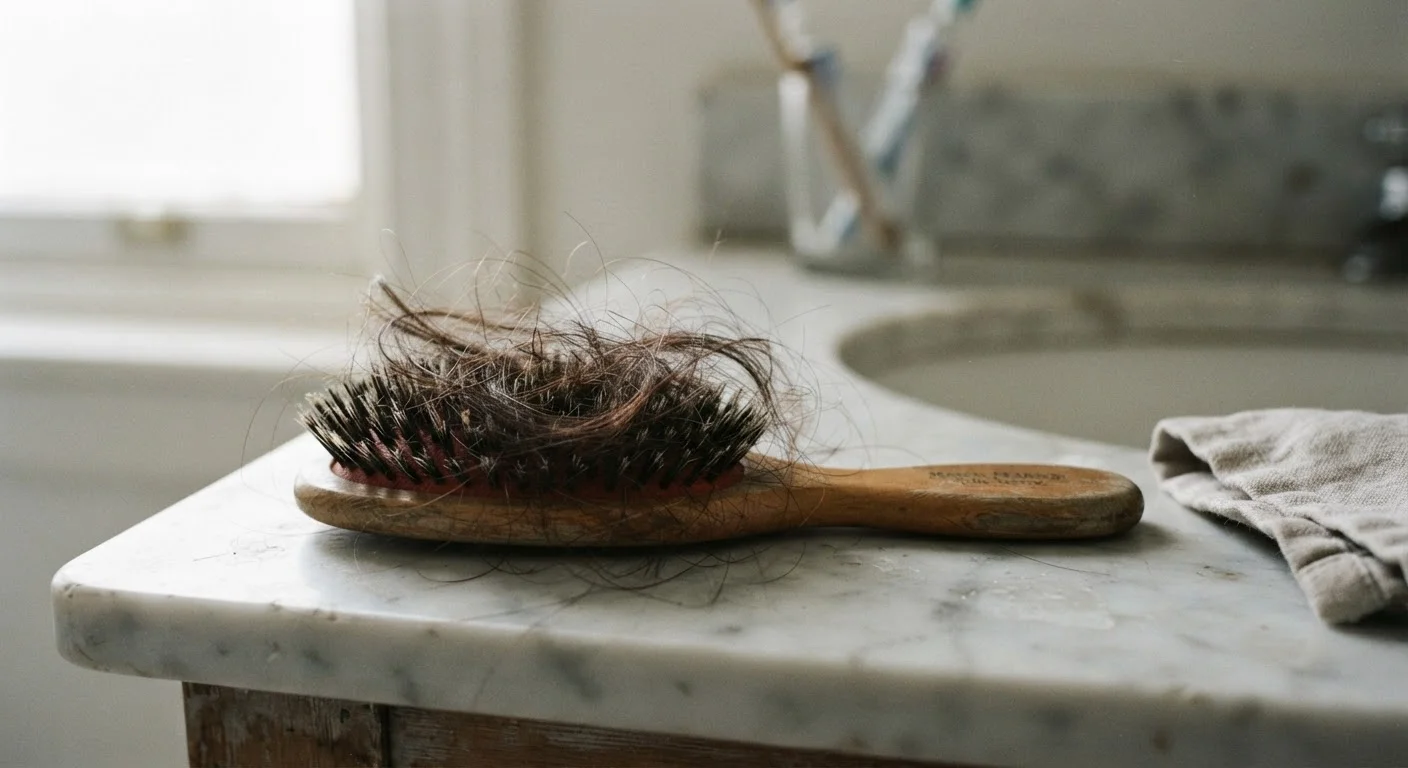
Why Hair Damage Often Goes Unnoticed Until It Compounds
Hair is resilient - until it isn't. Because the strands you see are technically dead tissue, damage accumulates gradually and often shows up weeks or months after the habits that caused it. By the time dullness, breakage, or thinning becomes noticeable, the underlying cause may have been in place for a long time.
Understanding which everyday grooming choices erode hair health is the first step toward changing them. The mistakes below are common across all hair types - and almost all of them stem from well-meaning routines rather than carelessness. For a broader look at hair care basics, see our guide to building a daily hair care routine.
Rubbing hair vigorously with a terry-cloth towel after washing.
Why it happens: It feels efficient and mirrors what most people grew up watching. The logic - that more friction equals faster drying - seems intuitive.
Using high heat settings on styling tools without any heat protectant.
Why it happens: Many people either forget protectant products or assume their tool's built-in technology handles the risk. Others simply don't realize that temperature settings above a certain threshold can be damaging.
Wearing tight ponytails, buns, or braids in the same spot every single day.
Why it happens: Convenience and habit drive most repeated styling choices. The same spot feels natural and takes less time to secure.
Skipping trims because you're trying to grow your hair longer.
Why it happens: There's a widespread belief that cutting hair slows growth - a myth that leads many people to avoid scissors entirely. In reality, growth occurs at the scalp, not the ends.
Detangling hair starting from the roots and pulling downward.
Why it happens: Root-to-tip brushing feels like the natural direction and is what many people were taught. The result, however, is that knots get compacted and strands snap under the force.
Washing hair too frequently or not frequently enough for the scalp's needs.
Why it happens: Overwashing is often driven by the feeling of oiliness; underwashing by time constraints or fear of drying out the hair. Both extremes can create scalp and strand problems.
The Habits Worth Reconsidering - and What to Do Instead
Most damaging grooming habits are fixable with small adjustments rather than complete overhauls. The key is understanding why each behavior causes harm, not just that it does.
~8%
Prevalence of traction alopecia in studied populations
Research published in dermatology literature suggests traction alopecia affects a notable share of people who regularly wear tightly styled hair, with higher rates among certain hair-typing communities.
145°C-230°C
Typical temperature range of consumer flat irons
Studies on hair fiber integrity indicate that repeated exposure to temperatures above approximately 150°C can progressively degrade the hair's cuticle and protein structure over time.
Heat tools deserve particular attention. The cuticle - the outermost protective layer of each strand - can be irreversibly lifted or cracked by sustained high temperatures. Using a heat protectant product and lowering the tool temperature are among the most practical interventions available. Many dermatologists also suggest air-drying when schedules allow.
Tight styles are another underappreciated source of cumulative damage. Ponytails, buns, and braids worn at high tension, especially daily, place persistent stress on the follicle. Over time, this can cause traction alopecia - a gradual, localized hair loss that may become permanent if the tension is not relieved early enough. Protective styles done correctly can reduce mechanical stress, but only if they aren't applied too tightly.
Traction Alopecia Can Become Permanent
Hair loss caused by repeated tension on the follicle is reversible in its early stages but can become permanent if the stress continues long enough. If you notice a receding hairline at the temples, scalp tenderness, or broken hairs around your edges, these may be early warning signs. Consult a dermatologist rather than waiting to see if it resolves on its own.
Brushing wet hair aggressively is another frequent issue. Hair is significantly more elastic and vulnerable to snapping when saturated. A wide-tooth comb used gently from ends upward is far less likely to cause breakage than a paddle brush dragged from root to tip. This is especially relevant for curly and coily textures - see expert guidance on washing natural hair for more context.
Finally, some persistent grooming beliefs make damage more likely. Our roundup of common hair growth myths addresses several misconceptions - like the idea that brushing 100 strokes a day promotes growth - that can actually increase breakage when followed literally.
This article is for general informational purposes only and does not constitute medical or dermatological advice. If you are experiencing significant hair loss or scalp concerns, consult a qualified healthcare professional or dermatologist.
The content on this site is for informational purposes only and is not a substitute for professional advice. Always consult a qualified professional for guidance specific to your situation.