

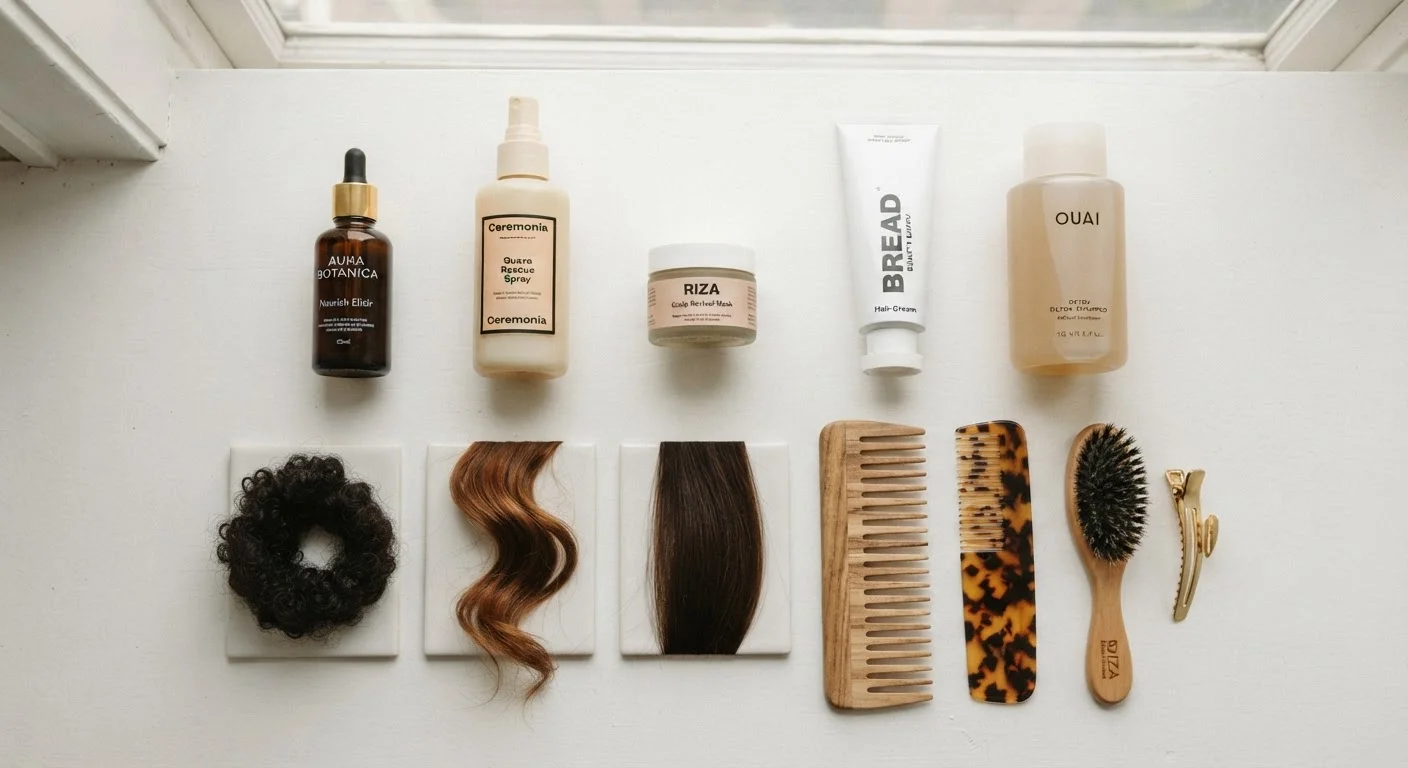
The Four Dimensions of Hair Type
Most people think of hair type as simply straight, wavy, curly, or coily. While curl pattern is one useful dimension, it's just one piece of a more complete picture. Understanding all four core dimensions gives you a much more accurate guide for product selection.
- Texture (strand diameter): Fine, medium, or coarse. Fine strands have a smaller circumference and can be weighed down easily. Coarse strands are more resilient but may resist moisture penetration.
- Porosity: How readily your hair absorbs and holds onto moisture. This single factor can determine whether a product makes your hair feel hydrated or greasy. See our deeper look at hair porosity for the science behind this.
- Density: How many individual strands you have per square inch of scalp - not to be confused with thickness per strand. High-density hair may need lighter formulas to avoid buildup; low-density hair may look flat under heavy products.
- Curl pattern: The shape of the hair strand, ranging from straight (1A) to tightly coiled (4C) in most classification systems. Curl pattern affects how sebum travels down the strand and how much moisture the hair naturally retains.
These four characteristics interact. Someone with high-density, coily hair of medium porosity will need a completely different routine than someone with fine, wavy hair of high porosity - even if their goals are the same.
Why Products React Differently Depending on Your Hair
A heavy cream conditioner might be a lifesaver for one person and a grease-laden disaster for another. The difference usually comes down to how the product interacts with your specific hair structure.
4
Core dimensions that define hair type
Dermatologists and trichologists commonly assess hair across texture, porosity, density, and curl pattern - not curl pattern alone.
~80,000-120,000
Average number of hair strands on the human scalp
According to general trichological references, this range varies by natural hair color and genetics, affecting how density should factor into product selection.
3 types
Porosity categories recognized in hair science
Hair porosity is commonly classified as low, normal, or high - each responding differently to moisture, heat, and product formulations.
Porosity is a particularly powerful variable. High-porosity hair - where the cuticle layer is more open - absorbs products quickly but struggles to keep moisture in. Low-porosity hair repels products that aren't applied with heat to help open the cuticle. Using a heavy oil on low-porosity hair, for example, often results in buildup rather than hydration.
Scalp chemistry also matters. If your scalp tends to produce oil quickly, a moisturizing shampoo formulated for dry hair may accelerate that. Scalp oiliness has biological roots that go beyond hygiene habits - and understanding your scalp type is just as important as understanding your strands.
When reading product labels, the ingredient list tells you more than the marketing language does. Our guide on decoding shampoo ingredient labels can help you spot formulas suited to your hair structure before you buy.
Practical Implications: Building a Routine That Fits
Once you understand your hair's characteristics, product and routine choices become much clearer.
A woman with fine, straight hair tries a rich, hydrating mask marketed for dry hair and finds her hair looks greasy and flat for days afterward.
A man with tightly coiled, low-porosity hair uses a water-based curl cream without applying heat and notices the product sits on top of his hair without absorbing.
Someone switches to a sulfate-free shampoo after reading it was better for curly hair, but finds it leaves a waxy residue after a few weeks.
A teenager with high-density, wavy hair uses a volumizing mousse and finds it creates crunchy, stiff results despite the product being labeled for wavy hair.
Washing frequency is a good starting point. Coily and naturally drier hair types generally benefit from less frequent washing to preserve natural oils, while fine or straight hair may need more frequent cleansing. Experts who specialize in natural hair often emphasize that a single universal schedule doesn't serve all hair types well.
Cleansing formula choice also shifts depending on hair type. Sulfate-based shampoos can be effective at removing buildup for oily scalps but overly stripping for dry or high-porosity hair. Understanding where you fall helps you make an informed call - and our breakdown of sulfate-free versus regular shampoo walks through what the practical differences look like.
Just as with skin - where knowing whether you're oily, dry, or combination is foundational to a skincare routine (see: skin types explained) - hair type knowledge removes much of the guesswork from product selection. The goal is not to chase trends or buy the most-hyped products, but to understand your own biology well enough to choose what serves it.
This article is for informational and educational purposes only and does not constitute medical or dermatological advice. If you have concerns about hair loss, scalp conditions, or significant changes in hair health, consult a qualified healthcare professional.
Frequently Asked Questions
Start by washing your hair without any products and letting it air-dry. Observe the natural curl pattern, volume, and how it settles. You can also test porosity with the float test - a strand dropped in water that sinks slowly typically indicates normal porosity. Density is easier to gauge by simply looking at how thick a ponytail feels at the base.
Yes. Hormonal shifts, aging, pregnancy, medication, diet, and even prolonged heat damage can alter your hair's texture, porosity, and density. Many people notice their curl pattern or scalp oiliness change significantly during periods like menopause or postpartum recovery. Revisiting your hair type assessment every few years is a good habit.
Significantly. Fine, straight hair tends to show oil faster and often benefits from more frequent washing, while coily or thick hair tends to be drier and may do better with less frequent washing. Scalp condition also plays a role. There's no universal rule - frequency should match your scalp's sebum production and your hair's moisture needs.
Because hair types differ so dramatically in structure and chemistry that a single formula can't optimally address every need. A moisturizing conditioner formulated for very dry, coily hair may weigh down fine, straight hair. 'For all hair types' labeling is a marketing generalization, not a functional guarantee.
Curl pattern is one component of hair type, but not the whole picture. Two people with the same curl classification can have very different routines based on porosity, density, and scalp conditions. Focusing only on curl pattern is a common reason people find popular routines don't work for them.
For most people, self-assessment is a reliable starting point. However, if you're dealing with persistent breakage, unexplained thinning, or scalp concerns, consulting a licensed dermatologist or trichologist is worthwhile. These professionals can assess your hair and scalp more comprehensively and rule out underlying conditions.
The content on this site is for informational purposes only and is not a substitute for professional advice. Always consult a qualified professional for guidance specific to your situation.