

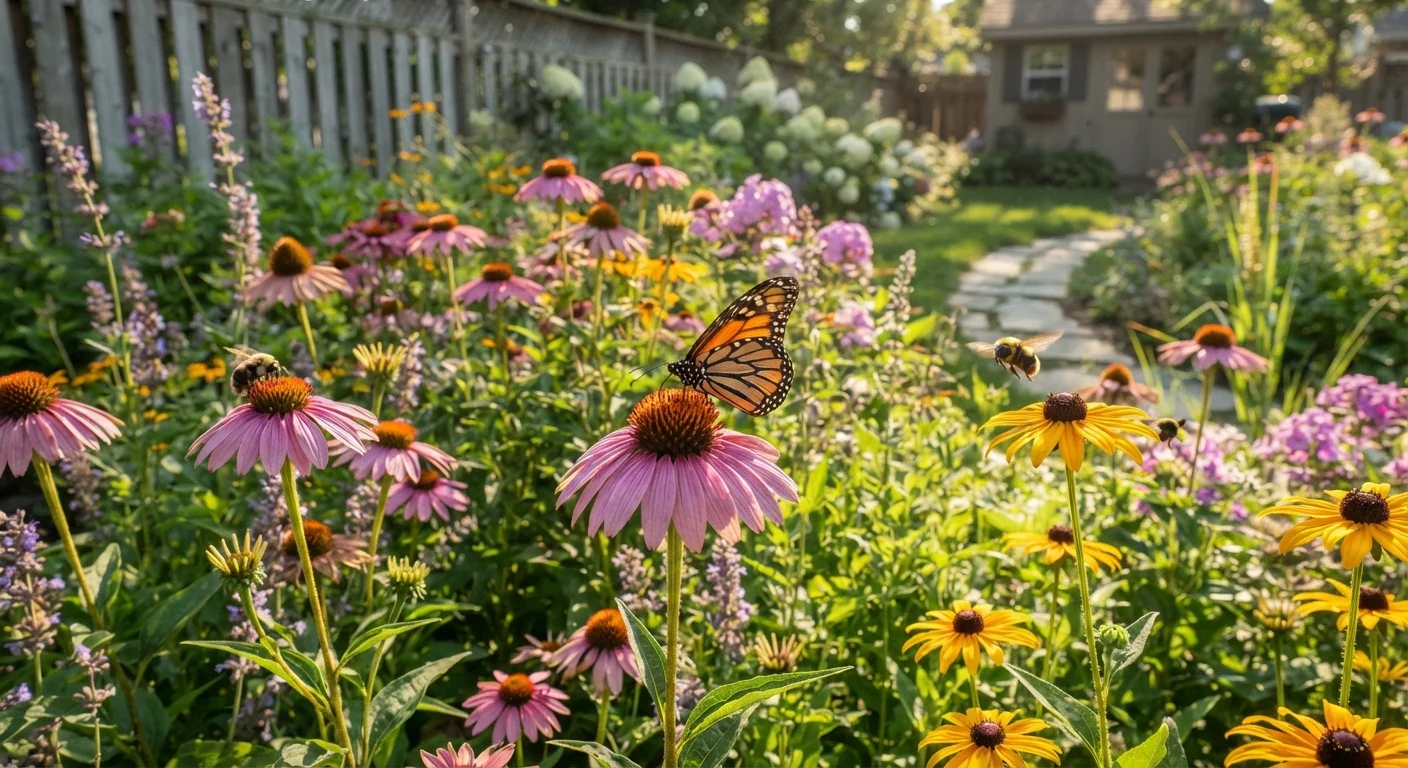
Why Native Plants Are the Foundation
When it comes to supporting native bees and butterflies, plant origin matters more than most gardeners realize. Native plants and native pollinators have co-evolved over thousands of years, meaning the flower shapes, bloom timing, and pollen chemistry of native species are closely matched to the insects that depend on them. Many native bees, for example, are specialists - they can only gather pollen from specific plant genera, making locally appropriate plant choices essential rather than optional.
Exotic ornamentals, even those that look bee-friendly, often lack the nutritional profile local pollinators need. Research from institutions including the University of Delaware has found that native plants support significantly more native bee species and individuals than non-native ornamentals, even when both are in bloom simultaneously.
Good native choices vary by region, but broadly useful options include purple coneflower (Echinacea purpurea), wild bergamot (Monarda fistulosa), goldenrod (Solidago spp.), and native milkweeds (Asclepias spp.) - the latter being essential for monarch butterfly reproduction. When planning your beds, see our raised beds vs. in-ground planting guide to decide which growing format best suits your space.
Choose at least 80% native plants for your pollinator beds.
Native plants provide the pollen and nectar chemistry that local pollinators are biologically adapted to use. Higher proportions of natives correlate with greater pollinator diversity and abundance in research studies.
Plan for continuous bloom from early spring through hard frost.
Gaps in bloom timing leave pollinators without food during critical life stages. A season-long sequence ensures your garden supports bees and butterflies beyond peak summer.
Leave bare soil patches and hollow stems in place for nesting bees.
Ground-nesting and cavity-nesting bees cannot colonize a garden that is fully mulched and tidied. Structural nesting habitat is just as important as floral resources.
Eliminate insecticide use during bloom periods whenever possible.
Pollinators are acutely vulnerable to insecticide exposure while foraging. Even sub-lethal doses can impair navigation, learning, and reproduction in bees.
Plant in generous clusters rather than single specimens.
Pollinators forage more efficiently when the same flower species is grouped together, reducing the energy cost of locating food. Larger patches also make the garden more visually cohesive.
Timing Blooms Across the Season
A garden that only blooms in midsummer leaves pollinators without food during critical early-spring and late-fall periods. Queen bumblebees emerge from hibernation in early spring needing immediate nectar, and many butterfly species require late-season blooms to fuel their migration or final egg-laying cycles. Structuring your plant list to include early, mid-season, and late bloomers is one of the highest-impact strategies available.
Early spring: native willows, Virginia bluebells, and redbud trees provide some of the first reliable pollen and nectar. Midsummer: coneflowers, bee balm, and native sunflowers carry the bulk of the season. Late season: goldenrod and native asters are indispensable, providing critical resources when little else is flowering. Pairing this timing strategy with your spring garden prep checklist helps you install early bloomers at the right time.
4,000+
Native bee species in North America
The Xerces Society for Invertebrate Conservation estimates over 4,000 native bee species exist in North America, the majority with highly specific habitat needs.
~70%
Native bees that nest in the ground
According to the USDA Forest Service, approximately 70% of native bee species are ground-nesters, underscoring the importance of bare or lightly vegetated soil in gardens.
Habitat Features Beyond the Flowers
Plants alone don't make a complete pollinator habitat. Native bees - which include over 4,000 species in North America - have diverse nesting habits. Roughly 70% nest in the ground, preferring patches of bare or sparsely vegetated soil in sunny spots. The remaining 30% are cavity nesters, using hollow stems, pithy branches, and beetle holes in dead wood. Leaving some leaf litter undisturbed in fall, keeping a few standing dead stems through winter, and tolerating a sunny bare patch of soil can meaningfully expand the number of species your garden supports.
Water access is another overlooked element. Most pollinators need shallow water for hydration. A shallow dish or tray filled with pebbles and kept topped up with fresh water serves this purpose without creating mosquito-breeding standing water. Place it near flowering plants in a partly sunny spot.
Avoid Dyed or Treated Mulch Near Pollinator Beds
Thick layers of mulch covering the entire garden floor can prevent ground-nesting bees from accessing soil. If you use mulch for weed suppression, leave intentional unmulched gaps in sunny areas close to flowering plants. These small openings can make a significant difference for ground-nesting species.
Reducing Pesticide Pressure
No amount of native planting fully compensates for regular pesticide use. Even products marketed as "natural" or "organic" - including pyrethrins and neem oil - can harm bees and other beneficial insects when applied during bloom periods or in conditions where drift occurs. The most protective approach is to avoid all insecticide applications when flowering plants are present in or adjacent to your garden.
If pest pressure genuinely requires intervention, apply treatments in the early morning or evening when bees are less active, target only affected plants rather than spraying broadly, and choose the least-toxic option appropriate to the specific pest. Integrated pest management (IPM) principles - emphasizing monitoring, thresholds, and least-harm solutions - are well-documented and widely supported by university extension programs.
Consider how plant partnerships can reduce pest pressure organically. Our guide to companion planting combinations that actually work covers science-backed pairings that deter pests while keeping your garden pollinator-safe.
Designing a Garden That's Beautiful and Functional
A pollinator garden doesn't need to look wild or unkempt to be effective. Grouping plants in drifts of at least three to five of the same species makes it easier for pollinators to locate food efficiently - scattered individual plants are harder to navigate. Mixing plant heights adds visual structure while creating varied microhabitats. Taller plants like native sunflowers or ironweed at the back, mid-height coneflowers and bee balm in the center, and low-growing ground covers or creeping thyme at the edges creates a layered, organized appearance.
Incorporating a thoughtful mix of perennials and annuals gives you reliable structure from returning plants while allowing seasonal flexibility. Native annuals like plains coreopsis fill gaps quickly and bloom abundantly, while perennials like wild columbine and black-eyed Susan anchor the design year after year. The result is a garden that earns its place aesthetically while doing genuine ecological work.
“The most important thing anyone can do for pollinators is to grow native plants. It is the single most powerful action available to a home gardener.”
— Doug Tallamy, Entomologist and author, University of Delaware
The content on this site is for informational purposes only and is not a substitute for professional advice. Always consult a qualified professional for guidance specific to your situation.