

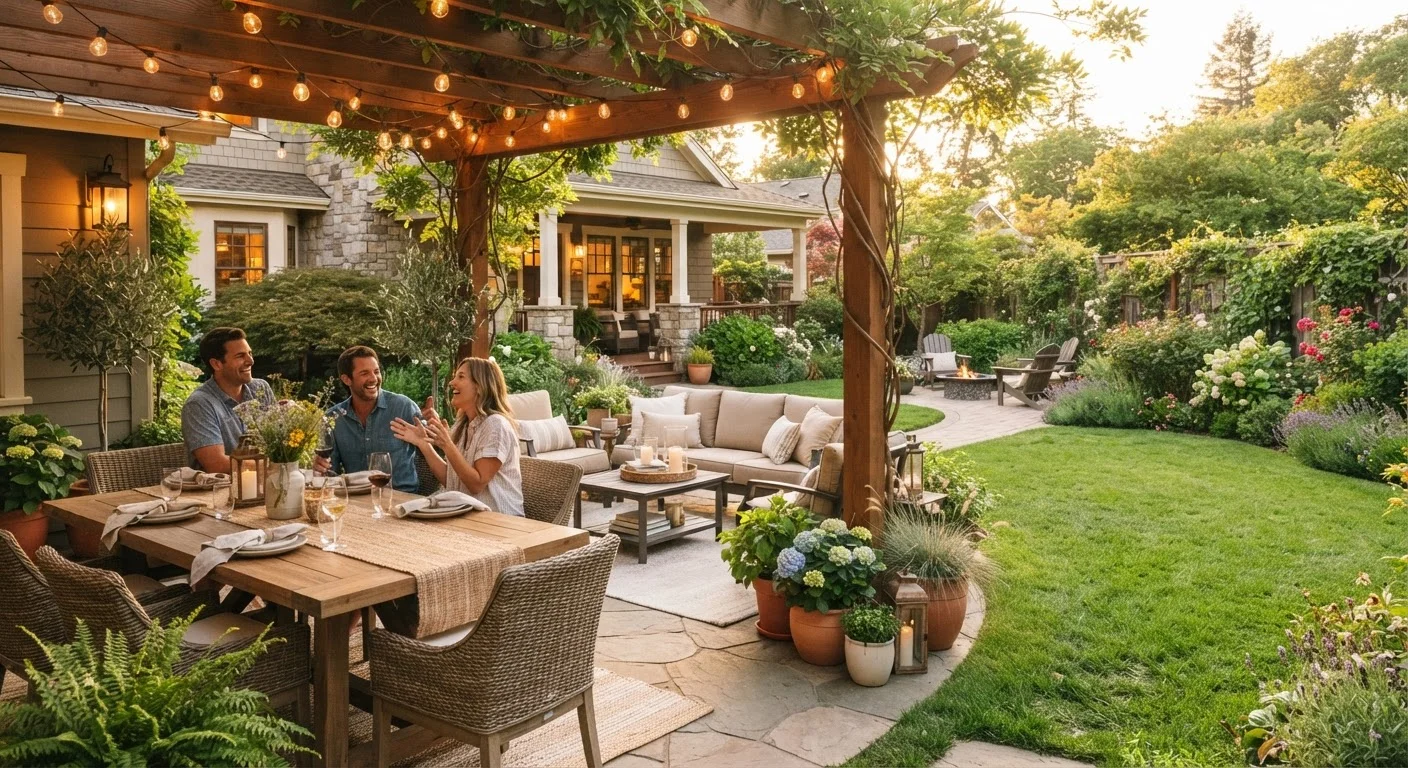
Start With How You Actually Live Outdoors
Most backyard redesigns stall because they begin with inspiration photos rather than honest self-assessment. Before sketching a layout or pricing materials, answer a few grounding questions: Do you cook outside, or just eat there? Do children or pets need open running space? Do you want quiet and solitude, or do you regularly host groups?
The answers shape every decision that follows - from zone placement to surface materials to how much shade structure you actually need. A yard built for a family with young kids looks very different from one designed for a couple who wants a quiet evening retreat. Neither is wrong; they just require different design logic.
Also consider your climate honestly. In humid Southern summers, a shaded, well-ventilated seating area gets used; an exposed stone patio doesn't. In cooler northern climates, maximizing afternoon sun exposure may extend your usable outdoor season by weeks.
Before buying a single piece of furniture, spend several evenings outside at different times to observe sun angle, wind patterns, and where you naturally gravitate. Design follows behavior, not the other way around.
Many homeowners invest in elaborate patios only to find they never sit there because of afternoon glare or an overlooked noise source. Observing your yard in real conditions saves costly mistakes.
Use outdoor rugs to define a seating zone even before you commit to permanent hardscaping - they let you test the footprint size and feel before spending on concrete or pavers.
Spatial prototyping with inexpensive, reversible elements is a common technique used by landscape designers to validate zone sizing and traffic flow.
Zoning Your Yard Into Functional Areas
A yard without zones tends to become an undifferentiated lawn that nobody uses intentionally. Zoning - dividing your outdoor space into distinct areas with defined purposes - is the single most effective organizational tool in backyard design.
Common zones include: a dining or cooking area near the back door for convenience; a lounge or conversation area slightly removed for relaxation; a play or activity zone with soft ground cover if children are in the picture; and a garden or growing area for those interested in planting. Not every yard needs all four, but identifying your two or three priorities creates a clear plan.
Transition the zones using low-cost cues: a change in surface material, a row of container plants, a slight grade change, or a simple gravel border. These visual breaks help each area feel intentional without requiring walls or fences.
If you're considering a deck as the anchor of your dining or lounge zone, our guide to structural deck decisions walks through the planning and permitting considerations before you build.
“The best outdoor spaces aren't designed around aesthetics first - they're designed around how people actually move, gather, and rest. Start with the human activity, then let the materials and plantings support it.”
— Julie Moir Messervy, Landscape designer and author on outdoor space planning
Choosing Surfaces That Hold Up to Real Use
Surface material is where outdoor projects often go over budget or underperform. The core trade-off is between upfront cost and ongoing maintenance. Here's a practical comparison of common options:
- Concrete pavers: Durable, repairable, and available in a wide range of profiles. Individual pavers can be lifted and reset if frost heave or tree roots cause shifting - a significant advantage over poured concrete slabs.
- Poured concrete: Lower upfront cost for large areas but prone to cracking over time. Stamped or brushed finishes improve aesthetics but don't change the underlying maintenance equation.
- Composite decking: Resists rot, splintering, and fading better than natural wood. Typically carries a higher upfront cost but lower long-term maintenance. Note that composite still requires occasional cleaning.
- Natural stone (flagstone, bluestone): High aesthetic value and durability, but cost and the need for precise installation make it less DIY-friendly than pavers.
- Gravel or decomposed granite: Low cost, excellent drainage, and easy to install. Best suited for lower-traffic zones or garden paths rather than primary seating areas.
Drainage Problems Compound Over Time
Improperly graded patios and hardscaping can direct water toward your foundation rather than away from it. Always ensure surfaces slope at least one-quarter inch per foot away from the house. When in doubt, consult a landscaper or civil engineer before laying large areas of hardscape.
Shade, Privacy, and Shelter Considerations
Shade is the single factor most likely to determine whether your outdoor space gets used on hot days. Options range in permanence and cost:
Pergolas and shade sails provide partial shade while maintaining an open feel. Pergolas can support climbing plants for natural coverage that deepens over time. Retractable awnings offer flexible coverage but require proper wall anchoring and periodic maintenance. Market umbrellas are the most flexible and least expensive option, ideal for dining tables.
Privacy is equally important for encouraging genuine relaxation. Solid fencing, lattice panels with climbing plants, tall ornamental grasses, or a staggered row of evergreen shrubs can all create a sense of enclosure without making the space feel confined. The key is choosing a privacy solution scaled to your yard - a six-foot privacy fence in a small urban backyard can feel oppressive rather than sheltering.
For permanent shade structures attached to the house, always check local permit requirements and ensure adequate ledger attachment. This falls under the same structural and safety logic as deck construction.
Bringing in Plants Without Overcomplicating It
Plants soften hardscaping, add seasonal interest, and make an outdoor space feel genuinely alive - but an overly ambitious planting plan becomes a maintenance burden that discourages use of the space itself.
A practical approach is to anchor the design with a small number of low-maintenance structural plants - ornamental grasses, dwarf shrubs, or native perennials suited to your region - and fill gaps with seasonal color using annuals or containers. This gives you year-round structure without requiring constant replanting.
For those interested in food production, raised beds can integrate naturally into a backyard zone without competing with recreational space. Our guide to raised beds vs. in-ground planting compares the practical trade-offs for home growers. And if you're building a longer-term plant palette, understanding how to combine perennials and annuals - covered in our perennials vs. annuals guide - helps you make choices that look good across multiple seasons.
Lawn Grass Is Just One Option
Traditional turf is familiar and forgiving for kids and pets, but it carries ongoing maintenance and water costs. For a thorough look at whether grass makes sense for your situation, see our balanced guide to lawn grass in the American backyard for a balanced perspective.
Budgeting and Phasing Your Outdoor Project
Outdoor improvements can range from a few hundred dollars for container plantings and furniture to tens of thousands for a full hardscape with a built-in kitchen and lighting system. The most important financial principle is to sequence investments by frequency of use rather than visual impact.
Build the zone you'll use most first, then layer in enhancements over time. A simple concrete paver patio with a good furniture set and a market umbrella delivers most of the functional value of an elaborate outdoor room - at a fraction of the cost. Lighting, permanent shade structures, and built-in features can follow as budget allows.
For a broader framework on managing home improvement spending, our Home Improvement hub offers practical guidance on prioritizing renovation decisions. If you want to think through the household budget side, the Budgeting Basics hub can help you build a spending plan that accommodates phased projects without financial strain.
Phase Your Project to Stay On Budget
Start with the zone you'll use most - often a simple patio or lawn seating area - and add elements like lighting, plantings, or shade structures in subsequent seasons. Phasing prevents budget overrun and lets you learn what you actually need from the space before committing to permanent features.
Finally, get at least two or three estimates for any work requiring a contractor, ask for references, and verify licensing and insurance before signing a contract. The outdoor living space you actually use is the one built thoughtfully - not rushed.
The content on this site is for informational purposes only and is not a substitute for professional advice. Always consult a qualified professional for guidance specific to your situation.