

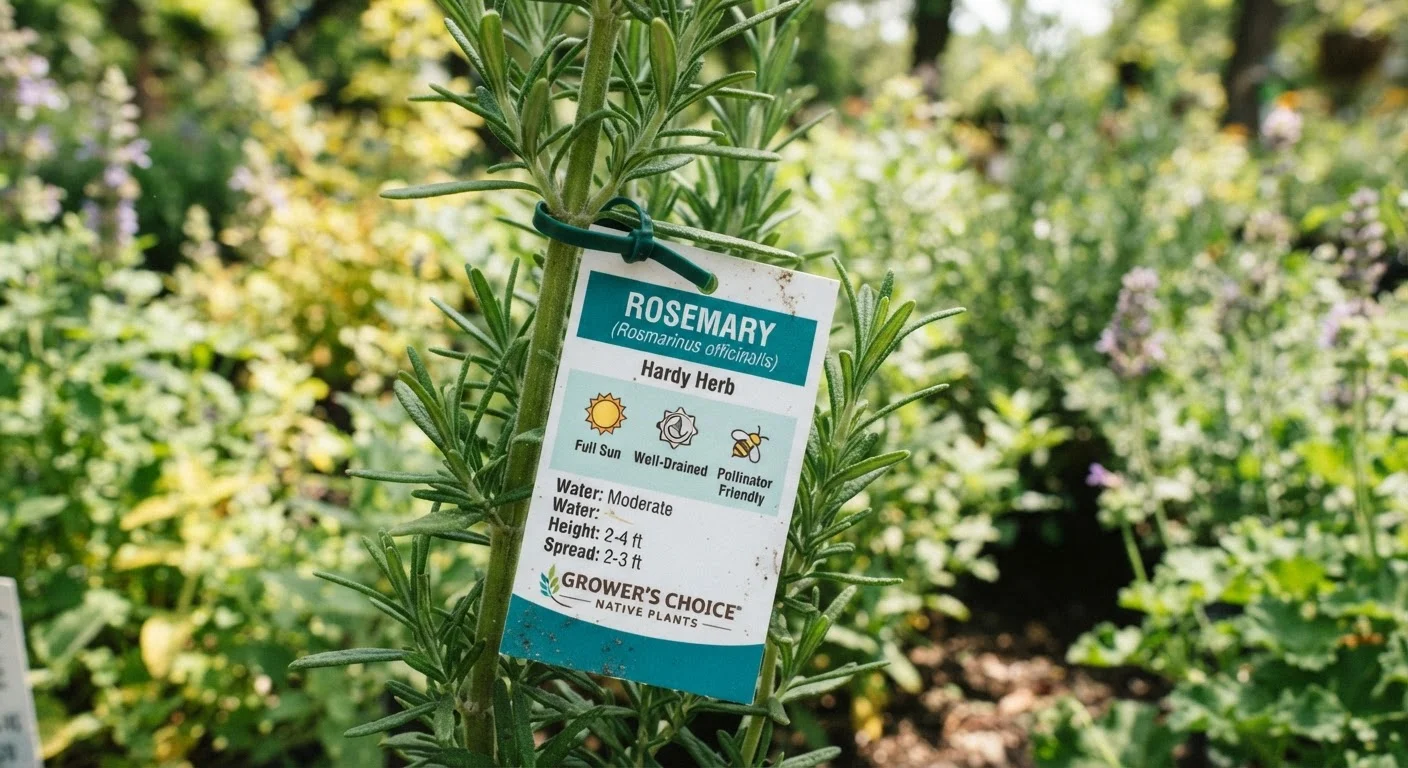
Why Plant Tags Deserve More Attention
Most gardeners glance at a plant tag long enough to confirm the flower color, then tuck it back into the pot and head to the checkout line. That quick scan leaves behind a surprising amount of practical information - the kind that determines whether a plant thrives for years or limps through a single season.
Plant tags are written by horticulturalists and growers who know exactly what conditions a plant needs. Every field on that tag exists for a reason. Learning to read them correctly takes less than five minutes and can save you real time, money, and frustration in the garden.
Save Your Plant Tags After Planting
Stick removed tags into a small labeled bag or photograph them before composting the pot. You'll frequently need the variety name, bloom time, or spacing info again in future seasons - especially when diagnosing problems or dividing established clumps. A simple photo album on your phone is all the record-keeping most home gardeners need.
Breaking Down Each Field on the Tag
Common Name and Botanical Name
The common name is what most of us recognize - 'purple coneflower,' for example. The botanical name directly below it (Echinacea purpurea) is the internationally standardized Latin identifier. Because common names shift by region - 'bluebells' refers to entirely different plants in different states - the botanical name is the definitive reference. When you're researching care requirements or buying additional plants, always cross-check using the Latin name.
USDA Hardiness Zone
This is the field most home gardeners overlook with the costliest consequences. The USDA Plant Hardiness Zone Map divides North America into zones based on average annual minimum winter temperatures. A tag listing 'Zones 5-9' means the plant can survive winters in those zones without special protection. You can look up your zone for free on the USDA website using your zip code. Planting a Zone 8 plant in Zone 6 almost always ends in winter kill.
Light Requirements
Tags use three standard designations: Full Sun (6+ hours of direct sun daily), Part Sun/Part Shade (3-6 hours), and Full Shade (fewer than 3 hours). These aren't suggestions - they reflect the light conditions the plant evolved to use. A shade plant in full sun will scorch; a sun plant in shade will grow weakly and rarely flower.
Water Needs
Tags often use a simple low/medium/high scale or describe the plant as 'drought tolerant' or 'moisture loving.' These refer to established plant needs, not newly planted ones. Nearly all plants need consistent moisture while getting established, regardless of their long-term drought tolerance.
Mature Height and Spread
The dimensions listed describe the plant at full maturity, often three to five years out - not the compact specimen in your hand. Spacing recommendations follow directly from these numbers. Planting too close causes poor airflow, which invites fungal disease and stunts growth. See our guide to raised beds vs. in-ground planting for how spacing decisions also interact with your bed type.
Annual, Perennial, or Biennial
This tells you how long the plant lives. Annuals complete their full life cycle in one season. Perennials return year after year within their hardiness zone. Biennials take two seasons - leafy growth the first year, flowers and seeds the second - before dying. Understanding this distinction shapes your whole planting strategy. Our article on perennials vs. annuals goes deeper on how to combine both for year-round appeal.
13
USDA Hardiness Zones across the continental U.S.
The USDA Plant Hardiness Zone Map, maintained by the U.S. Department of Agriculture, divides North America into zones based on average annual extreme minimum temperatures.
6+ hrs
Daily direct sun required for 'full sun' plants
The full sun designation is a consistent industry standard used across nursery and seed producers in the United States.
~30%
Of new plants lost to preventable siting errors
Cooperative extension horticulturalists commonly cite incorrect light and drainage placement as leading causes of early plant loss in home gardens.
Fields That Provide Bonus Guidance
Soil Preferences
Some tags specify soil pH ranges or drainage requirements ('well-drained,' 'tolerates clay,' 'needs acidic soil'). These details matter more than most beginners realize. A plant demanding acidic soil placed in alkaline ground will show nutrient deficiencies even with regular fertilizing, because pH affects the plant's ability to absorb nutrients - not just their presence in the soil.
Bloom Time
Bloom time data helps you plan a garden that has something flowering across the entire season rather than everything peaking at once. Cross-referencing bloom times across your planned purchases is a simple way to build visual continuity. This pairs naturally with companion planting strategies that also consider timing and proximity.
Wildlife Notes
Labels like 'attracts pollinators,' 'deer resistant,' or 'butterfly host plant' reflect documented tendencies - useful for planning a garden that supports local ecology or protects itself from browsing pressure. Treat 'deer resistant' as a relative term: it means less palatable to deer than alternatives, not fully deer-proof.
When Tag Information Conflicts With Local Conditions
Plant tags are written for average conditions across a zone, not for your specific microclimate. A sheltered south-facing courtyard might let you push a zone warmer than your official rating; a frost pocket in a low-lying yard can make your zone effectively colder. Your local cooperative extension office - a free public resource connected to land-grant universities - publishes region-specific planting guidance that accounts for these nuances.
Putting Tag Information to Work Before You Plant
Before purchasing any plant, walk your yard and observe where sunlight falls and for how long. Note low spots where water collects after rain - these signal drainage issues that certain plants can't tolerate. Then match what you observe to what the tag specifies. This simple pre-purchase audit is one of the most reliable ways to avoid first-season failures.
Keep the tags after planting by sticking them in a small binder or photographing them. You'll want the information again when it's time to fertilize, divide, or troubleshoot problems. A well-read plant tag at the nursery and a saved record at home forms the baseline of an organized, successful garden - and it costs nothing extra.
Frequently Asked Questions
The USDA Plant Hardiness Zone number indicates the coldest average winter temperature a plant can reliably survive. The continental U.S. spans zones 3 through 10. If your local zone number falls within the range listed on the tag, the plant should overwinter in your garden without special protection.
Full sun means the plant needs at least six hours of direct sunlight per day. Part sun or part shade generally means three to six hours. Full shade means fewer than three hours of direct sun. Planting in the wrong light condition is one of the top reasons plants underperform.
Spacing reflects the plant's mature spread, not its current size in the pot. Crowding plants leads to poor air circulation, increased disease risk, and competition for water and nutrients. Giving plants their recommended space from the start avoids costly thinning later.
An annual completes its life cycle in one growing season and must be replanted each year. A perennial returns from its roots season after season within its hardiness zone. Some plants are labeled as tender perennials, meaning they behave as perennials only in warmer zones.
Tags are a reliable starting point, but they reflect general averages. Microclimates in your yard - such as a south-facing wall that stays warmer - can shift what's possible. Local cooperative extension offices are an excellent secondary resource for region-specific guidance.
Deer resistant means the plant is less palatable to deer than alternatives, not that deer will never touch it. Hunger and local deer populations heavily influence browsing behavior. The label is a useful guideline, not a guarantee.
The content on this site is for informational purposes only and is not a substitute for professional advice. Always consult a qualified professional for guidance specific to your situation.