

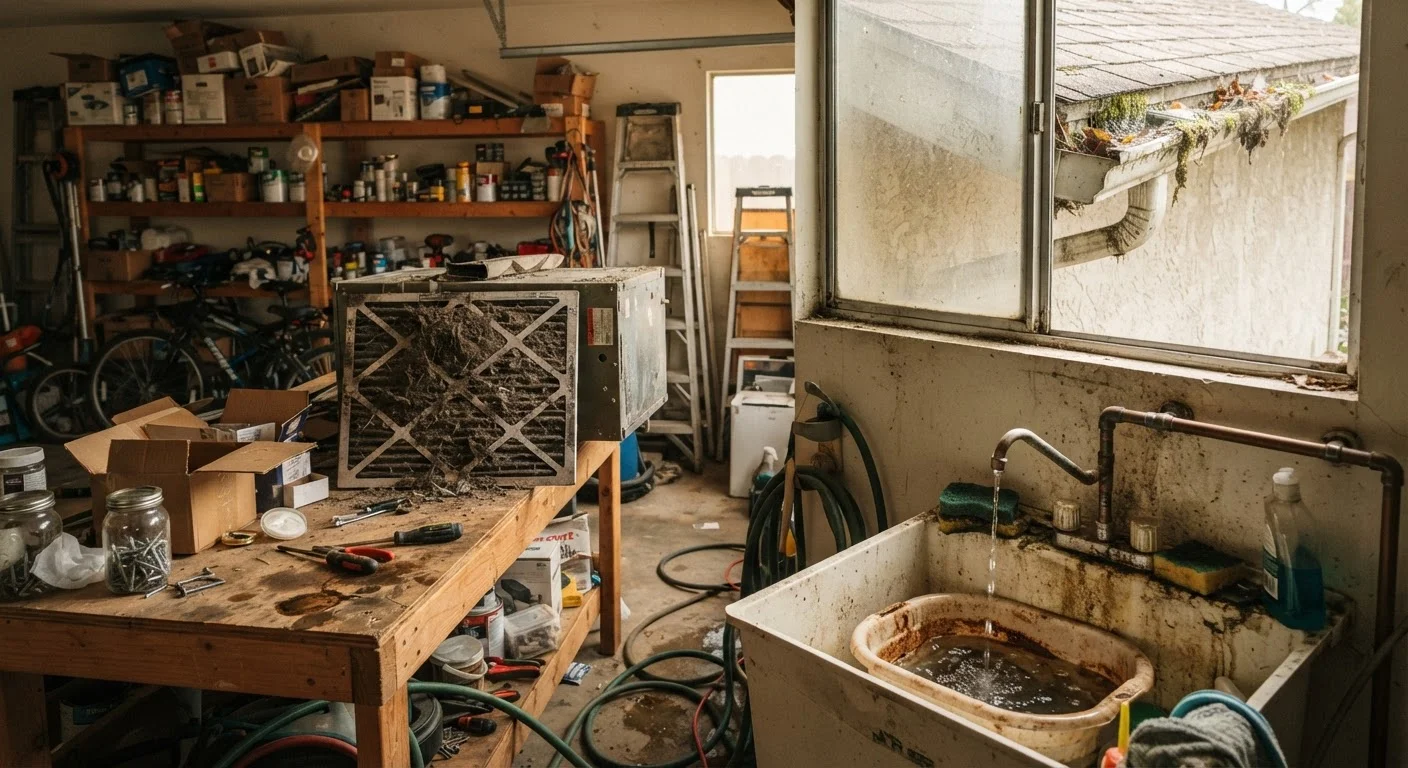
Why Routine Tasks Keep Getting Pushed Aside
Most homeowners don't skip maintenance tasks out of carelessness - they skip them because the consequences aren't immediate. A clogged gutter doesn't flood your basement the same afternoon. A neglected HVAC filter doesn't cause the system to fail overnight. That slow feedback loop makes it easy to defer tasks indefinitely, often until a minor issue becomes a major one.
Understanding what actually happens when specific tasks go undone is one of the most effective motivators for staying on schedule. The hidden costs of deferred maintenance tend to compound quietly - and the final bill is rarely proportional to the original problem.
Skipping gutter cleaning, typically once or twice a year.
Why it happens: Gutters aren't visible from inside the home, and cleaning them requires a ladder - a task many homeowners put off for convenience or safety concerns.
Not replacing HVAC air filters on schedule - typically every one to three months depending on filter type and household conditions.
Why it happens: Filters are tucked away in utility closets or ceiling returns, and there's no visible alert when they're overdue. Many homeowners simply forget.
Ignoring caulk and grout maintenance in bathrooms and around windows.
Why it happens: Cracked or missing caulk looks cosmetic at first glance, so homeowners often assume it's a low-priority aesthetic issue rather than a waterproofing failure.
Failing to test smoke detectors and CO alarms regularly or replace them when they expire.
Why it happens: Detectors are easy to ignore when they're functioning quietly. Many homeowners test them at installation and then never again, assuming they're still working.
Not flushing the water heater to clear sediment buildup.
Why it happens: This task is rarely mentioned in homeowner onboarding, and the tank sits out of sight in a utility space. Most homeowners aren't aware it's necessary at all.
Skipping exterior paint and siding inspections, allowing moisture to enter through cracks or peeling areas.
Why it happens: Paint fading and minor cracks appear gradual, so it's easy to defer exterior touch-ups season after season until damage is widespread.
The Downstream Damage: What Neglect Really Looks Like
Each skipped task described above doesn't just create its own isolated problem - it often triggers a chain of secondary damage. Water from an overflowing gutter can erode landscaping, seep into siding, and eventually compromise a home's foundation. An overworked HVAC system may mask its decline through gradual efficiency loss before it fails completely during a heat wave.
1%-3%
Of home value recommended for annual maintenance budget
Housing experts commonly suggest setting aside one to three percent of a home's value each year for routine upkeep and unexpected repairs.
5-10×
Cost multiplier for deferred versus timely repairs
Industry estimates from home inspection and contracting sources consistently show that delayed repairs can cost several times more than addressing the same issue early.
If you've let several of these tasks slip, it helps to prioritize by risk level rather than convenience. Safety-related items - smoke detectors, CO alarms, and similar devices - should always come first. Our guide on smoke detectors, CO alarms, and fire extinguishers explains what proper upkeep actually looks like for those devices.
For ongoing HVAC health, common misconceptions can be just as damaging as outright neglect. It's worth reviewing HVAC maintenance myths that cost homeowners money before assuming your current habits are sufficient.
Electrical, Gas, and Structural Work Requires a Pro
Some maintenance tasks - such as inspecting electrical panels, checking gas lines, or evaluating structural concerns - should never be treated as DIY projects. These require licensed professionals and, in many jurisdictions, permits. Attempting them without proper credentials can create serious safety hazards and may violate local building codes. When in doubt, consult our guide on DIY repairs versus hiring a pro to understand where the line is.
Finally, staying on top of maintenance is far easier when there's a financial cushion set aside for it. A dedicated home maintenance fund can mean the difference between handling a repair promptly and deferring it because the timing feels wrong.
The content on this site is for informational purposes only and is not a substitute for professional advice. Always consult a qualified professional for guidance specific to your situation.